Resolution of the preventive closure at the La Pastora Zoo
The Federal Environmental Protection Agency (Profepa) has proceeded to formally lift the preventive closure that kept the La Pastora Zoo, located in the state of Nuevo León, closed. This administrative determination comes after an exhaustive investigation focused on alleged negligence in the handling and care of several specimens, with special attention to the case of the bear named “Mina.” The precautionary closure measure was originally implemented as a security protocol to mitigate risks of contagion, given that the bear was diagnosed with leptospirosis, a highly transmissible zoonotic pathology that can circulate between animals and humans.
The technical support for the reopening of the establishment is based on the verification, by federal inspectors, of a significant progress in compliance with the urgent corrective measures that were ordered. A central element of this verification was the clinical review of 493 specimens that live in the zoo, of which, according to the official report, none presented dermatological problems that could be associated with the disease in question. This mass examination constitutes a fundamental part of the protocol to rule out the spread of the pathogen within the captive animal population.
Measures implemented and situation of the specimens
The corrective action plan executed by zoo management included a thorough inspection and deep cleaning of areas deemed critical for biosecurity. These areas included the kitchens where the diets are prepared, the food stores, and the animals’ own cages and enclosures. In parallel, strict hygiene and handling protocols were implemented and documented for staff, which emphasize the mandatory use of personal protective equipment such as gloves, rubber boots and face masks, along with meticulous hand washing before and after handling any food or organic waste.
From an infrastructure perspective, work was carried out to reinforce mesh and perimeter fencing to prevent the intrusion or escape of animals. Likewise, live traps were installed to control feral fauna, such as raccoons, foxes and cats, which can act as disease vectors. One of the most relevant technical requirements was the verification of the performance of PCR tests to detect the presence of the leptospirosis bacteria in other individuals. In this regard, Profepa reported that the zoo presented 29 negative results corresponding to specimens that cohabited in the vicinity of the “Mina” bear enclosure.
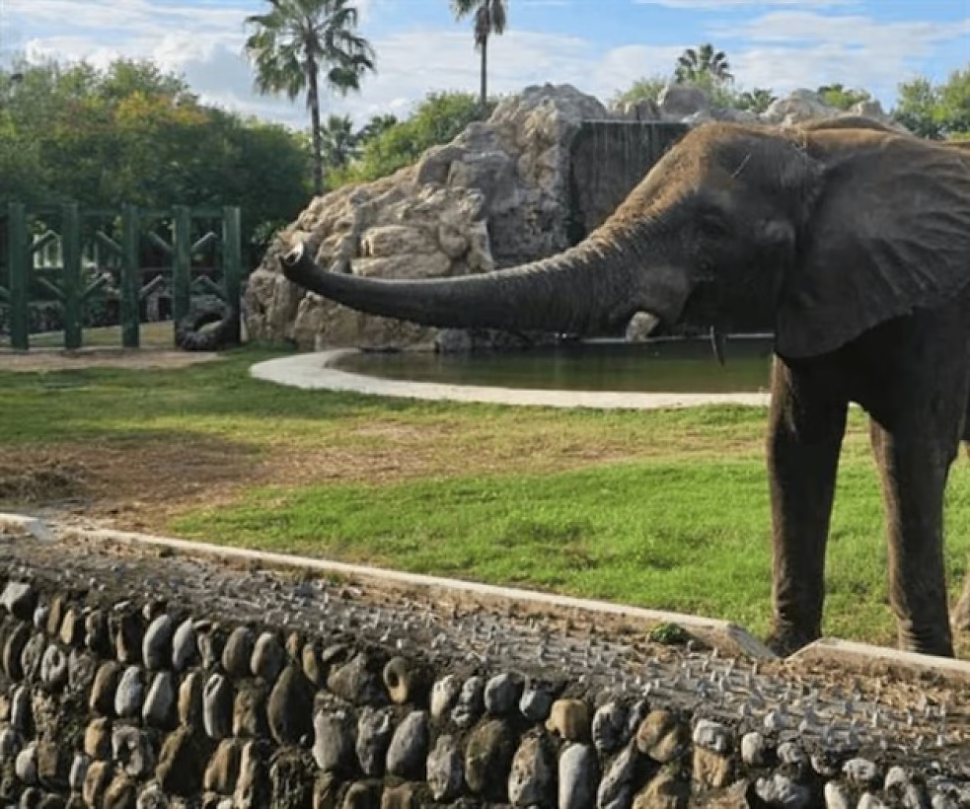
The investigation also detected the existence of several specimens with low weight conditions. After a detailed evaluation, it was determined that this condition was mainly associated with the advanced age of the animals. The clinical records of a black jaguar, a white rhinoceros, a white African lion, an African elephant and a female chimpanzee were reviewed, confirming that all of them receive continuous veterinary treatment for various conditions typical of their geriatric stage, which would rule out, at this point, general negligence in their diet.
The most critical case, that of the bear “Mina”, culminated with its transfer by air on September 27 to the facilities of the Invictus Foundation, located in the state of Hidalgo. This move was carried out despite the inherent risk involved in moving an animal in a delicate state, with the primary objective of receiving intensive and specialized care that could not be provided in its place of origin. This episode underlines the initial seriousness of the situation and constitutes the core of the legal actions that remain open.
It is crucial to highlight that, although the closure has been lifted, Profepa has been emphatic in pointing out that the administrative procedure has not concluded. The federal agency has announced that it will continue with the legal process to impose the corresponding economic or administrative sanctions specifically for the case of the “Mina” bear. In addition, a continuous monitoring and review program will be maintained at the La Pastora Zoo to ensure that all animals enjoy optimal welfare conditions and that corrective measures are sustained over time, thus guaranteeing the health of the fauna collection and the safety of visitors and workers.
Did you find this detailed analysis of captive wildlife management helpful? Share this report on your social networks to inform more people and explore other content related to conservation and environmental protection on our platform.