A War Cry in the Empty Classrooms
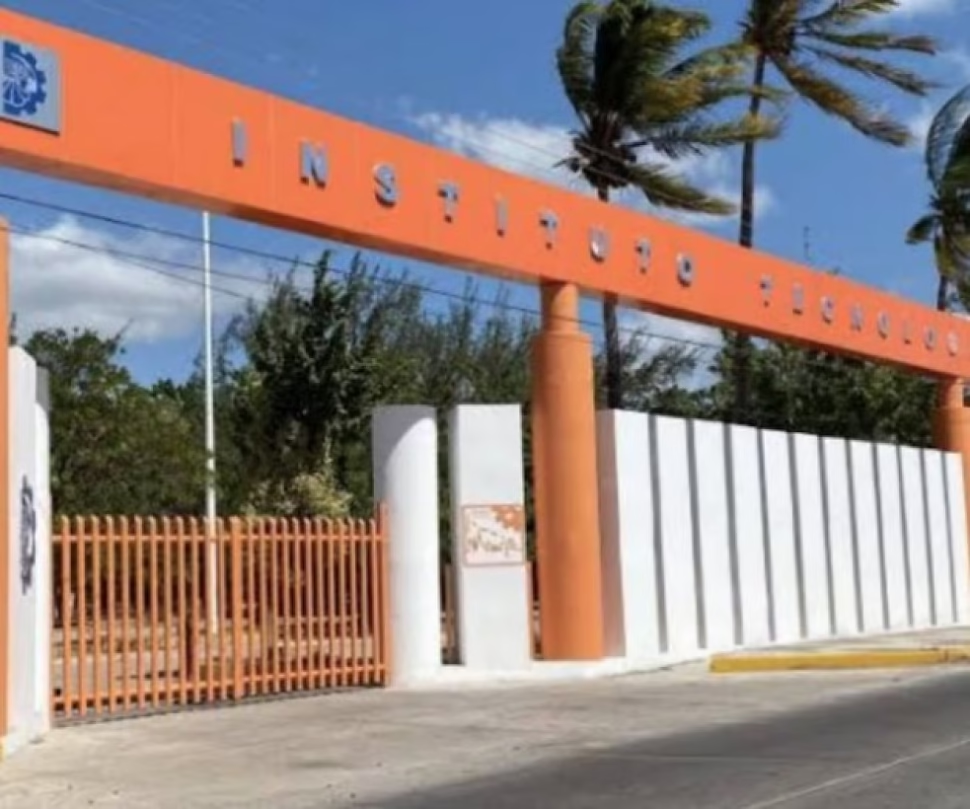
The second day of the August-December 2025 term was destined to resonate with the murmur of textbooks and the renewed energies of students. Instead, an ominous silence, charged with indignation and tension, took over the halls of the Instituto Tecnológico del Istmo (ITI). In a dramatic turn that has shocked the entire educational community, the workers affiliated with the D-V-71 union delegation of section 61 of the powerful Education Workers Union (SNTE), declared a total work stoppage, paralyzing hopes for a normal start to classes.
This movement, which explodes like thunder on a clear day, is not a decision taken lightly. According to an official statement from the union representation, this extreme measure and other fighting actions were agreed upon in a general assembly held on August 19. Their mission, they vehemently proclaim, is no less than the “defense of legality“, the protection of their sacred labor rights and the very preservation of the institutional life of the campus. An epic battle for the soul of the institution was about to begin.
Day Zero: Confrontation and a Ghost Director
Last Monday, August 25, the date marked on the calendar as the beginning of the semester, the stage was set for conflict. At dawn, the unionists, firm as a rock, gathered at the main entrance to the institution, erecting an insurmountable human barrier. Its objective was clear and forceful: to prevent the entry of academic authorities, symbolizing an absolute rejection of the current leadership.
In a move that added fuel to the fire of intrigue, the director of the ITI, Juan José Rementería Orozco, announced that he would not appear physically to, as he declared, “avoid confrontations.” His absence, far from calming things down, was interpreted as a mysterious act of cowardice or a calculated strategy, leaving a power vacuum at the heart of the conflict.
But the true protagonists of this tragedy, those who carry the weight of uncertainty, are the parents and their children. Arriving from the most distant Isthmus communities, with hearts full of hope and hands loaded with bags of groceries for their young people, they found the harsh reality: closed doors and an academic future on pause. Their annoyance, understandable and deep, exploded into statements of frustration: “We paid registration, we are renting rooms and we find that there are no classes starting.” The investment of dreams and resources, shattered in an instant.
A Leader on the Beach and a Shadow of Corruption
The plot, already convoluted, took a turn towards the unimaginable when the parents, seeking answers and a responsible face, demanded to speak with both the director Rementería Orozco and the top union leader, Wilber Guerra Cabrera. The response they received was a masterstroke of irony and impudence. While the director was an unattainable ghost, the leader of those who advocated for their rights was told that “he is walking around Cancun.”
The confirmation of this surreal fact came in the most unexpected way. EL UNIVERSAL managed to contact Secretary General Guerra Cabrera himself, who, from the paradisiacal beach, confirmed his presence in Cancun to attend the first national meeting of leaders. But the drama would not end there. In his absence, his own fellow fighters, in an act of internal betrayal that reveals a deep crack, began to circulate copies of bank transfers sent in his favor by the institution itself, Tec Istmo. A shadow of suspicion about alleged irregular management hangs over the conflict, transforming a fight for rights into a potential corruption scandal that could change everything forever.
The fate of hundreds of students’ semester hangs in the balance, caught in a battle where loyalties blur, accusations fly, and the truth seems to be the first victim. The climax of this novel is far from arriving, and the world watches with its heart in its mouth.
Do you think this situation affects the future of public education? Share this story on your social networks to raise awareness and explore more content related to the challenges in the Mexican educational system.