Indigenous Education Teachers Start Strike to Demand Their Rights

Teachers take forceful actions to make their fundamental needs visible and demand immediate solutions.

A Mobilization for Dignity and the Educational Future

Today I want to share with you a story of courage and determination that is happening in the heart of Oaxaca. The incredible teachers at the Indigenous Education level, belonging to Section 22 of the SNTE, have made a powerful decision: a 48-hour stoppage of activities. Its purpose? Demand what they justly deserve: priority attention to the needs of this fundamental sector and the official recognition of the Directorate of Native Peoples within the State Institute of Public Education of Oaxaca. This is not just a protest; It is a call to action for educational justice.

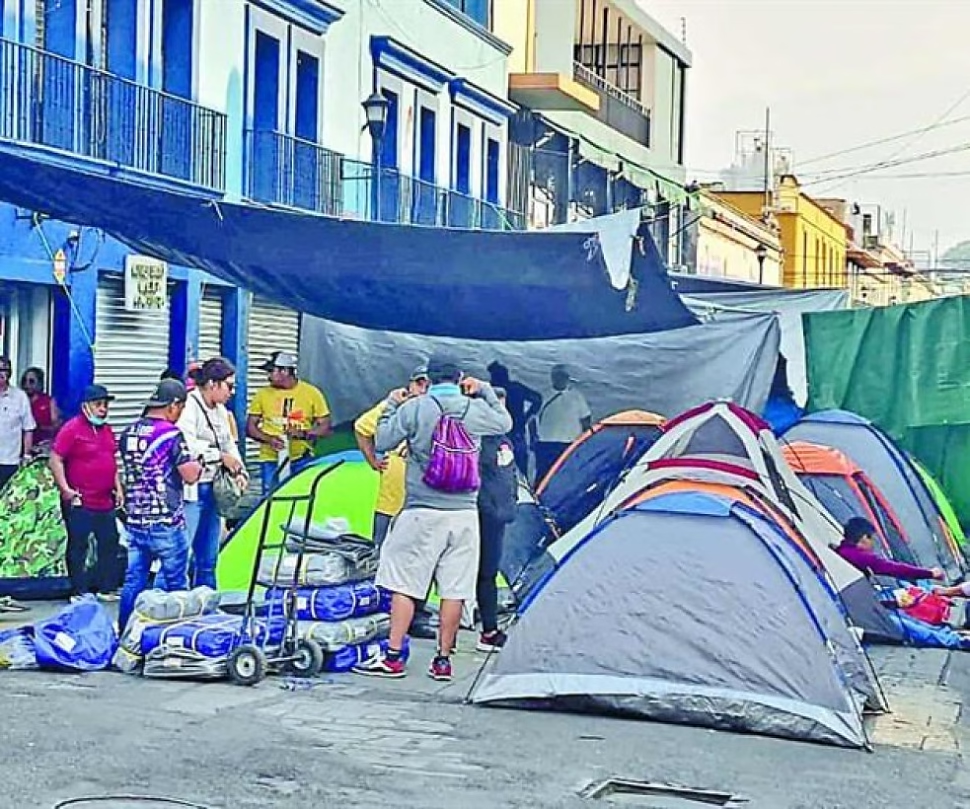
Imagine the scene: these committed educators have not only suspended their work, but have transformed the zocalo of the Oaxacan capital into a space for peaceful expression through a sit-in. And they have something even more significant planned: a march that will start from the monument to Benito Juárez, located at the San Andrés Huayapam road intersection, towards the center of the city. Each step they take will represent the firm conviction of fighting for an education that honors and preserves the cultural roots of the native peoples. Their physical presence on the streets is a living testimony of their unwavering commitment.

RelatedEducational investment in Mexico affects the health of teachers

The Key Demands: Building Bridges to Solutions

Professor Rodrigo Sánchez Joaquín, head of Work and Conflicts at the Indigenous Education level, has been clear and transparent about the main objectives. One of the most urgent requests is the assignment or hiring of personnel for more than one thousand five hundred people. Think about the transformative impact this would have: the essential spaces would be covered for this level of education to function with the excellence that students deserve. This is not a simple figure; They are employment opportunities, they are classrooms that will recover their dynamism, they are futures that will be built with solid foundations.

The current situation is a challenge that these educational heroes turn into an opportunity for change. Due to the critical lack of teachers, they have seen the need to merge school groups to be able to teach classes. In addition, there is a significant shortage of workers in administrative areas, which further complicates educational management. Each obstacle becomes one more reason to move forward, demonstrating that when a community comes together with a common purpose, there is no barrier that cannot be overcome.

Another fundamental demand is the institutional recognition of the Directorate of Native Peoples of the IEEPO. This administrative area, which was previously under its management, ceased to be so after the restructuring and disappearance of the old IEEPO. Reclaiming this space is not just about management; It is about autonomy, representativeness and ensuring that the voices of indigenous peoples are heard and respected in decisions that directly affect their education. It is a crucial step toward true educational equity.

The state educational authorities have responded that this matter requires approval in the local Chamber of Deputies. However, so far, no positive or concrete response has been obtained that satisfies this legitimate aspiration. This lack of progress does not discourage teachers; On the contrary, it strengthens your resolve. It teaches us that sometimes we must persist, raise our voices louder and remind everyone of the importance of complying with what is fair and necessary.

Looking Towards the Future with Hope and Determination

Professor Rodrigo Sánchez has been emphatic in pointing out that, if during these 48 hours of mobilization and peaceful protest significant progress is not achieved, the possibility of escalating to a 72-hour strike will be evaluated. And, if necessary, an indefinite work stoppage would be contemplated. This is not a threat, it is a well-considered plan of action that reflects the seriousness of your commitment. It shows us that when we believe in a cause, we must be prepared to take the necessary steps, always with peace and conviction.

This mobilization is much more than a work interruption; It is a call to collective conscience. It is a powerful reminder that education, especially that which protects and promotes native languages ​​and cultures, is a fundamental pillar for our society. Teachers not only educate in classrooms; Today they are giving us a master lesson in dignity, perseverance and the importance of defending our rights. Their fight is for a more inclusive, more representative and fairer educational system for present and future generations.

Every gesture of peaceful protest, every sign, every step in the march, is loaded with the hope of a better tomorrow. Today these educators are sowing the seeds of a future where indigenous education occupies the place of honor it deserves. Their example inspires us not to settle, to raise our voices for what is right and to believe in the power of unity to generate deep and positive changes in our society.

Share this story of courage and conviction on your social networks! Help make this important cause visible and explore more content on the defense of educational and cultural rights. Together we can be speakers of positive change.

Marina de México y EU acuerdan nuevas estrategias de seguridad marítima

México y EU refuerzan seguridad marítima con nuevos acuerdos operativos y tecnológicos.

Reunión de alto nivel entre mandos navales

El almirante Raymundo Pedro Morales Ángeles, titular de la Secretaría de Marina (Semar), se reunió con mandos de la Armada y la Guardia Costera de Estados Unidos del 3 al 5 de junio. El objetivo fue diseñar estrategias de seguridad marítima, fortalecer labores de búsqueda y rescate, y reafirmar el compromiso binacional contra la delincuencia organizada transnacional.

Los acuerdos se formalizaron con los almirantes James W. Kilby y Kevin E. Lunday, subjefe de operaciones navales y comandante de la Guardia Costera, respectivamente. En las mesas de trabajo se revisaron mecanismos de coordinación bajo principios de confianza mutua y respeto a la soberanía. El espacio marítimo se consolida como uno de los ejes más dinámicos de la agenda bilateral.

RelatedThe Navy faces investigations for internal corruption

Cooperación tecnológica y ambiental

Las autoridades estadounidenses reconocieron la capacidad operativa de la Armada de México, destacando el modelo de trinomio naval —buques, helicópteros y patrullas interceptoras— y la incorporación de sistemas no tripulados para vigilancia y seguimiento de objetivos.

El secretario Morales Ángeles subrayó la urgencia de fortalecer la Iniciativa de Seguridad y Protección Marítima para América del Norte (NAMSI). Este mecanismo trilateral, vigente desde 2008, permite intercambio de información y operaciones coincidentes para frenar actividades ilícitas, manteniendo el control soberano de cada país. En el ámbito ambiental, México ratificó su compromiso contra la pesca ilegal, con énfasis en el Golfo de California y el Golfo de México.

Ambas partes acordaron reactivar los ejercicios binacionales SAREX para mejorar la capacitación en emergencias. La Semar implementará el sistema SAROPS 4.5, desarrollado con la Guardia Costera estadounidense, que optimiza recursos y reduce tiempos de localización de personas o embarcaciones. El plan integral incluye protección portuaria, ciberseguridad e interoperabilidad académica.

Continue reading

Profepa rescata seis animales silvestres en Baja California Sur

Aves, reptiles y un venado fueron atendidos en diferentes municipios del estado.

Rescate de fauna silvestre

Tras reportes ciudadanos, la Procuraduría Federal de Protección al Ambiente (Profepa) atendió a seis animales silvestres en Baja California Sur. Los ejemplares fueron hallados lesionados, desorientados o fuera de su hábitat natural.

La autoridad ambiental, encabezada por Mariana Boy Tamborrell, informó que las acciones ocurrieron entre el 7 de mayo y el 2 de junio. Las especies rescatadas incluyen polluelos de águila pescadora, un búho cornudo y un venado bura.

RelatedProfepa rescata 345 animales silvestres en tianguis de Guadalajara

En la comunidad de Puerto Adolfo López Mateos, en Comondú, tres polluelos de águila pescadora fueron atendidos. Dos tenían aparente incapacidad de volar y otro cayó de un nido. Todos recibieron atención médica.

Una serpiente de cascabel de diamante rojo fue hallada en una construcción en Los Cabos. Sin lesiones, fue liberada en un sitio alejado de asentamientos humanos.

Un búho cornudo, atacado por perros domésticos en Los Cabos, presentaba dificultad para volar. Recibió atención veterinaria especializada y después fue liberado en un lugar adecuado para su supervivencia.

Una hembra adulta de venado bura fue atropellada en una carretera cerca del Rancho La Fortuna, en Los Cabos. Sufrió laceraciones, golpes severos y una fractura expuesta en una extremidad. Falleció durante el traslado para recibir atención especializada.

En todos los casos, Profepa realizó valoración, resguardo temporal y liberación o canalización a atención especializada según las condiciones de cada animal.

Continue reading

Aseguran 150 kilos de metanfetamina en Baja California

150 kilos de metanfetamina asegurados en operativo federal en Baja California.

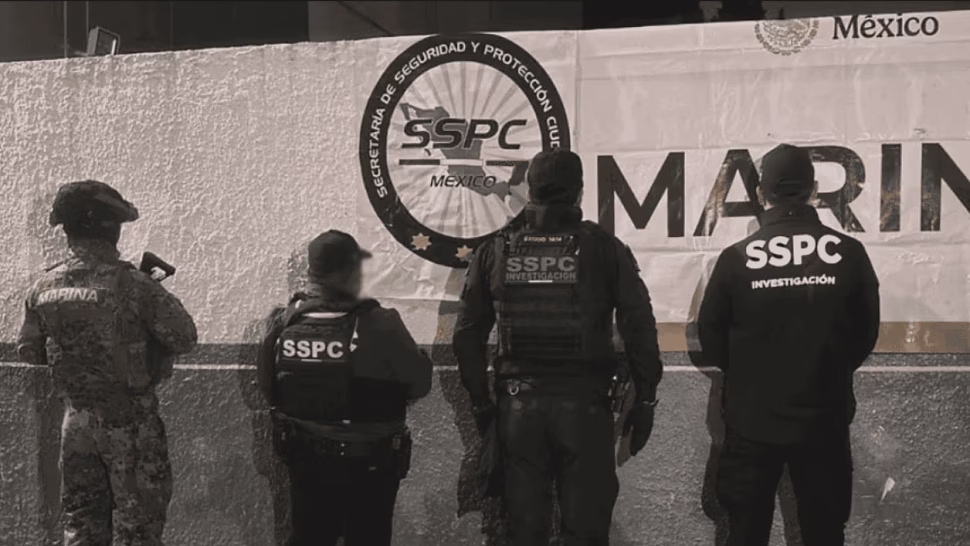
Personal de la Secretaría de Seguridad y Protección Ciudadana, la Marina Armada y la Fiscalía General de la República aseguraron 150 kilogramos de metanfetamina en Baja California. El operativo formó parte de acciones para debilitar estructuras del crimen organizado en la entidad.

Detenciones clave para el operativo

El Gabinete de Seguridad informó que el aseguramiento se derivó de la detención de dos personas, a quienes se les incautaron 68 kilos de cristal. Con esa información, los agentes federales realizaron investigaciones que llevaron al decomiso de los 150 kilos adicionales.

RelatedAuthorities seize 203 kilos of methamphetamine in a highway operation

Impacto económico y social

La droga asegurada equivale a 3 millones 750 mil dosis que no llegarán a las calles. Además, representa una afectación económica de cerca de 38 millones de pesos para las organizaciones delictivas. La sustancia fue puesta a disposición del Ministerio Público para integrar la carpeta de investigación del caso.

Continue reading