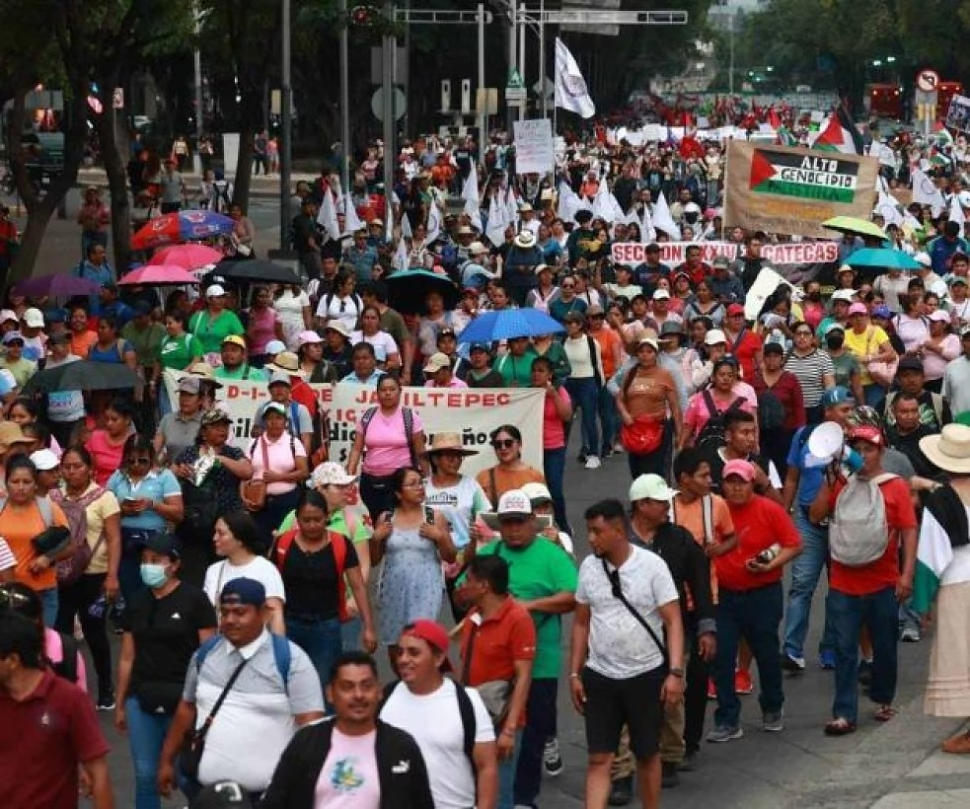
Impact of the teacher strike on the Mexican educational system
The Secretary of Education, Mario Delgado, revealed during a press conference that 9.8% of educational institutions in Mexico suspended activities due to the national strike called by the National Coordinator of Education Workers (CNTE) on May 15. According to official data, of the 202,184 registered schools, 19,974 interrupted work, directly affecting approximately 1.2 million students out of a total of 20 million in the country.
Institutional response and calls for dialogue
The Secretary of the Interior (Segob) issued an urgent statement over the weekend, urging the CNTE to resume classes to mitigate the impact on the school year. The organization stressed the need to maintain work tables and prevent prolonged protests from damaging learning, especially in entities such as Oaxaca and Chiapas, where 80% of the inactive schools were concentrated (12,404 and 3,388 schools, respectively).
“It is a priority to guarantee the right to education,” Segob emphasized. Dialogue must prevail to reach agreements without affecting the students. This position reflects concern about the closing of the 2024-2025 school year, which could face significant delays if negotiations do not advance.
Analysis of regional repercussions
The southern states of the country have been the most affected by the teachers’ movement, historically linked to wage demands and working conditions. In Oaxaca, where the CNTE has a strong presence, the strike reached 61% of schools, while in Chiapas the figure was 17%. These regions, already vulnerable in educational indicators, could experience a decline in their levels of academic achievement, according to consulted experts.
Secretary Delgado highlighted that, although the national percentage of affected schools seems low, the geographical concentration aggravates the situation: «One million 200 thousand students without classes is equivalent to the total population of cities like Querétaro or Mérida. This is not a minor issue.
Historical context and projections
This strike is part of a series of recurring teacher protests since 2006, when the CNTE emerged as a dissident against educational reforms. Analysts point out that, although the mobilizations managed to make legitimate demands visible, their repetition and focusing on key periods (such as the closing of school years) reduce their effectiveness and generate social wear and tear.
Data from the National Institute for Education Evaluation (INEE) indicates that, in previous protests, students from marginalized areas took up to 3 months to recover lost learning. In addition, school dropouts increased by 2.5% after prolonged stoppages.
What’s next? Segob and the SEP have proposed an accelerated negotiation route, but the CNTE requires written guarantees on budget increases. Meanwhile, parents demand immediate solutions to prevent their children from losing the school year.
Share this information on your social networks and help us make visible how labor conflicts affect the educational future of millions. Explore more content about public policy and education on our site.