Analysis of the Tariff Measure for Industrial Protection
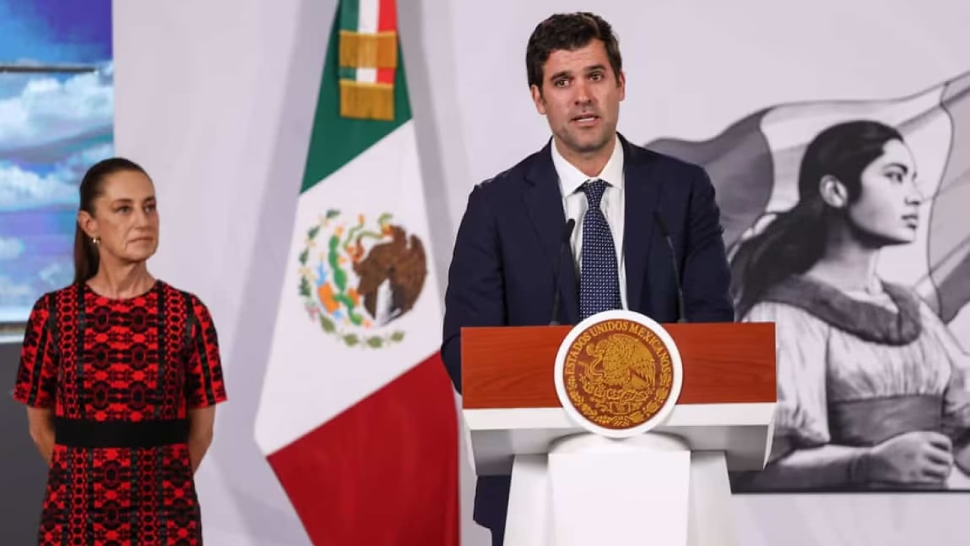
The President of Mexico, Claudia Sheinbaum, announced during her morning conference the implementation of a strategic Tariff Package, whose primary objective is to safeguard approximately 350 thousand jobs in industrial sectors considered vital for the national economy. This foreign trade policy, scheduled to come into force on January 1, 2026, represents a deliberate intervention by the State to correct imbalances and strengthen the country’s manufacturing base in the face of international competition.
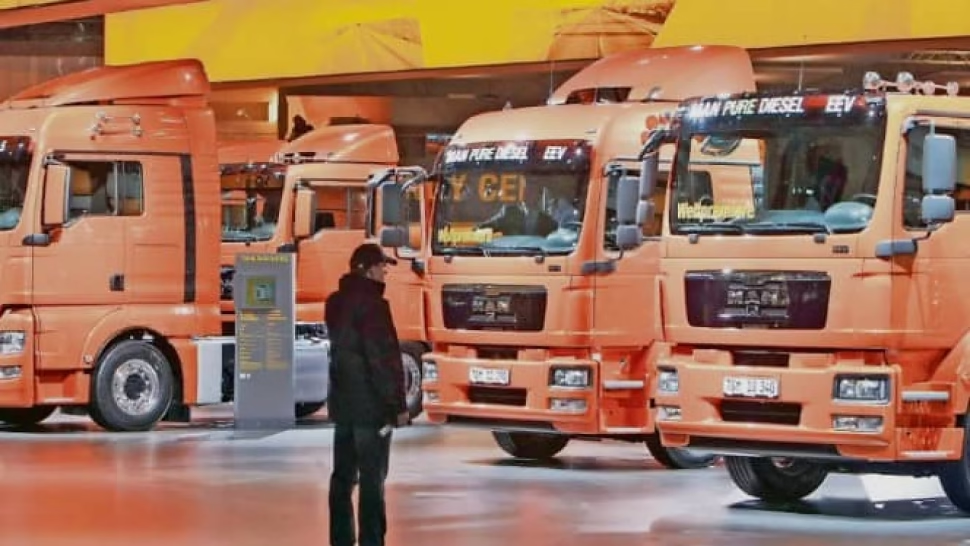
The geographical and sectoral approach of the measure is meticulous. The protection will be concentrated on the automotive, steel, footwear, textile and clothing industries, located in ten states that constitute the industrial heart of Mexico: Aguascalientes, Baja California, Chihuahua, Coahuila, State of Mexico, Guanajuato, Jalisco, Nuevo León, Puebla and Querétaro. This focus demonstrates a previous diagnosis that identifies these productive clusters as particularly vulnerable to tariff-free imports from nations with which there are no trade agreements.
Fundamentals, Collection and Diplomatic Strategy
The president stressed that the initiative is part of the Plan México, a roadmap for industrial development with justice. A crucial aspect of the official discourse was the insistence that these measures will not generate inflationary pressures on food or a wide range of final consumer products. This statement is based on the decision to keep tariffs unchanged for many intermediate products or inputs, thus avoiding making supply chains more expensive. The legitimacy of the policy is based on the explicit support of key industrial chambers such as CONCAMIN, CANACERO, AMIA and CANAINTEX, among others, which suggests a process of dialogue and consensus with the national private sector.
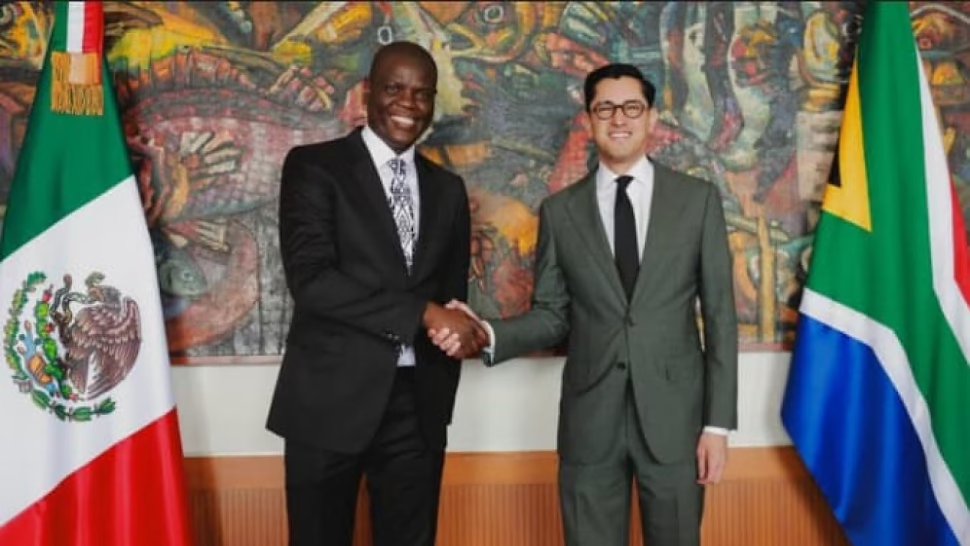
From a fiscal perspective, the package projects an estimated collection of 30 billion pesos annually. These additional tax revenues have the potential to be reinvested in economic development programs, creating a virtuous cycle between protection, collection and reinvestment. At the same time, a diplomatic component was activated to manage commercial relations. The Secretary of Economy and the Secretary of Foreign Relations (SRE) are in charge of holding negotiations with all affected countries, mainly in Asia and other regions without trade agreements with Mexico, in order to mitigate tensions and clarify that the measure is not punitive in nature against any nation, but rather a tool of defensive industrial policy.
In conclusion, this tariff package can be interpreted as a multifaceted economic policy instrument. It seeks, immediately, to act as a trade defense mechanism for strategic jobs. In the medium term, it functions as a source of financing for development. And in the geopolitical sphere, it is proposed as a tacit renegotiation of the terms of trade with non-preferential trading partners. Its success will depend on the balanced execution of these three fronts: the effective protection of local industry, the prudent management of revenues and the maintenance of constructive international relations.
Do you support measures to strengthen the national industry? Share this analysis on your social networks and explore more content about Mexico’s economy and industrial future.