Mexico implements tariffs to protect 350 thousand industrial jobs

The measure seeks to level the playing field against imports with prices below the international market, according to the Ministry of Economy.

Analysis of the Tariff Package in the context of the Mexico Plan

In an economic policy movement of significant scope, the head of the Secretary of Economy, Marcelo Ebrard, formally presented the so-called Tariff Package. This initiative, already ratified by the Legislative Branch, constitutes a central pillar within the macroeconomic strategy of Plan Mexico. Its declared objective, quantified precisely, is the safeguarding of 350 thousand jobs in the national territory, a figure that underlines the dimension of the challenge perceived by the authorities.

During his presentation at the morning conference of President Claudia Sheinbaum, Ebrard based the measure on a clear diagnosis: the absence of an “equal floor” in international trade for certain key sectors. This concept, technical in its essence, refers to competitive conditions distorted by practices that alter market prices. State intervention, therefore, is not proposed as indiscriminate protectionism, but as a corrective response to dynamics considered disadvantageous.

RelatedMexico’s Tariff Package will protect 350 thousand industrial jobs

Sectoral diagnosis and technical foundation of the measure

The official analysis identifies sources of vulnerability in strategic industries: textile and clothing, footwear, steel and, particularly critically, the automotive and auto parts industry. The argument does not focus on a supposed competitive inability of the Mexican production plant, but on the entry into the market of products with prices below international benchmarks. This situation, according to the exhibition, generates a commercial imbalance that threatens the viability of local companies and, by extension, the employment they generate.

Ebrard was meticulous in defining the geopolitical scope of the decision. He clarified that “it does not have a geopolitical design, it is a commercial and economic design“, emphasizing that the tariff instrument is not directed against specific nations, but against products that enter under the aforementioned distortion conditions, regardless of their origin. This distinction is crucial to understand the legal framework of the measure, which operates outside the current free trade agreements.

Framework of commercial relations and specific adjustments

The implementation of the package is carried out with full awareness of the commercial architecture of Mexico. The official explained that the measure mainly affects economies with which there are no current trade agreements, listing Russia, South Korea, China, India, Indonesia, Brazil, Thailand, Ukraine and Turkey. In contrast, the commitments acquired with traditional partners such as the United States, the European Union, Japan, Colombia, Chile and Vietnam are preserved.

The previous legislative process included a substantive dialogue with industrial chambers and representatives of the countries involved, which led to modifications to the original project. The most notable adjustments were made in the auto parts sector, following the industry’s argument about the immediate difficulty in replacing certain components. The final package impacts 17 economic sectors, seeking a balance between the protection and continuity of supply chains.

This policy is articulated synergistically with other components of the Mexico Plan, such as the increase in national content in the productive chains, the strategic substitution of imports, the strengthening of the Made in Mexico brand and the goal of raising national investment to 25% of the Gross Domestic Product. Altogether, an active industrial strategy is emerging that seeks to reconfigure Mexico’s insertion into global value chains, prioritizing the retention of manufacturing employment and the development of local suppliers.

The presentation also included a preview of the development poles for well-being, productive infrastructure projects whose execution would begin in the first quarter of 2026, thus complementing the tariff policy with a vision of long-term regional development.

Do you share this analysis of the new trade measures? Spread this information on your social networks to expand the debate and explore more content related to the Mexican economy and industry on our site.

Registro de líneas telefónicas en México: pasos y fecha

Aún estás a tiempo de registrar tus líneas telefónicas. Conoce cómo.

Registro de líneas telefónicas en México

El proceso de registro obligatorio de líneas telefónicas continúa en marcha. Miles de usuarios buscan regularizar números asociados a su nombre o desvincular aquellos que ya no utilizan. La medida busca depurar el padrón de telefonía móvil en el país.

¿Cómo dar de baja líneas telefónicas? Los usuarios pueden realizar el trámite a través de los portales oficiales de sus compañías o de manera presencial en centros de atención. Se requiere identificación oficial vigente y un proceso de validación de identidad, que puede incluir verificación biométrica. Una vez realizada la solicitud, el sistema confirma la baja y genera un folio o notificación. En caso de fallas técnicas, las empresas recomiendan acudir a atención al cliente.

RelatedProcess and limit of attempts for the mandatory registration of mobile lines

Fecha límite y consecuencias El plazo para completar el registro vence el 30 de junio de 2026. A partir del 1 de julio, las líneas no registradas podrían enfrentar una suspensión temporal del servicio. Esto impediría realizar llamadas, enviar mensajes o usar datos móviles. Las compañías Telcel, Movistar, AT&T y Bait han habilitado plataformas digitales y sucursales para facilitar el registro. El trámite es gratuito y requiere CURP, identificación oficial vigente y que la línea esté activa al momento de la gestión.

Las autoridades han enfatizado la importancia de cumplir con este trámite para evitar inconvenientes. La regularización es fundamental para mantener un control adecuado en el uso de la telefonía móvil en el país.

Continue reading

Filtros de acceso en el Zócalo complican la movilidad en el Centro Histórico

Largas filas y confusión por el plantón de la CNTE en el Zócalo capitalino.

Congestión peatonal por plantón de la CNTE

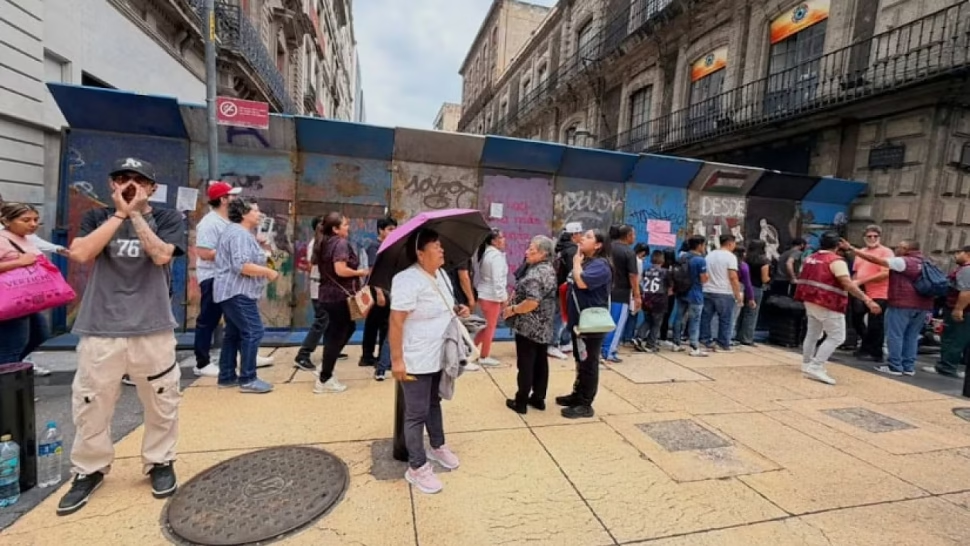
El Centro Histórico de la Ciudad de México registró alta congestión peatonal este fin de semana. La instalación de filtros de acceso y vallas metálicas en los alrededores del Zócalo generó complicaciones de movilidad, en el contexto del plantón de la Coordinadora Nacional de Trabajadores de la Educación (CNTE).

Desde el miércoles pasado, calles como Francisco I. Madero y Simón Bolívar tienen acceso controlado. Los peatones deben avanzar uno por uno para ingresar al primer cuadro de la ciudad. Esto ha provocado largas filas y confusión entre visitantes nacionales y extranjeros.

RelatedMassive concentration in the Zócalo commemorates the seventh anniversary of the 4T

Afectaciones a turistas y comercios

Turistas con equipaje buscaban sus hoteles dentro del perímetro restringido sin información clara sobre rutas habilitadas. Varios comercios del área permanecen cerrados. La actividad comercial se ha visto afectada.

En Tacuba y República de Brasil se habilitaron accesos peatonales adicionales. Personal del gobierno local orienta a los transeúntes y restringe el paso de vehículos, incluyendo motocicletas. Elementos de la Secretaría de Seguridad Ciudadana (SSC) mantienen filtros de control. Solo permiten el ingreso a quienes se dirigen a zonas específicas, como la Catedral Metropolitana.

Las autoridades locales supervisan el perímetro del Zócalo. Las restricciones continúan sin fecha de retiro informada. La movilidad y la vida comercial en el corazón de la capital siguen afectadas.

Continue reading

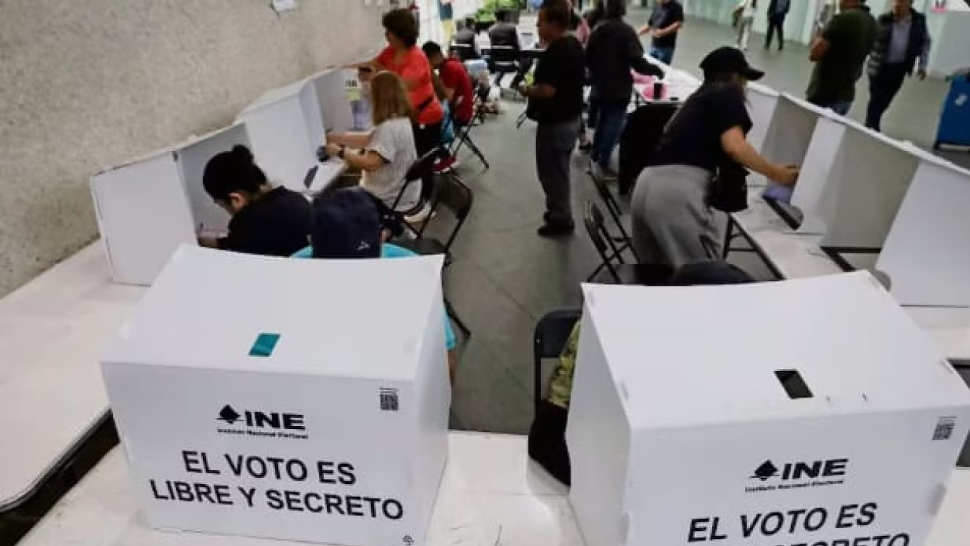
Morena denuncia compra de votos con códigos QR en Coahuila

Morena denuncia uso de códigos QR para comprar votos en Coahuila. El caso llega a la UIF.

Denuncia por coacción electoral

Morena presentó una queja formal ante el Instituto Electoral de Coahuila (IEC) por una presunta operación de compra de votos durante la jornada para renovar el Congreso estatal. Según el partido, se habrían usado códigos QR entregados a ciudadanos a cambio de dinero para favorecer al PRI.

Guillermo Santiago, diputado federal y representante de Morena ante el Consejo General del INE, señaló que existe una estructura tecnológica detrás del esquema. Por ello, el partido también acudirá a la Policía Cibernética para investigar aplicaciones, servidores y bases de datos.

RelatedMorena denounces the PAN for alleged triangulation of electoral resources

Acciones legales en curso

Además, Morena anunció que presentará una denuncia ante la Unidad de Inteligencia Financiera (UIF) para rastrear los recursos que, según sus acusaciones, habrían financiado esta estrategia. También solicitarán a la Unidad Técnica de Fiscalización del INE revisar el posible origen del dinero.

El partido aseguró que llevará el caso hasta las últimas consecuencias legales y pidió respetar la voluntad ciudadana. Hasta ahora, las autoridades electorales no han emitido una resolución sobre las acusaciones.

Continue reading