Morena proposes sanctioning the glorification of crime in audiovisual media

Analysis of the legislative proposal against the apology of crime Deputy Arturo Ávila, representative of the Morena party, has presented an initiative to modify the…

Analysis of the legislative proposal against the apology of crime

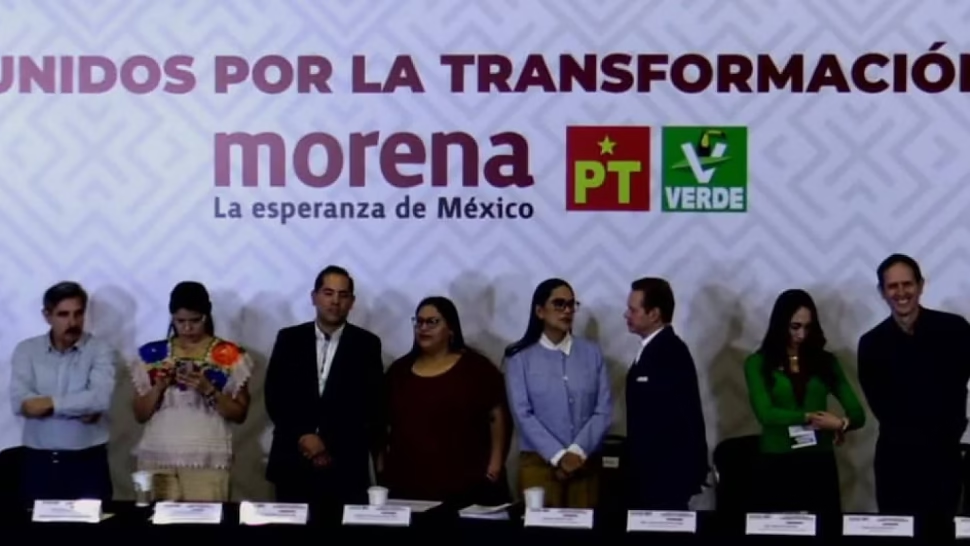
Deputy Arturo Ávila, representative of the Morena party, has presented an initiative to modify article 208 of the Federal Penal Code. This reform seeks to penalize apology for crime in various media formats, including film productions, television series, musical compositions, plays and video games.

Details of the proposed sanction

According to the explanatory statement, those who promote illicit conduct through these means would face community work, with a duration of 10 to 180 days. The legal text specifies: “If the crime is not consummated, this measure will be applied; otherwise, the provocateur will receive the corresponding penalty for his participation in the criminal act.”.

RelatedMorena deputy buys mansion in California during blockade of accounts

The proposed addition emphasizes that any content that exalts, justifies or encourages criminal activities, facilitating their imitation, will be subject to sanctions. This includes civil liability for damages resulting from the dissemination of said materials.

Objectives and social context

Ávila bases the initiative on the need to eradicate the normalization of violence, not only linked to organized crime, but also in cases of aggression against women. The measure aims to discourage the creation of content that distorts social perception of criminal behavior.

Explore more about how legislation regulates the social impact of media and share this analysis to encourage informed debate.
SNTE rejects violence and blockades in educational negotiations

The SNTE calls for dialogue and distances itself from the pressure tactics of the CNTE.

Position of the SNTE

The National Union of Education Workers (SNTE) rejected any form of blackmail, extortion, provocation, radicalization or violence as a negotiation method. This was expressed in a statement, in reference to the dialogue tables that the National Coordinator of Education Workers (CNTE) holds with the Ministry of Public Education (SEP).

The union stated that it does not support the use of strikes, blockades or other actions that affect third parties as a mechanism for political pressure. The position seeks to promote constructive dialogue and avoid harm to students and the community.

The SNTE statement occurs at a time of tension between the actors in the educational system. The union organization advocates peaceful and respectful methods, prioritizing the stability and well-being of students.

Continue reading

Felipe VI attends Spain-Uruguay in Guadalajara for the 2026 World Cup

The Spanish monarch arrived at La Perla Tapatia to support the team in a key duel.

The World Cup fever in Mexico also has an echo in European royalty. Felipe VI, King of Spain, traveled to Guadalajara to watch his team’s match against Uruguay in the 2026 World Cup.

The monarch arrived at the Guadalajara Stadium under a security operation. He accompanied the ‘Red Fury’ in a decisive match in the group stage. In the FIFA box, the king greeted fans and experienced the pre-match protocol.

Applause and attentive look

During the Spanish anthem, Felipe VI stood tall. The stadium screens showed their reaction to the first attacks of the team led by Luis de la Fuente. He even applauded Spain’s approaches.

Along with the king were local authorities and representatives of the federations of both countries. He also shared the stage with two leading figures in Spanish football: Iker Casillas and Carles Puyol, world champions in 2010. Both closely followed the performance of the new generation, considered one of the candidates for the title.

The royal presence in the Guadalajara stadium reinforces the connection between Mexico and Spain within the framework of a global sporting event. The visit of Felipe VI did not go unnoticed by the fans and the cameras that captured every gesture of the monarch.

Continue reading

Earthquakes in Venezuela: SRE reports Mexicans safe and prepares repatriation

SRE confirms that Mexicans in Venezuela are safe; 26 request repatriation.

Two earthquakes of magnitude 7.2 and 7.5 shook Venezuela, leaving 920 fatalities and 50,000 people missing so far. The Ministry of Foreign Affairs (SRE) reported that Mexicans in that country are well.

The agency, headed by Foreign Minister Roberto Velasco, did not report any deceased compatriots. In addition, he announced that they are already preparing the repatriation of a group of Mexicans who wish to return.

Diplomatic actions

The Mexican embassy in Caracas has contacted, via telephone and email, 73 people—residents or in transit.

“All of them are in good health and in safe places,” said the SRE.

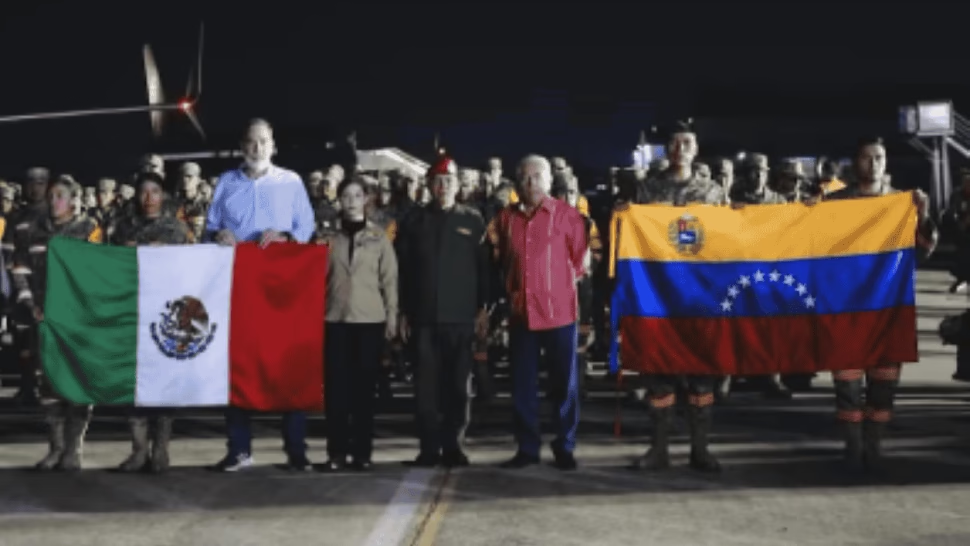
A group of 26 nationals expressed their willingness to return to Mexican territory. Their transfer will be coordinated with the flights of the Mexican Air Force that yesterday brought humanitarian aid and 250 rescue elements to Venezuela.

“The Foreign Ministry recognizes the work and professionalism of the diplomatic staff of our representation in Venezuela, who are safe and carrying out the required consular assistance and protection tasks,” the agency added.

For emergencies, the Mexican embassy in Caracas makes available the telephone number +58 412 2524675 and the email address [email protected].

Continue reading