OAS Mission arrives in Mexico to supervise judicial election
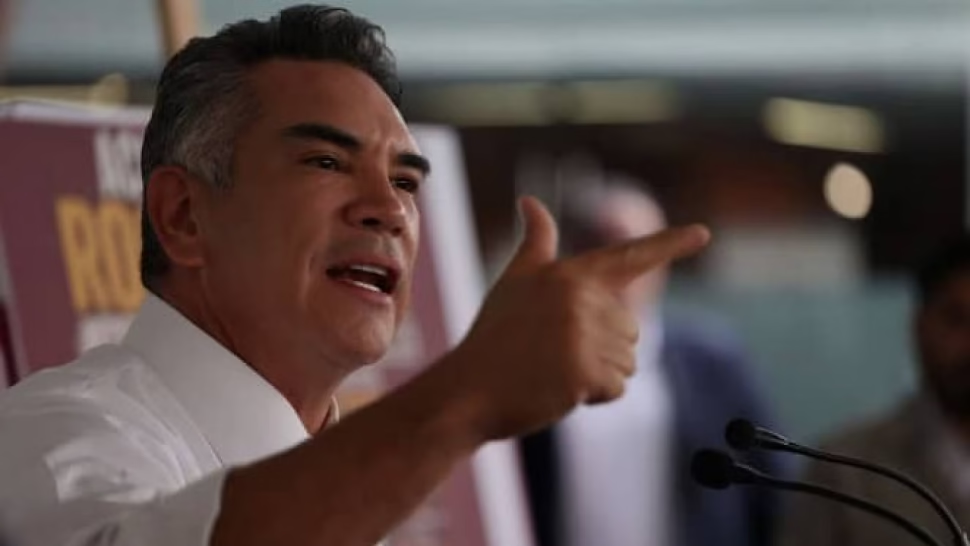
The Secretary of the Interior, Rosa Icela Rodríguez, received this Friday the members of the electoral observation mission of the Organization of American States (OAS), who will monitor the unprecedented process of popular election of magistrates in Mexico. This fact marks a milestone in the democratization of the Judiciary, an area traditionally designated through institutional means.
Mission details and key statements
The team, led by Heraldo Muñoz, former Minister of Foreign Affairs of Chile and head of the Electoral Observation Mission, was received at the facilities of the Ministry of the Interior (Segob). Rodríguez highlighted on his social networks: “They will witness the historic election to the Judiciary by the people of Mexico”, a message supported by the OAS itself.
The presence of international observers was requested by the National Electoral Institute (INE), following established protocols to guarantee transparency. President Claudia Sheinbaum emphasized that this practice is common in democratic processes: “The OAS has among its powers to be an observer in elections. They have come to Mexico many times,” she noted during a meeting with the media.
In addition to Segob, the delegates were received by the chancellor Juan Ramón de la Fuente and the Senate of the Republic, which reinforces the institutional nature of their work. Sheinbaum anticipated that the process will be “free, transparent and historic”, underscoring his confidence in the solidity of the Mexican electoral system.
Context and international relevance
The OAS’s participation in Mexican elections goes back decades, but this is the first time it focuses on a judicial process. Experts in electoral law highlight that international observation provides credibility and allows the identification of areas for improvement in regulatory frameworks. Mexico thus joins countries such as Bolivia and Ecuador, where the organization has evaluated judicial reforms.
The mission will deploy standardized methods: analysis of the electoral roll, access to means of challenge and conditions of equity for candidates. Its final report, with non-binding recommendations, will be key for future processes.
Why is it relevant? This election could set precedents for democratizing judicial bodies in Latin America, a region with challenges in independence and accountability. The OAS acts as guarantor of international standards in a context of increasing citizen scrutiny.
Share this analysis on your social networks and join the conversation about the future of justice in the region. Explore more content about democracy and transparency on our site.
Note: This content was updated at 6:00 p.m. on 05/31/2025 to include official statements.