A scientific committee will decide on the future of gas in Mexico
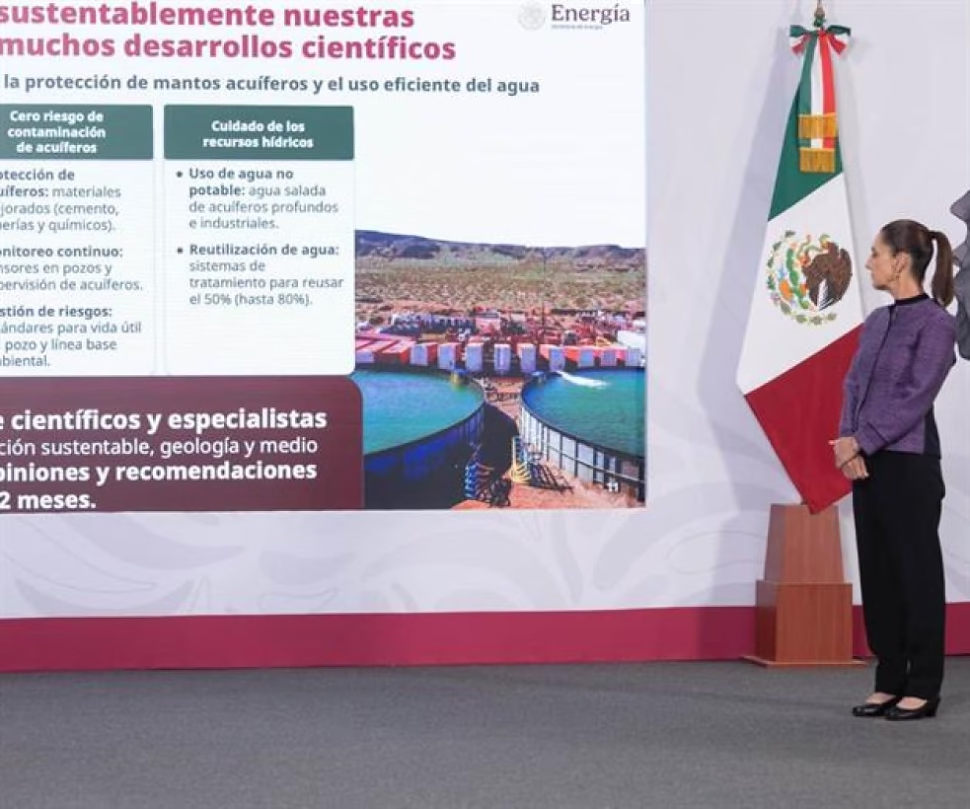
President Claudia Sheinbaum presented a new energy strategy with a key ingredient: a committee of specialists that will have two months to give its verdict on the exploitation of unconventional gas fields. The measure comes while the country imports three quarters of the gas it consumes.
“What do we put at the center? Sovereignty. What do we put at the center? The development of the country. What do we put at the center? The environmental future,” Sheinbaum said in his morning conference.
But among so many rhetorical questions, there is a figure that does not admit of doubt: Mexico imports 6,800 million cubic feet of gas per day, mainly from Texas. It only produces 2.3 billion. This dependence, according to Energy Secretary Luz Elena González, makes us vulnerable to international prices and other people’s decisions.
Between urgency and caution
The official discourse navigates between two waters. On the one hand, this scientific committee that will be presented next Wednesday is announced with great fanfare. On the other hand, it is recognized that any development will take 10 to 15 years. Urgency or theater?
Meanwhile, Pemex already has the numbers mapped. Its director Víctor Rodríguez Padilla explained that there is enormous potential: 141,494 million cubic feet in unconventional deposits. That is almost double that of conventional ones.
The strategy promises three pillars: more efficient equipment, more renewable energy and exploiting our own gas reserves. But the third point comes with an asterisk: subject to the committee’s recommendation.
Here’s the interesting thing: for four months, a technical team has been traveling to Texas, California and Canada looking for “new technologies” for this exploitation. Curious itinerary for someone who talks so much about sovereignty.
Memory is long in this country. Every time “unconventional gas” and “new technologies” are mentioned, a certain word begins to float around the room even though no one says it: fracking. And that word comes with its own history of environmental controversies.
So we have a committee ahead of us, alarming figures of energy dependence, and promises for decades to come. Meanwhile, we continue buying 75% of the gas from our northern neighbor. The two-month clock for recommendations has already started ticking.