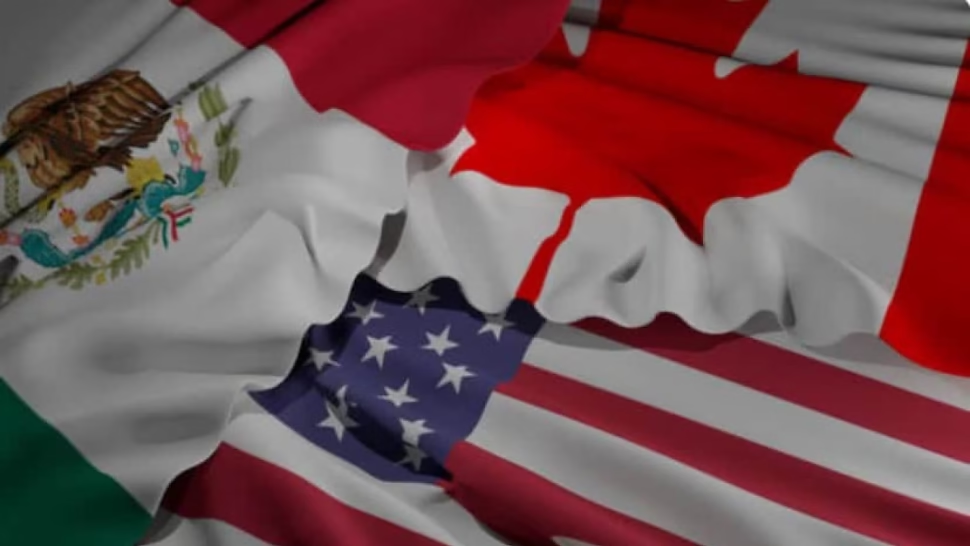
The review of the Treaty between Mexico, the United States and Canada (T-MEC) entered a decisive stage. The Federal Government informed Congress that the negotiations with the United States reduced the pending issues from 54 to 14, according to a report from the Ministry of Economy published in the Parliamentary Gazette.
The issues that are still on the table
Both nations will hold a new round of negotiations on July 20. The objective: define the next steps, address the priority issues and make the results known. Among the concerns of the United States are the loss of manufacturing jobs, dependence on supply chains from third countries, the trade deficit, rules of origin and economic security.
Mexico maintains that these challenges can be resolved with a regional strategy that strengthens production in North America and reduces dependence on Asian imports.
Mexico’s proposals
As part of its negotiating position, Mexico presented 13 proposals. Among them, the elimination of tariffs applied by the United States under Section 232 to strategic sectors such as steel, aluminum and the automotive industry. The federal administration believes that withdrawing these measures would strengthen regional competitiveness and give greater certainty to investments.
In addition, the Mexican government seeks to promote investments in strategic industries: semiconductors, medicines, electronics and computing technologies. The purpose is to expand the productive capacity of North America, reduce dependence on critical inputs from abroad and strengthen competitiveness against other economic blocks.