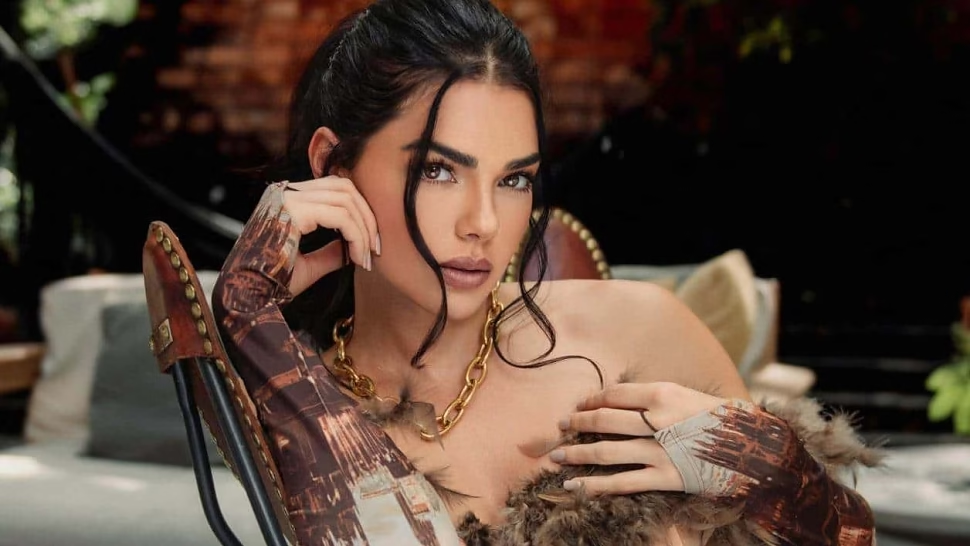
Lupillo Rivera files a legal countersuit against Belinda

Rivera's lawyer files a complaint for falsehood and fraud, revealing key inconsistencies in the singer's initial accusation.

Analysis of Lupillo Rivera’s Counterclaim against Belinda

The Mexican legal environment has been immersed in a complex, high-profile litigation after the presentation of a countersuit by the singer Lupillo Rivera in response to the initial complaint filed by the artist Belinda. This legal procedure, far from being a mere replica, constitutes a strategic maneuver based on allegations of falsehood and alleged procedural fraud. The detailed investigation of the facts reveals a multi-layered narrative, where the contradictory statements of the original plaintiff have become the central pillar of the Mexican regional interpreter’s defense.

Rivera’s legal representation, led by Mr. Alonso Beceiro, has meticulously broken down the foundations of his legal action. The basis of the counterclaim is based on an apparent substantial inconsistency within Belinda’s initial statement. According to the documentation to which we have had access, the singer initially claimed to have had a sentimental relationship with Lupillo Rivera. However, in a later phase of the process, specifically when requesting protection measures, he would have modified his testimony, ensuring that the relationship was strictly of a work nature. For Rivera’s legal team, this divergence is not a simple discrepancy, but the manifestation of a declarative falsehood that seeks to alter the perception of the case.

RelatedLupillo Rivera faces Belinda’s lawsuit with a countersuit

Legal Foundations and Application of the Olimpia Law

A crucial aspect that demonstrates the sophistication of the legal strategy is the use of the same legal tool used by the counterparty: the Olimpia Law. This legislation, designed to punish digital violence and the dissemination of intimate content without consent, is the framework under which Belinda proceeded. Rivera’s defense has reversed this approach, arguing that it is the alleged erotic and sexual videos, mentioned in the original complaint, that do not find evidentiary support. Lawyer Beceiro has been emphatic in pointing out the absence of concrete evidence that demonstrates that his client has disseminated material of that nature. What Rivera made public, it is alleged, was evidence of the relationship itself, a link that Belinda herself acknowledged in her first official statement.

The investigation delves beyond accusations of falsehood, introducing a potentially more serious element: discrimination. The statements of the legal representative suggest that, as can be seen from the writings presented by Belinda, there would be a discriminatory motivation behind her attempt to deny the relationship. Beceiro indicated that the singer’s writings could be interpreted as an attempt at distancing based on the fact that “Lupillo does not meet her current criteria, physical criteria, the color that she would prefer.” If this intention is proven, the legal scenario would become considerably more delicate, since a component of violation of fundamental rights and the dignity of the person would be incorporated.

The analysis of this case transcends the show and delves into the functioning of the judicial system in the face of accusations of gender violence and digital violence. It raises critical questions about the burden of proof, the consistency of testimony, and the strategic use of laws designed to protect victims. Each procedural move is scrutinized, not only by the courts, but by public opinion, establishing a precedent for how these conflicts develop in the digital age. The rigor in the presentation of evidence and narrative coherence will, without a doubt, be the determining factors for the resolution of this legal framework.

This court case, which by all indications is just beginning, exemplifies the complex intersection between the private lives of public figures, criminal law, and the battle for narrative in the media. The counterclaim is not only an instrument of defense, but a legal offensive that seeks to dismantle the original accusation point by point, exposing its possible vulnerabilities before a judge. The subsequent development of this case will provide an invaluable case study on the evolution of digital rights and personal reputation litigation in Mexico.

Did you find this analysis of the legal conflict revealing?Share this article on your social networks to keep your community informed and explore more content related to the impact of digital laws on the entertainment industry.

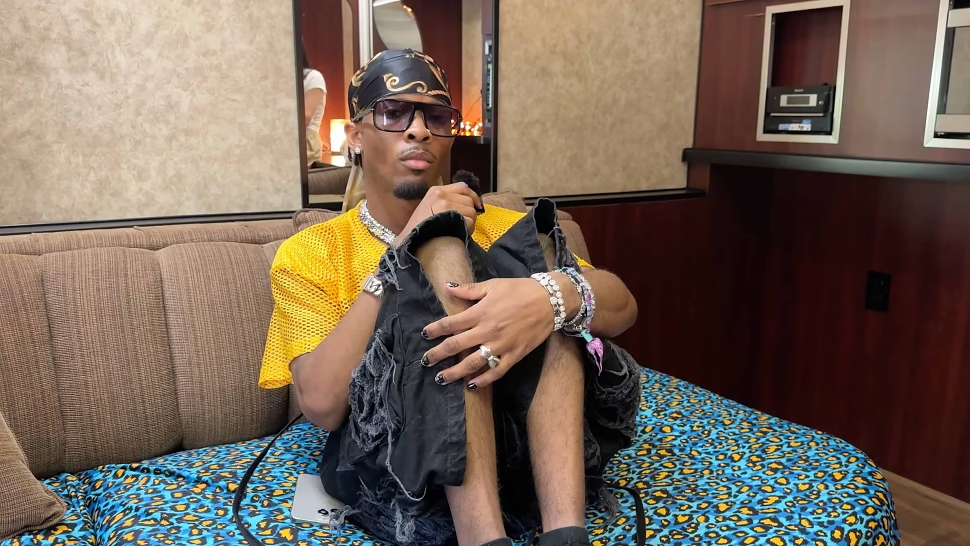
Qween Jean: primera persona trans en ganar un Premio Tony

Primera persona trans en ganar un Tony: Qween Jean hace historia en Broadway.

Un hito en los Premios Tony

Vestida de lila, Qween Jean subió al escenario para recibir el premio a Mejor diseño de vestuario de un musical por Cats: The Jellicle Ball. Su victoria en los Tony 2026 marcó un precedente: se convirtió en la primera persona abiertamente trans en ganar este galardón, el máximo reconocimiento del teatro en Estados Unidos.

Al aceptar la estatuilla, Jean envió un mensaje directo a la comunidad LGBTQ+. “Esta experiencia ha sido monumental. Estamos aquí por el legado de las personas queer, las personas trans. Tenemos que ocupar nuestro espacio. Tenemos que cambiar el paradigma”, declaró desde el escenario.

RelatedMexico ranks second in homicides of LGBT+ people in Latin America

También se refirió al contexto social actual. “El mundo en este momento está combatiendo profundamente tantas dolencias, y sabemos, como sociedad, que cuando nos unimos podemos hacer cambios reales y permanentes”, agregó.

Activismo y representación

Además de su trabajo teatral, Qween Jean es activista y fundadora de la organización Black Trans Liberation. Ha participado en manifestaciones y campañas por los derechos de las personas trans y queer en Estados Unidos, convirtiéndose en una voz visible dentro de la comunidad.

La producción que le dio el triunfo histórico es una reinterpretación contemporánea de Cats, inspirada en la cultura ballroom y en las comunidades negras y queer que durante décadas han construido espacios de expresión artística.

Aunque en años recientes artistas no binarios como Alex Newell, J. Harrison Ghee, Cole Escola y Toby Marlow ya habían hecho historia en los Tony, la victoria de Qween Jean representa un nuevo paso en la representación de las personas trans dentro de Broadway.

Continue reading

Polémica por ‘La niña futbolista’ de Julieta Venegas: desactivan comentarios en YouTube

Fans de Julieta Venegas critican su nuevo cover para el Mundial 2026 y recurren a otros videos para expresar su descontento.

A nueve días del lanzamiento de La niña futbolista, Julieta Venegas desactivó los comentarios en YouTube. La medida no frenó las críticas. Usuarios inconformes migraron a otros clips de la cantante, como Me voy, para externar su opinión.

¿Por qué desactivaron los comentarios?

El tema, un cover de la banda mexicana Los Patita de Perro, fue lanzado para el Mundial 2026. Sin embargo, muchos seguidores consideran que Venegas politizó su música con un enfoque feminista. Hasta sus fans más leales han mostrado antipatía.

RelatedJulieta Venegas defiende canción por la niña futbolista

Reacciones en la red

En el video de Me voy, los comentarios se multiplicaron. Algunos de ellos:

“Aquí es donde me dijeron que podía venir a hablar mal de la canción del Mundial”.
“Ni con limón ni sal se cura lo que hiciste”.
“La importancia de ahorrar para el retiro y no aceptar cualquier propuesta por dinero”.
“Entré a criticar la canción del mundial y me llevé la gran sorpresa de que aquí estamos todos”.

La controversia podría repercutir en la carrera de Venegas, conocida por su conexión con el público. La reacción negativa plantea dudas sobre el futuro de su música y su relación con los seguidores.

Continue reading

Paulina Rubio y su productora, ¿romance en el aire?

Abee asegura que su expareja podría tener un romance con Paulina Rubio.

La cantante Abee, expareja de la productora Pamela Velez, ha encendido los rumores al asegurar que Velez y Paulina Rubio podrían tener una relación sentimental. En entrevistas recientes, Abee recordó detalles de su noviazgo con Velez que hoy le parecen sospechosos.

Declaraciones de Abee

Abee señaló que durante los tres años que vivió con Velez en Miami, Paulina Rubio solía llamar con frecuencia a su entonces pareja. “Cuando estábamos juntas, ella prefería no contestar”, dijo. En una ocasión, Rubio preguntó directamente si Velez aún tenía novia, lo que Abee consideró extraño.

“¿Quién lleva a su productora a un juicio familiar? Hay un apoyo más allá de la amistad”, declaró la cantante.

Aunque reconoce que la ruptura no se debió a Paulina, Abee cree que ahora podría haber un vínculo romántico entre ambas.

RelatedPaulina Rubio is conspicuous by her absence at her son’s birthday

¿Quién es Pamela Velez?

Pamela Velez es una productora dominicana radicada en Miami. Ha trabajado con artistas como Shakira, Becky G, Carlos Vives, Manuel Turizo y, por supuesto, Paulina Rubio. Este año ganó un Grammy por su labor como ingeniera de grabación en el disco de Alejandro Sanz. Actualmente, produce en el sello Addicted 2 FAME, colaborando con figuras como Lady Gaga y Akon.

Los rumores sobre su relación con Rubio surgieron tras ser vistas juntas en eventos privados. Hasta ahora, ninguna de las involucradas ha confirmado ni desmentido la información.

Continue reading