


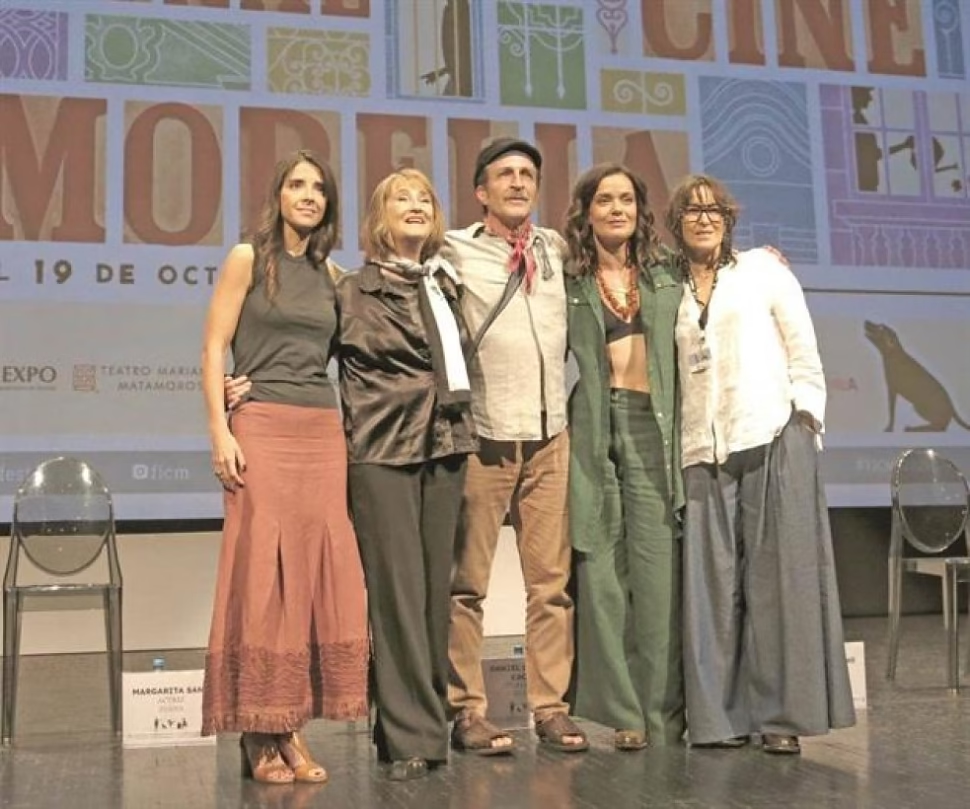
From established actor to new director: The debut that no one expected
It seems that the crisis of 40 (or 60, who’s counting) hit Daniel Giménez Cacho in a very specific way. After a career that has given us everything from the historical drama in “Zama” to the rantings of Almodóvar in “La Mala Educación”, the actor decided that playing complex characters was no longer enough. He needed the maximum level of stress: directing his debut film. And what better setting for this film baptism than the Morelia International Film Festival (FICM), the place where the crème de la crème of national cinema will be judged by their peers. Everything very quiet.
The film is called “Juana”, a seemingly simple name for a story that is anything but that. Imagine having to carry not only the traumas of an investigation into femicides that cost the lives of two colleagues (one of them, your romantic partner), but also the ghosts of a personal past full of abuse. The protagonist, a tortured journalist played by Diana Sedano, is basically living our worst day multiplied by a thousand, every day. Giménez Cacho, in his role as a rookie director, describes it as “getting inside, inside, to dig one’s own wounds.” In other words, an intensive therapy session but with a camera and lights.
From the stage to the set: Or how your previous experience does not save you from panic
Good Daniel did not arrive at zero. He had experience as a theater director, which, according to him, gave him certain tools. But let’s face it, directing films is like going from driving a golf cart to driving an F1 in Monaco. The scale, the technology, the pressure… everything is another level. In an interview, he dropped the gem: “Everything you learn in this process, how outrageous!” Millennial translation: “I Googled ‘how to direct a movie’ at 3 a.m. and cried a little.”
His background as an actor, however, was his superpower. It made it possible for him to direct a luxury cast that includes Margarita Sanz, Nailea Norvind, Arturo Ríos and Ángeles Cruz. He knew how to communicate, understand the rhythms and internal processes of his colleagues. The curious thing was his own cameo in the film. Was it a divo’s whim? Not at all. The explanation was much more relatable: they couldn’t find an actor to play a psychiatrist. So, in a “fine, I’ll do it myself” move, he put on the suit. The shortage of talent: the true muse of surprise appearances.
“You understand the rhythms, you understand the internal processes, you know how to communicate,” the director said about his transition. “That’s why it’s very important to be clear about what you’re looking for when acting… Choose those that are going to match the type of film. Here a strong commitment was needed, to get inside, inside, to dig into one’s own wounds.”.
A plot that hurts (and it’s not just because of the budget)
What drives an actor of his career to choose such a heavy subject for his debut? The answer is not “I wanted a challenge.” It’s much more visceral. The spark was the raw and chilling violence against journalists in Mexico. To put it in context: according to Reporters Without Borders, in 2024 Mexico was the third deadliest country in the world for the practice of journalism, only behind areas in open conflict such as Gaza and Pakistan. A statistic to frame and hang in the room of national despair.
“It shocked me a lot that the social service they do suddenly faces death”, confessed Giménez Cacho. This reflection led him to an uncomfortable and fundamental question: Why would someone dedicate themselves to this profession knowing that it could put their life at risk? And the most disturbing thing, as he says, is that many of the journalists he spoke to during his investigation had never asked themselves that question. Courage autopilot is a survival mechanism, it seems.
But the film does not stop at social denunciation. It adds an extra layer of personal trauma to Juana: a father who sexually abused her, triggering serious mental health problems. Because, why suffer for one thing when you can suffer for all of them at the same time? Regarding this intertwining of violence, the director explained the work with the Spanish screenwriter Emma Bertrán: “What happens when you deny something and hide it and you don’t want to see it and how those wounds continue and send you messages from the unconscious that arrive despite you”. Basically, it is the cinematic embodiment of that tweet that says “your trauma doesn’t define who you are, but how you browse Amazon at 2 a.m.” Only with more deadly consequences.
“Juana” is presented, therefore, not only as a thriller about impunity, but as a psychological journey to the heart of wounds that do not heal. It is an artist’s attempt to understand bravery from the trenches of fiction, an uncomfortable mirror for a society that often prefers to look away. Giménez Cacho did not choose an easy path for his first time; He chose a necessary one, a story that hurts because it is, sadly, ours.
Are you intrigued by this journey to the dark side of journalism and the human mind? Share this article on your social networks and get more people talking about this important film debut. Explore more content about Mexican cinema and the stories that are defining our era.


