Zelenskyy accelerates Patriot production and hits inside Russia

kyiv negotiates with Raytheon to manufacture Patriot interceptors while attacking strategic Russian targets.

Ukraine advances in production of Patriot interceptors

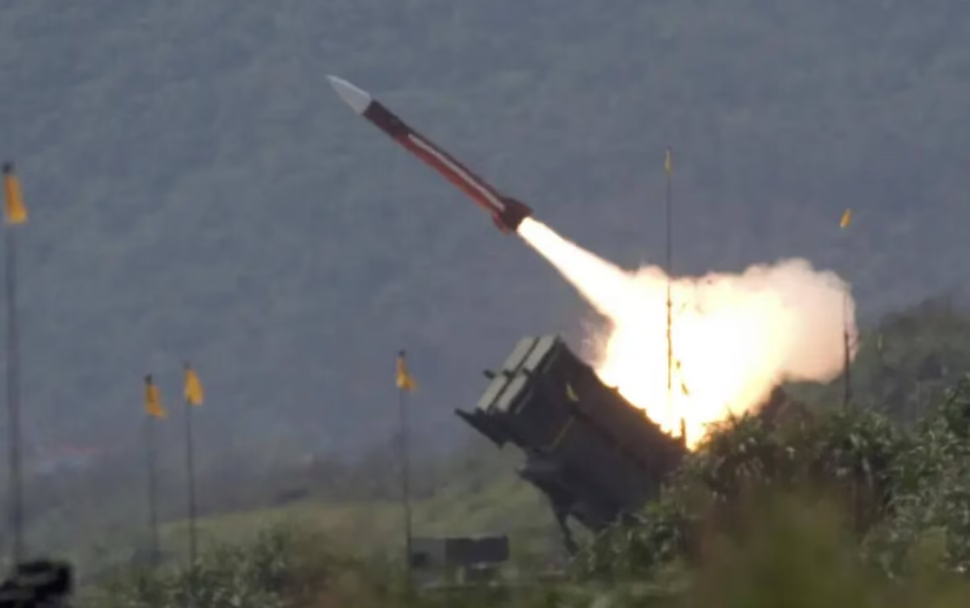
President Volodymyr Zelenskyy met in kyiv with executives from Raytheon, the American firm that manufactures Patriot air defense systems. The objective: to carry out a project for the joint production of interceptors, essential to protect the country from Russian ballistic missiles.

The meeting occurred weeks after Donald Trump announced that he would grant Ukraine a license to manufacture the Patriots. Zelenskyy assured that both parties will maintain permanent contact to close the agreement. However, specialists warn that local production could take several years.

RelatedUkraine deploys new Patriot systems against Russian air offensive

Drone offensive in Russian territory

While strengthening its air defense, Ukraine maintains a drone campaign against strategic targets inside Russia. In recent days, they attacked logistics centers for Wildberries—the country’s largest online retailer—as well as an oil facility and a military plant located more than a thousand kilometers from the border.

Ukrainian authorities maintain that these attacks seek to weaken Russian logistical and economic capacity, in addition to bringing the effects of the conflict to enemy territory. For its part, the Russian Defense Ministry reported that it shot down 571 Ukrainian drones overnight.

The war enters a new phase marked by military technology and long-range attacks. Ukraine seeks to strengthen itself with American support, as Russia faces growing pressure over damage to its strategic infrastructure.

Iranian drones intercepted in Iraq raise regional tension

Five drones intercepted in Irbil; Iran's Revolutionary Guard claims to have attacked bases in Kuwait and Bahrain

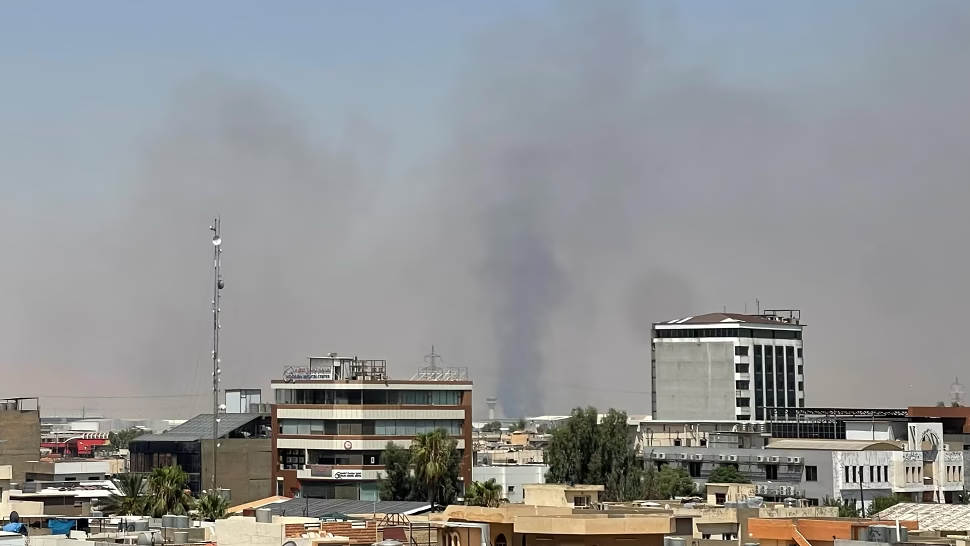
Tensions between the United States and Iran intensified this Friday after the interception of several drones with explosives over the city of Irbil, in northern Iraq. The events occur in the midst of continuous US bombings against Iranian territory.

Escalation in the Middle East

U.S.-led forces shot down five drones heading toward a base with U.S. troops in Irbil, according to Iraqi security officials. No victims were reported. The incident set off alarm bells in Bahrain and raised tension in a key region for global energy supply.

At the same time, Iran’s Revolutionary Guard claimed to have attacked US military facilities in Kuwait and Bahrain. However, US Central Command did not confirm those claims.

The new escalation represents a challenge to the stability of the area, where any direct confrontation could affect the flow of oil. So far, Washington has not issued an official statement on the attacks claimed by Tehran.

Continue reading

China imposes restrictions on 14 European entities

Beijing applies measures against EU firms due to sanctions on Chinese companies linked to Russia.

China has announced new trade restrictions against 14 European entities. The measure responds to the sanctions that the European Union imposed on Chinese companies for their alleged indirect support for Russia in the Ukraine conflict. Tension between Beijing and Brussels intensifies over the control of goods with possible civil and military applications.

The Chinese Ministry of Commerce reported that European firms included on the list will no longer be able to receive exports of dual-use items manufactured in China. In addition, foreign companies are prohibited from supplying products of Chinese origin that can be used in both civil and military activities to these organizations.

Among the affected companies are firms from the Czech Republic, Italy, Germany and France. They are dedicated to sectors such as vehicle manufacturing, electric motors and drones. Beijing assured that the restrictions seek to protect its security and national interests, as well as comply with international commitments related to non-proliferation.

Continue reading

US partners reject Trump’s new wave of tariffs

US partners reject new taxes. What effect will they have on global trade?

Global rejection of the new US tariffs

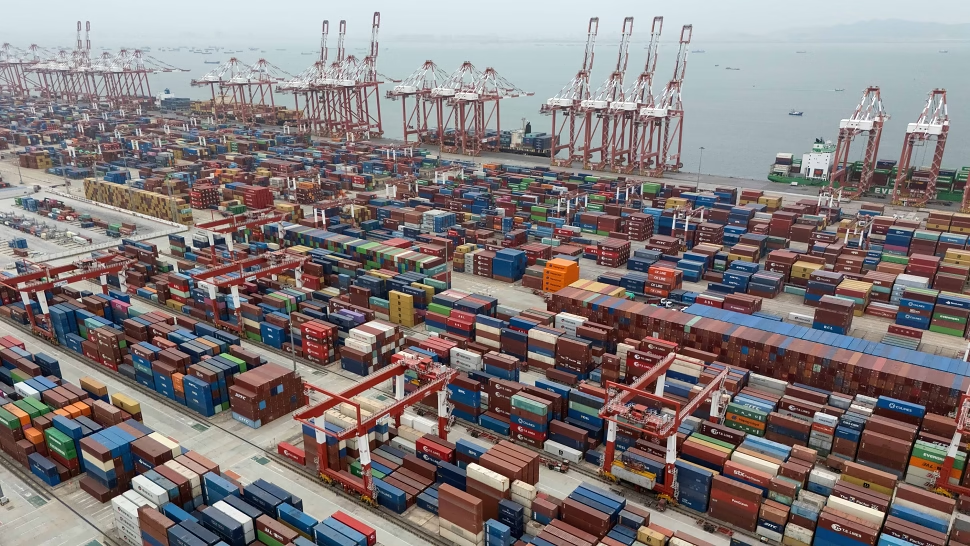
This Friday, the White House activated a new round of taxes ranging from 10% to 12.5% on products from 60 economies. The measure, justified by alleged failures in the adoption of standards against forced labor, provoked an almost unanimous reaction from trading partners.

Australia and New Zealand were the first to speak out. Both countries rejected Washington’s accusations and assured compliance with international labor standards. They requested the immediate elimination of tariffs.

Japan also protested. He recalled that there was a previous agreement with the United States to maintain a rate of 10% and affirmed that its trade rules adjust to global criteria.

China reiterated its rejection of “all forms of unilateral tariffs” and maintained that trade wars do not benefit either party.

Chinese exporters acknowledged that the new tariffs are lower than those of 2025, but pointed out that uncertainty has led them to diversify markets, increasing their sales to Europe.

South Korea and Thailand opted for the path of dialogue. They announced that they will hold talks with Washington while evaluating the impact on their exports.

Long-lasting tariffs?

Specialists consider that these liens have a better chance of remaining in force as they are supported by an investigation under Section 301 of the United States Trade Act. This gives them a more solid legal basis than previous measures.

The European Union and Singapore, for their part, described the decision as unjustified and warned that it will affect the stability of international trade.

Continue reading