Leo XIV calls for world peace without naming conflicts in his first Easter

The new Pope breaks with tradition by avoiding naming specific wars in his first Easter message, focusing on general criticism.

A different message from San Pedro

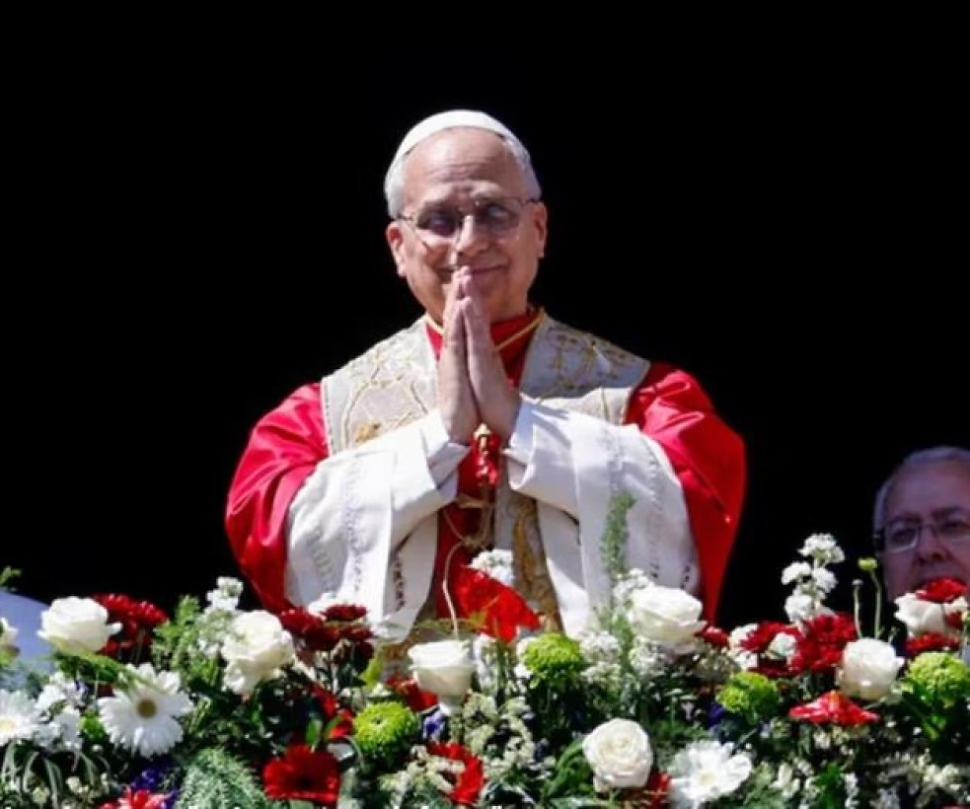
The first thing that catches your attention: the silence. In his first Easter message, Pope Leo XIV broke with a decades-old tradition. He did not mention Ukraine. He didn’t name Gaza. Not Syria, not Haiti, not any specific conflict.

From St. Peter’s Square, the new Pontiff opted for a different approach. Instead of the usual geopolitical recounting, he launched a broad critique against what he called the “normalization” of suffering.

“We cannot continue being indifferent,” he expressed, taking up the concept of “globalization of indifference” of his predecessor Francisco.

The strategy behind silence

This change is not coincidental. By avoiding proper names, Leo XIV avoids immediate diplomatic positions that could complicate future mediations. But you also run the risk of making your message seem generic.

RelatedCelebrities say goodbye to Pope Francis with emotional messages

The warning was clear: “The world is getting used to violence.” He criticized this growing insensitivity to death and the economic consequences of the clashes.

His call was direct to those who have the capacity to initiate conflicts: put aside “all desire for dispute, dominance and power” and opt for dialogue.

The concrete thing came at the end: he announced a prayer vigil for peace on April 11 in the Vatican. He stressed that true peace goes beyond the silence of weapons—it must transform people.

First diplomatic move of the new Pope: broad in principles, careful in details. We will see if this general approach achieves more resonance than the specific condemnations of the past.

US without response to 233 extraditions requested by Mexico

Of 269 extradition requests from Mexico to the US, 233 remain unanswered. Sheinbaum and Blanche clash.

The Deputy Attorney General of the United States, Todd Blanche, seemed surprised when asked about the extradition requests from Mexico that Washington has not responded to. During the White House Correspondents’ Dinner, Blanche mentioned the “extradition agreement” and said those requests “should be reviewed.”

The most visible case is that of the former governor of Tamaulipas, Francisco García Cabeza de Vaca, who lives in the United States. President Claudia Sheinbaum has denounced the lack of American response.

“He has dual nationality. He is a Mexican citizen and an American citizen, he lives in the United States. Mexico has requested his extradition… and there has been no response from the United States Government,” Sheinbaum lamented in his morning conference.

According to data from the Mexican government, between 2018 and 2026, 269 requests were made for people accused of various crimes. Of that number, 233 have no resolution from the US authorities.

Accusations and politics

García Cabeza de Vaca faces charges from the Attorney General’s Office for alleged links to organized crime, money laundering and tax fraud. The former PAN president published a video on X accusing Sheinbaum of being “misinformed.”

Since his residence in the US, he has participated in events of the Conservative Political Action Conference (CPAC) along with other PAN politicians, including migrant congressman Raúl Torres Guerrero, where they called for US military actions in Mexico.

Contracts and a homicide

Between 2017 and 2019, companies linked to brothers Sergio and Julio César Carmona received contracts from the Tamaulipas government for about 335.8 million pesos. In August 2025, the state Ministry of Health revealed 70 complaints, 14 of them criminal, against García Cabeza de Vaca and former officials for these contracts.

Sergio Carmona was deprived of his life in November 2021 while being treated at a barbershop in San Pedro Garza García, Nuevo León, amid a claim of non-payment to the former governor.

The current governor of Tamaulipas, Américo Villarreal (Morena), has been linked by García Cabeza de Vaca’s political group with Carmona. A source from the Villarreal government declared: “From the American Union… I feel that they have been giving their versions, to which we have not had the consideration… to have a counter reply.”

Security cooperation between both countries continues, but the pending extradition file adds tension to the bilateral relationship.

Continue reading

Knife attack in Paris leaves three women injured

Three women attacked with a knife in Paris; none are in critical condition.

Attack on Porte de Clichy

None of the three women attacked this morning with a knife in the Porte de Clichy area, northwest of Paris, is in critical condition. This was reported by the Minister of the Interior, Laurent Núñez, after the meeting of the Council of Ministers.

Two of them suffered serious injuries: one in the back and another in the abdomen. The third suffered minor injuries caused by the blades of the two kitchen knives that the attacker was carrying. The victims are 19, 24 and 36 years old. The attack occurred around 11:30 in the morning.

Arrest and reactions

The attacker was intercepted by an off-duty police officer. Núñez thanked him for his bravery. Before the authorities, the suspect only gave general information and unconnected phrases. The minister asked for caution about the reasons for the act.

In a video circulating on social media, the alleged attacker is heard saying: “It was Allah who ordered it to me.” However, Núñez insisted that it will be the judicial process that determines the motive. According to the newspaper Le Parisien, the attacker is 31 years old and may not be of full use of his mental faculties. The authorities continue the investigation.

Continue reading

Colombia breaks diplomatic ties with Cuba and closes embassies

The Colombian president-elect breaks ties with Cuba and cuts his diplomatic presence.

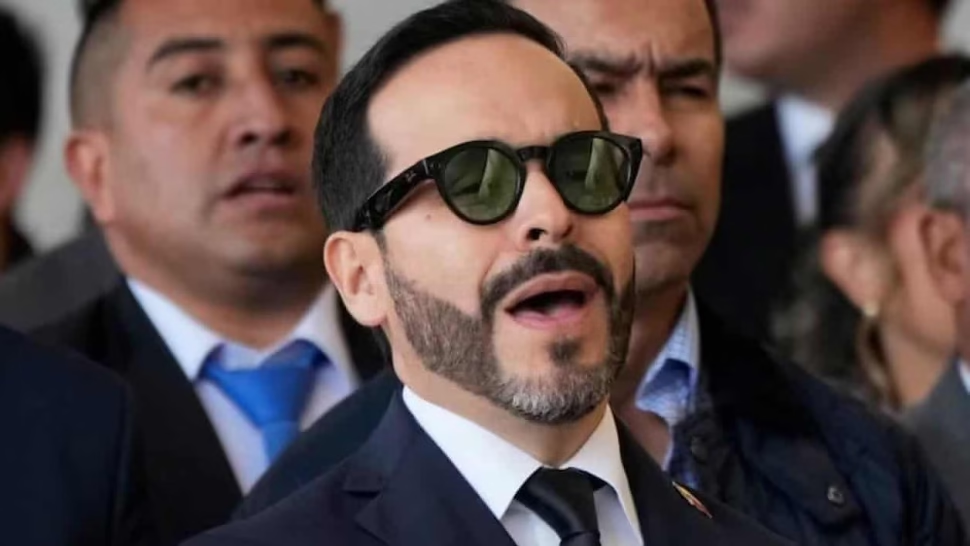
The elected president of Colombia, Abelardo de la Espriella, confirmed in a message released this Sunday that he will break diplomatic relations with Cuba. The decision is aligned with what was previously done by Ecuador and Costa Rica.

In addition, it announced the closure of 14 embassies and 15 consulates in countries such as Nicaragua, Algeria, the Czech Republic, Ghana, Hungary, Senegal and South Africa. These nations will maintain concurrent representation upon coming to power.

A single ambassador for several countries

He explained that the same ambassador will attend multiple representations in the same country. He clarified: “These decisions do not mean breaking diplomatic relations with those countries or with multilateral organizations. The exception is Cuba and Nicaragua.”

The next president also reported that he will suspend the opening of the embassy in Palestine, but will authorize the reopening of the consulate in Israel.

Regional background

In early March, the government of Ecuador closed the Cuban diplomatic headquarters in Quito and declared its ambassador persona non grata. Days later, the then president of Costa Rica, Rodrigo Chaves, also ordered the closure of the island’s embassy in San José.

Continue reading