The pending account of inequality
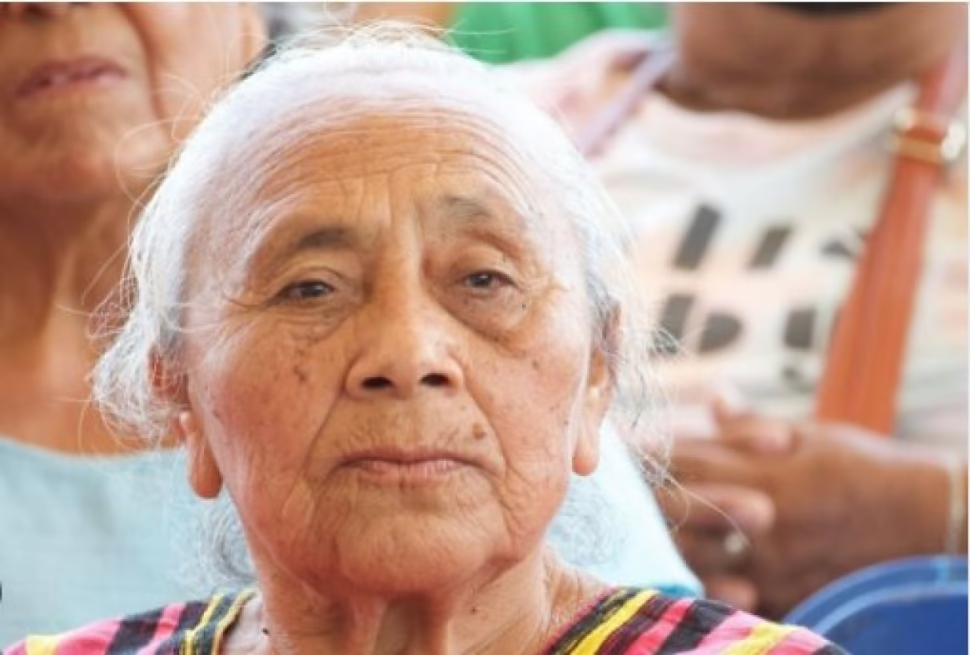
They live longer, but with less. That is the cruel paradox that older women face in Mexico, according to Gabriela Luna Ruiz, an economist at Iberoamericana. More than half of people over 60 are women, with a life expectancy up to five years longer than men.
But that longevity is not a reward. It is a sentence to greater economic vulnerability.
“Many women reach old age with less savings, less access to pensions and greater economic dependence,” explains the specialist.
The reason is not a mystery. They are interrupted or precarious work trajectories, and an unequal distribution of income within the home that systematically harms them.
The invisible cost of care
Historically, women have prioritized family well-being over their own. Their resources are allocated to care, food and home. An act of love that the system turns into a financial trap.
That pattern has cumulative effects. Every year of unpaid work, every peso allocated to others before themselves, turns into poverty in old age.
Faced with this bleak panorama, Luna Ruiz proposes concrete solutions: comprehensive public policies. Promote financial inclusion from early stages and move towards a national care system that distributes responsibilities equitably.
Because if one thing is clear, it is that this poverty is not an accident. It is the end result of decades of inequalities that no one wanted to see when it mattered.