Voices that history wanted to silence, now echo on the avenue
This year, the Brazilian Carnival did more than just dance. Two of its most emblematic schools decided to use the splendor of the Sambódromo to tell another story. Not that of kings and emperors, but that of the women whose voices it took the country decades to hear.
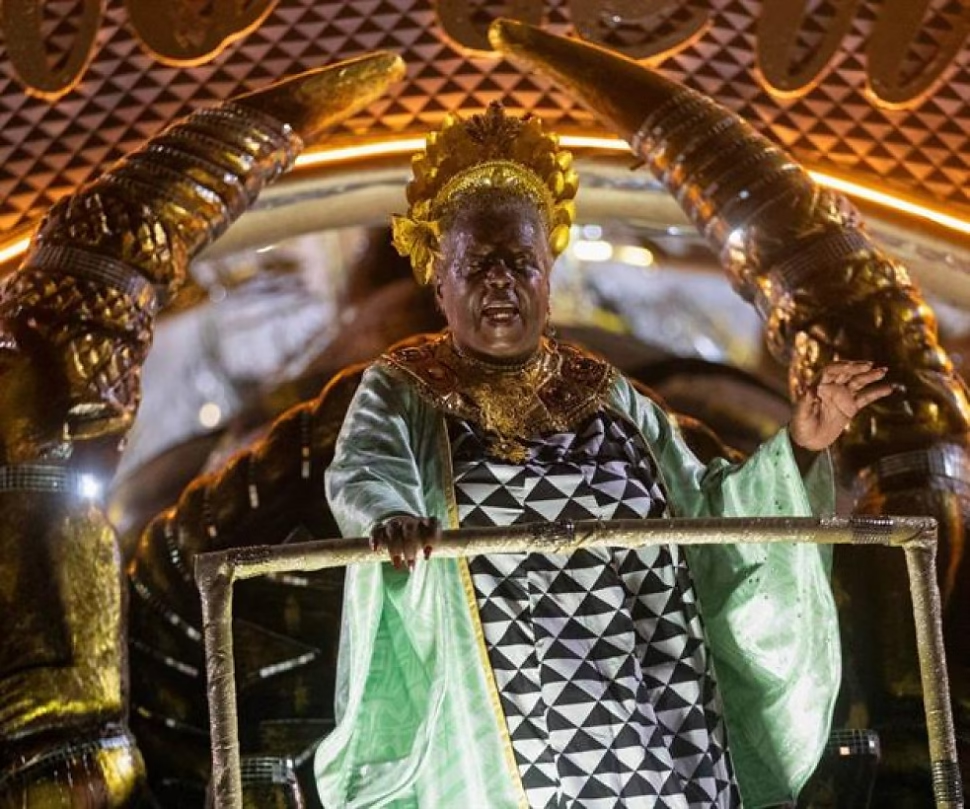
The Imperio Serrano school brought the legacy of Conceição Evaristo to the avenue. The 79-year-old writer paraded on a float while thousands of voices celebrated her work. A work that, for years, portrayed the experiences of black Brazilian women from within.
“It is a recognition of the knowledge that is born in our communities,” someone could have said amidst the beating of the drums. But the gesture already said it all.
Days later, Unidos da Tijuca took over with an even more heartbreaking tribute. It was the turn of Carolina María de Jesús, the diarist who, from a favela in São Paulo, narrated the hunger and extreme poverty of the 1950s.
His book ‘Cuarto de Despejo’, published in 1960, was a blow to the conscience of Brazil that wanted to look the other way. A raw testimony, written on pieces of paper found in the trash, that became an indelible symbol.
What’s really happening here
It’s not a coincidence. This goes beyond a pretty carnival theme. It is popular culture claiming its right to rewrite—or rather, to include—the official narrative.
For decades, these authors were marginalized by the traditional literary canon. Now, their stories are chanted by thousands in the greatest show on earth. Samba, that profoundly Afro-Brazilian expression, becomes a vehicle to return them to the place they should always occupy.
It is memory with feathers and sequins. It is vindication with drums and cavaquinho. And perhaps most importantly: it is Brazil looking in the mirror through the eyes of those who know its wounds—and its resistance—best.