
An Analysis of the Tribute Concert “Polvo Enamorado” at the Festival de la Costa del Seno Mexicano
The event “Polvo Enamorado” stands as a paradigmatic case study in contemporary cultural management, functioning as a preservation and exaltation device for the Tamaulipas musical heritage. This concert, successfully presented on Tuesday, October 7 as an integral part of the XXXII International Festival on the Costa del Seno Mexicano, was not a mere show, but an applied sound investigation that drew a historical map of Tamaulipas’ contribution to Mexican popular music. The execution of the project, an institutional collaboration between the Government of the State of Tamaulipas, the Tamaulipas Social Welfare Secretariat and the ITCA Tamaulipas, with the operational headquarters of the Reynosa Cultural Park, demonstrates an effective methodology for the revitalization of regional identity through the arts.
The Artistic Selection and the Mechanism of Tribute
The effectiveness of the tribute resided in a careful selection of honored figures, representative of different genres and eras, which allowed for a comprehensive musical narrative. The analysis of the list of composers reveals a curatorial intention that ranges from bolero and ranchera song to urban trova and experimental avant-garde. Honor was paid to Roberto Cantoral, originally from Ciudad Madero, whose authorship of universal pieces such as “El Reloj” and “La Barca” place him as a fundamental pillar of romantic music. From Altamira, the figure of Cuco Sánchez was rescued, whose songs “Fallaste corazón” and “Cama de Piedra” are archetypes of Mexican popular narrative.
The tribute prominently included Rigo Tovar, born in Matamoros, a cumbia and rock fusion phenomenon who revolutionized the music scene with hits like “Mi Matamoros Queria” and “El Sirenito.” In parallel, the work of Lolita de la Colina was recognized, a composer whose vast catalog has been performed by legends such as Jorge Negrete, José José and Ana Gabriel, consolidating her status as one of the most versatile and influential creators. The inclusion of Rockdrigo González, chronicler of urban life with “Estación del metro Balderas”, and Juan García Esquivel, pioneer of electronic music and sound experimentation, demonstrates an approach that values both traditional roots and innovation.
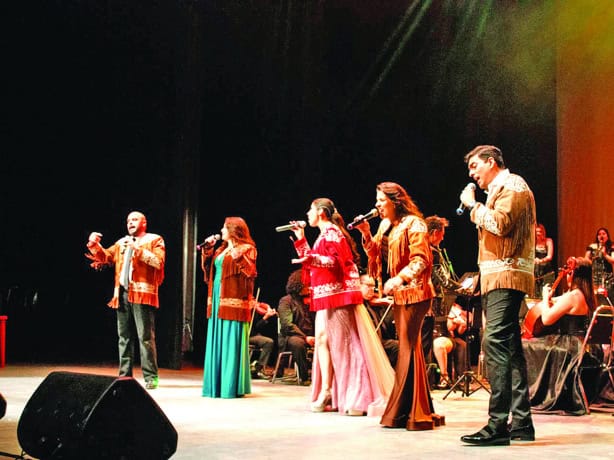
The cast of artists gathered pure Tamaulipas pride on stage.
Artistic Performance and Audience Reception: A Case Study in Collective Emotionality
The interpretation of this repertoire was carried out by an ensemble of voices with deep roots in the entity, among them Pepe Navarrete, Polo Rojas, Cynthia Sánchez, Héctor Gamaliel, Júpiter Bautista, Carmen Sarahí and Isabelle Govea. The choice of these interpreters was not arbitrary; It was a key element to guarantee authenticity and emotional connection with the material. The evening was characterized by palpable emotion, where pride and nostalgia operated as catalytic forces of a community experience. The audience was not a mere spectator, but an active participant who chanted the hits, recognizing each melody from its first notes, which confirms the deep roots of these works in the local collective imagination.
The production, described as spectacular, provided a sound and instrumental framework that enhanced the qualities of the voices without overshadowing them, achieving an acoustic balance that allowed the richness of the original compositions to be appreciated. This ensemble functioned as the ideal vehicle for a trip back in time that reactivated the sonic identity of Tamaulipas.
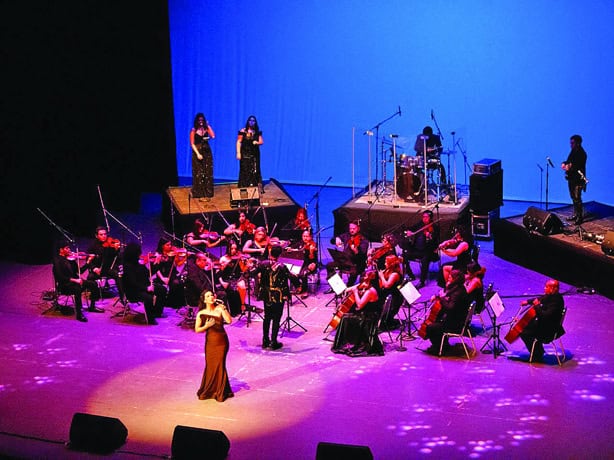
A spectacular ensemble framed the beautiful voices of Polvo Enamorado.
Macro Context: The XXXII International Festival on the Costa del Seno Mexicano
To understand the full impact of “Polvo Enamorado”, it is essential to place it within the broader context of the XXXII International Festival on the Costa del Seno Mexicano. This mega cultural event represents a free public access policy on a massive scale, bringing together 1,154 artists from various disciplines and backgrounds, including representatives from the United States, England, France, Italy, Chile and Malaysia. The festival, which runs until Sunday, October 12 and takes place simultaneously in the 43 municipalities of Tamaulipas, aims to cultural democratization and the strengthening of the social fabric.
In this framework, “Polvo Enamorado” fulfilled a dual function: on the one hand, it acted as an anchor of local identity within an international programming, and on the other, it demonstrated that the value of regional artistic production can dialogue on an equal basis with global expressions. The choice to include a tribute of this nature reinforces the thesis that local culture, when treated with rigor and quality, is an asset of incalculable value and an engine of social cohesion.
Were you moved by this tribute to the music of Tamaulipas?Share this analysis on your social networks and spread the legacy of these great composers. Explore more content related to Mexican musical cultural heritage on our platform to discover other sonic gems.