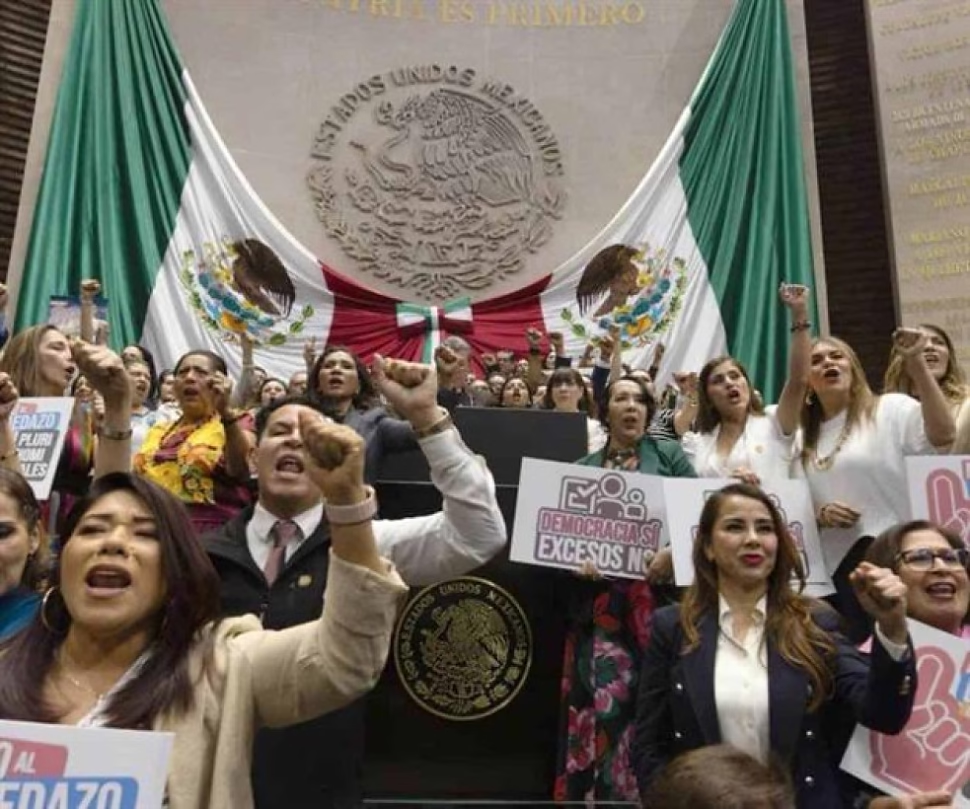
The wall of San Lázaro
The first act of Claudia Sheinbaum’s great legislative project ended in silence this Wednesday. His electoral reform, one of the most ambitious banners, crashed against the cold arithmetic of the votes in the Chamber of Deputies.
He needed a qualified majority, a magic number: 81 votes beyond his caucus. In the end, he only added six. The score was 259 in favor against 234 against. A solitary abstention completed the picture of a announced but no less symbolic failure.
“The organization will not remain on the canvas for long,” said Ricardo Monreal, the Morenista leader, almost like a scriptwriter who has already prepared the next chapter.
The key that didn’t turn
Everything depended on the traditional allies: the PT and the Green. Morena has 253 legislators, but to change the rules of the constitutional game it needed that extra key. And the key rusted in the lock.
First it was the Citizen Movement, criticizing that the proposal “destroyed” the system that helped small parties. Then the PRI, talking about a project that “divides Mexico.”
And then the key moment arrived. The gazes were fixed on the PT and the Green. Its coordinators went up to the podium and… announced their rejection without deviating from the script. A script that, apparently, everyone except Morena had read.
The government agreed to an express process, only with speeches from coordinators. Perhaps to minimize the spectacle of the disaster. But in politics, as in theater, sometimes silence shouts louder than applause.
Now it’s time to see what that “alternative plan” that Monreal promises is. Because in this scenario, the first act ended with the curtain falling on the protagonist.