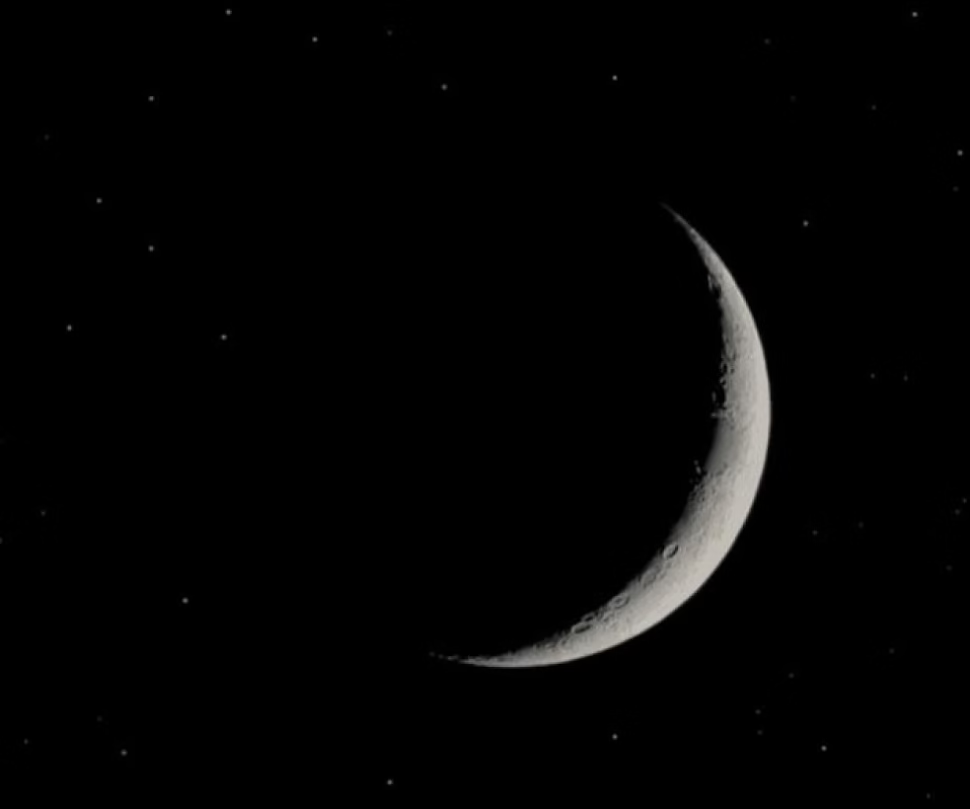
The Black Moon phenomenon: an astronomical rarity
At the end of April 2025, the night sky will host a rare event that has sparked the interest of both the scientific community and the general public: the Black Moon. Despite its enigmatic name, this phenomenon has a well-defined scientific basis and is not associated with omens or extraordinary events.
What exactly is a Black Moon?
According to data provided by NASA, the Black Moon coincides with the New Moon phase and will occur specifically on Sunday, April 27, starting at 6:35 p.m., reaching its maximum splendor between 11:00 p.m. and 3:00 a.m. on Monday, April 28. During this period, the Moon will be located between the Earth and the Sun, which will make it impossible to observe from Mexico and other regions due to the absence of direct illumination on its visible side.
The specialized portal Star Walk explains that this phenomenon can manifest itself in two different ways:
- Calendrical Black Moon: It occurs when there are two New Moons in the same calendar month, something unusual given that the average lunar cycle is 29.5 days.
- Seasonal Black Moon: It occurs when an astronomical season (period between solstices and equinoxes) hosts four New Moons instead of the usual three, with the third of them being called “Black.”
Scientific implications and curiosities
Unlike lunar eclipses, which are visible and generate visual spectacles, Black Moons go unnoticed by the human eye. However, its study is relevant to understanding celestial mechanics and the synchronization between the lunar and solar calendars. This phenomenon also influences tidal cycles and the planning of professional astronomical observations, since lunar darkness facilitates the study of distant objects in the cosmos.
For astronomy fans, although it is not visible, the Black Moon represents an opportunity to learn about the dynamics of the Earth-Moon-Sun system. Experts recommend using astronomical simulation applications or participating in live broadcasts from international observatories during the event.
Did you know? The term “Black Moon” is not official in academic astronomy, but it has gained popularity in the media and general culture to describe these rare variants of the New Moon.
Upcoming related astronomical events
After this phenomenon, space enthusiasts will be able to anticipate other events in 2025, such as the Eta Aquarid meteor shower in May or the partial solar eclipse visible in North America in August. Staying informed through sources such as NASA or local astronomical societies is key to not missing these celestial shows.
Share this article with other astronomy lovers and continue exploring the mysteries of the universe on our social networks! Discover more content about cosmic events, space technology and scientific curiosities in our dedicated section.