Generation Z calls for a new march for safety

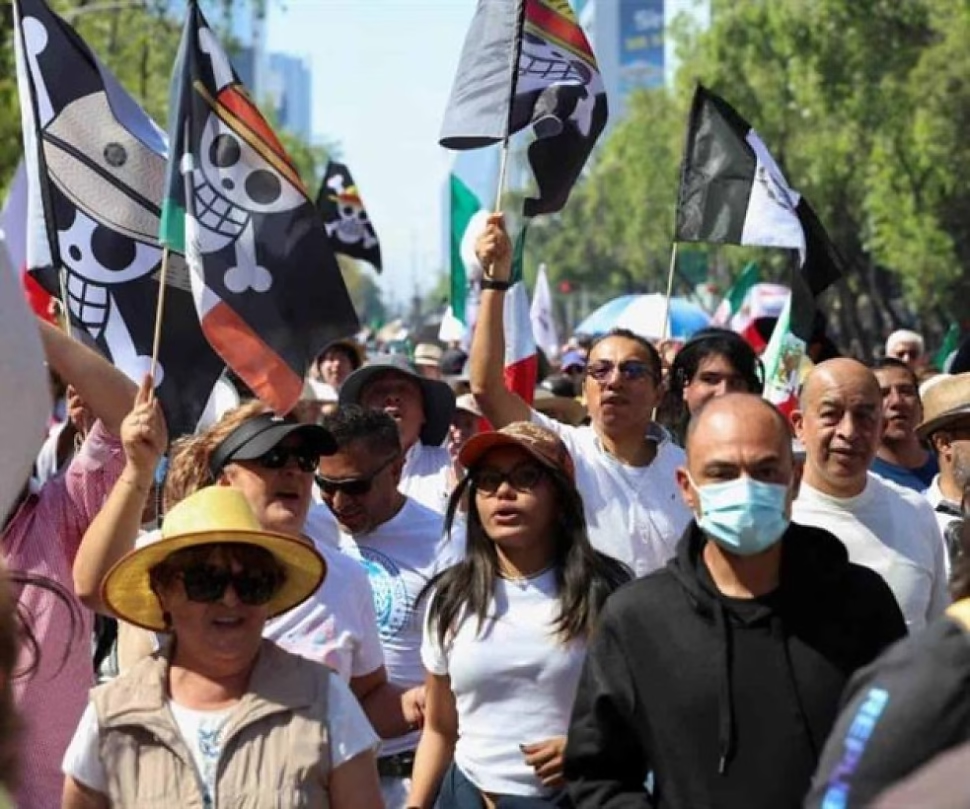
Generation Z does not stop and returns to the streets. We tell you the details of the second massive call.

Generation Z does not give up and returns to the fray

It seems that the spirit of rebellion of Generation Z comes with snooze mode. After the tremendous chaos that broke out in the Historic Center of CDMX on November 15 — an event that included everything from assaults to the demolition of metal fences that looked like they were taken from a *Mad Max* set — this digital cohort has decided that a single mobilization was not enough. That’s right, they are organizing a second round, because apparently, for this generation, asking for security and justice is like watching a series on Netflix: if the ending doesn’t convince you, you click “watch next episode.”

The main trigger for this new call to citizen action continues to be the climate of violence that intensified after the murder of the mayor of Uruapan, Carlos Manzo. A situation so serious that, obviously, it requires more than a tweet of thoughts and prayers.

RelatedGeneration Z announces new march after clashes

The quote: same battles, same channel

For all those who missed the first performance or who simply love the drama, the call is set for November 20 at 11:00 a.m.. And in an act of pure nostalgia, they will replicate the same starting point from the previous time in more than 50 cities. In the country’s capital, the meetup will be at the iconic Glorieta del Ángel de la Independencia, on the Paseo de la Reforma, and then begin the walk to the capital’s Zócalo. Basically, the same script, waiting for a different ending.

What is new is that the group has not given details about alternative routes or extra security measures. His advice is to stay glued to his official communications to avoid getting lost along the way. I mean, stop looking for the truth on TikTok for a while and check the direct sources, please.

Flashback: what happened in the first edition

The initial demonstration brought together a diverse crowd, with a notable presence of older adults who demonstrated more stamina than many influencers at a festival. The tour began in the Ángel and advanced towards the Zócalo, chanting slogans against the federal and local government. Everything was going on with a peace that would have made any mindfulness guru proud, until they reached Constitution Square.

There, a group of hooded men, probably believing they were in *Assassin’s Creed*, decided to tear down the metal fences in front of the National Palace. The result: confrontations with security elements, a shower of objects, and the use of tear gas that turned the atmosphere into a realistic and unpleasant version of an open-air concert. The authorities reported 100 injured police officers, 20 injured civilians and 20 people detained, plus another 20 reported for administrative offenses. A balance that no one asked for for their weekend.

To make matters worse, organizations and attendees have warned that some participants still cannot be located, making a desperate call for people to share digital evidence and thus be able to locate them. Because in the information age, even searching for someone is done through crowd-sourcing.

And the government, what does it say?

President Claudia Sheinbaum, for her part, came forward to reiterate that her government supports freedom of demonstration… as long as it is as peaceful as a yoga class. But, in a plot twist, she insisted that they detected a disinformation operation that, according to her, involved million-dollar resources to influence the public narrative and delegitimize her administration. Basically, the classic “it wasn’t my fault, it was a plot.” A narrative that, it must be admitted, competes in intrigue with any *House of Cards* plot.

In short, another chapter awaits us in this saga of social mobilizations where Generation Z is writing its own script for citizen participation, complete with plot twists, confrontations and a soundtrack of slogans.

Will you join the conversation? Share this article on your social networks and explore more content about the evolution of digital activism and the fight for public safety. Your outreach helps these crucial issues be discussed.
Controversy over an interview with Monsiváis reaches the Senate and the Palace

The republication of a 1999 interview unleashes accusations between the Executive and legislators.

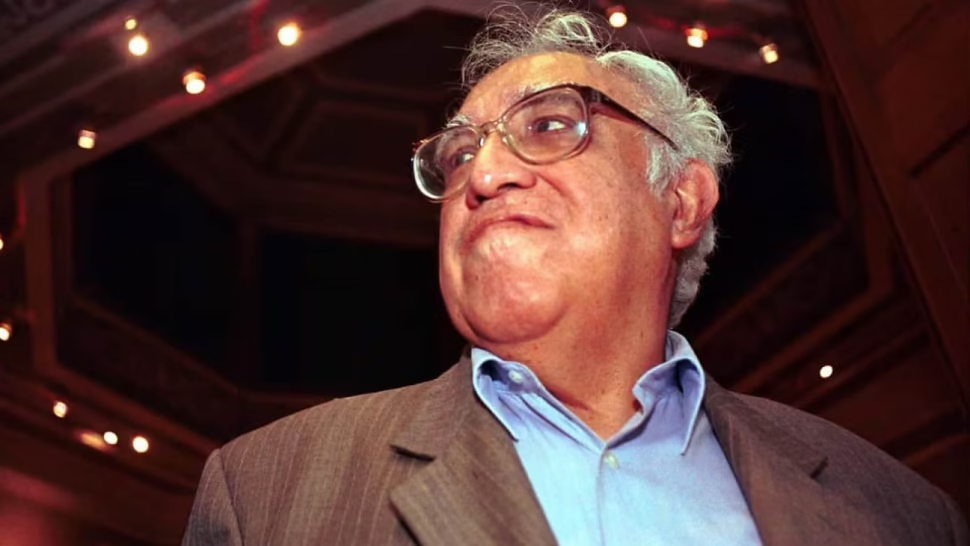
The republication of an old interview attributed to Carlos Monsiváis climbed to the center of the Mexican political debate this Wednesday. The issue was discussed both in the Senate and in President Claudia Sheinbaum’s morning conference.

The original text was written by journalist Edmundo Cázares in 1999 and recently republished by El Universal. It contains statements about the then head of Government Andrés Manuel López Obrador. Its veracity and context have been questioned, generating conflicting positions.

Sheinbaum describes the content as “grotesque”

During her conference, the president harshly criticized the publication. He described the content as “grotesque” and accused the medium of generating a controversy that distorts the tribute to the Mexican intellectual.

Reactions in the Senate

The issue also reached Congress. Senator Lilly Téllez read fragments of the text on the platform. In response, Gerardo Fernández Noroña rejected its use and maintained that it was a false publication with the intention of political attack.

The exchange reflects the polarization around the figure of López Obrador and the use of historical documents as partisan weapons.

Continue reading

PRI demands urgent action against violence in Guerrero

They denounce an incursion of armed civilians in Coyuca de Catalán; party calls for state intervention.

The national leadership of the PRI demanded that the Mexican State intervene urgently in response to the complaint by inhabitants of the Guajes de Ayala ejido, in Coyuca de Catalán, Guerrero. The residents reported the incursion of armed civilians into their community in the Sierra.

Call for safety

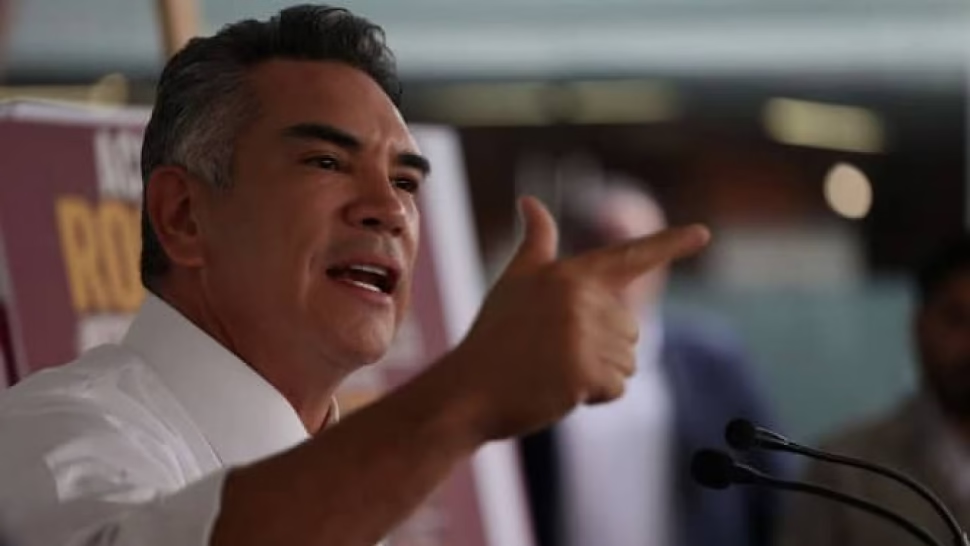
Alejandro Moreno Cárdenas, president of the party, asked the authorities to guarantee the safety of the families. He warned that these events should not be normalized due to the risk they represent for the civilian population.

The leader pointed out that in various communities in Guerrero they live under siege by armed groups. This has caused displacement, confinement of inhabitants and a constant climate of fear and uncertainty. He considered an immediate response from the State necessary.

Moreno Cárdenas also criticized the federal government for minimizing the situation of violence in the country. He affirmed that the population faces conditions of insecurity that require priority attention to restore the rule of law in the region.

Continue reading

Inflation in Mexico slows down and remains at Banxico’s goal

Inflation drops to 3.55% in the first half of June, within Banxico's target range.

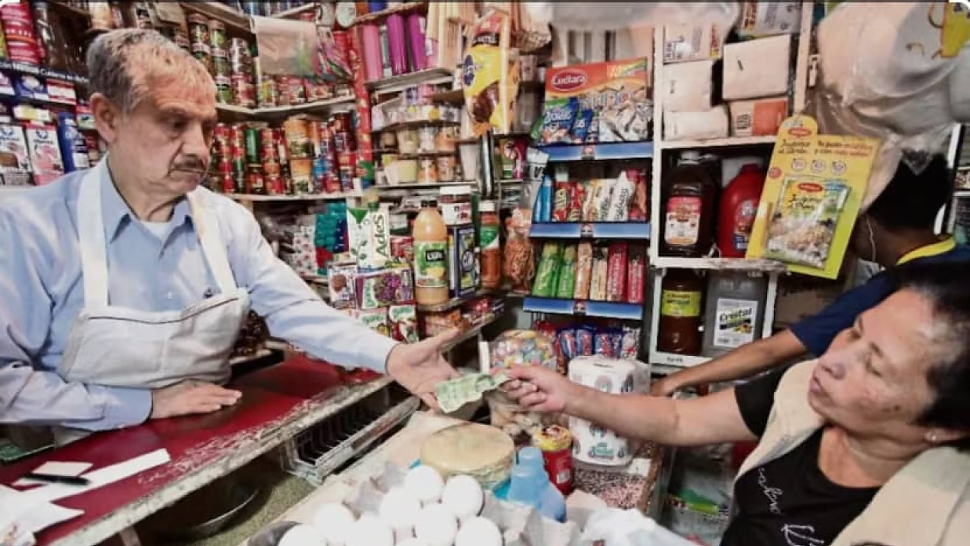
Inflation in Mexico continues to decline. According to Inegi, it stood at 3.55% annually during the first half of June. This represents a drop of 0.11 percentage points compared to the second half of May.

With three consecutive months of deceleration, the indicator remains within Banxico’s target range (3% plus/minus one point). This level is key for purchasing power.

Pressures on core inflation

However, pressures remain. Core inflation—which reflects medium and long-term trends—was at 4.12%, with a biweekly increase of 0.19 points. Within this category, merchandise rose 3.65% annually and services, 4.57%.

Non-core inflation and seasonality

In contrast, non-core inflation slowed to 1.61% annually, driven by the drop in agricultural prices. Products such as tomatoes, eggs and poblano peppers recorded significant decreases.

The report also reflected seasonal movements in tourist services, related to the summer and the Soccer World Cup. Air transportation, hotels and tour packages increased. Despite this, analysts foresee a favorable trend towards the end of the year.

Continue reading