FDA approves natural dyes derived from algae and flowers

The FDA gives the green light to three new natural dyes, expanding options for the food industry.

Goodbye to artificial dyes, hello to colorants that sound like an indie playlist

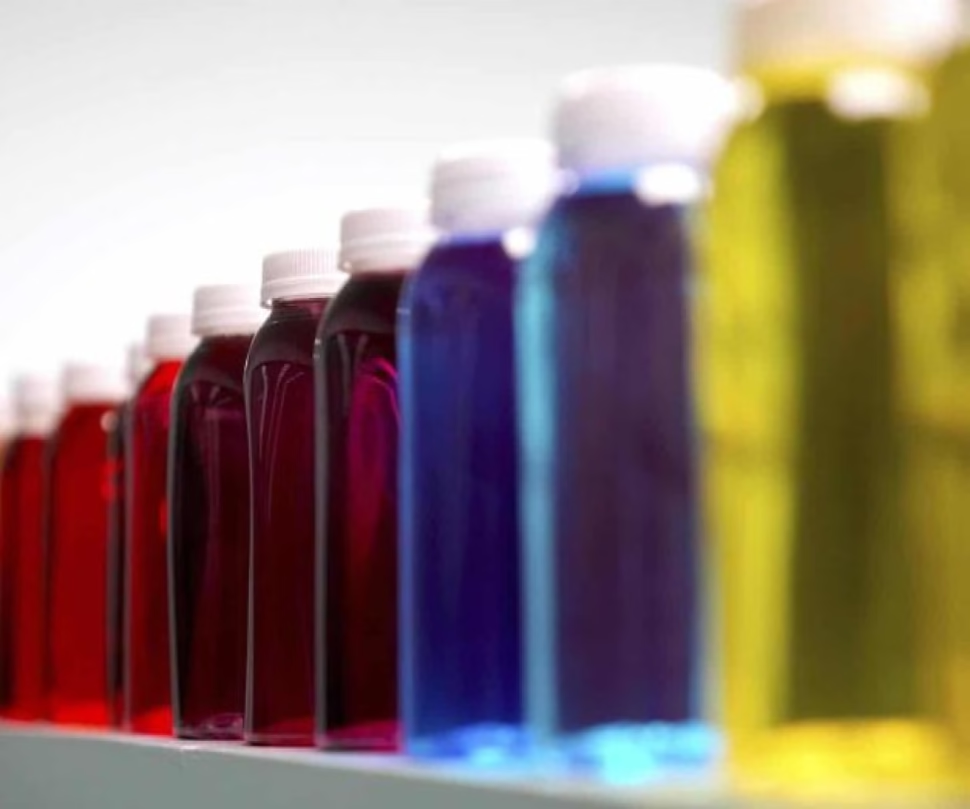
It seems that the FDA finally got its act together (or rather, its algae) and decided that our food deserves better than those artificial dyes that look like they came from a Breaking Bad laboratory. This Friday, regulators gave the go-ahead to three new color additives so natural that even vegan influencers would approve: blue galdieria extract (aka “the blue of algae”), calcium phosphate (a white mineral that sounds like a gym supplement) and bellflower extract (yes, literally dried flowers grinding life).

From yogurt to chicken: the natural rainbow comes to your table

These colorants are not only pretty, but they are also versatile as a multi-niche influencer. The FDA has approved them for use in foods ranging from yogurt (so that pink isn’t just chemically enhanced strawberry) to…ready-to-eat chicken! Because what better way to enjoy your brisket than with a touch of bluebell? (Relax, just kidding… or not). According to the authorities, this “expands the palette of natural colors”, which in Christian means that now companies will be able to dye your snacks without sounding the alarm bells of eco-friendly parents.

RelatedFDA approves new generic abortion pill

The irony: While the industry celebrates, the FDA continues to drag its feet to eliminate petroleum-based dyes, the ones that have colored everything from cereals to sports drinks (yes, that fluorescent Gatorade isn’t exactly a gift from nature). Of course, they insist that the approved dyes are safe, although some studies suggest that they could be related to hyperactivity in children. But hey, at least now the blue in your smoothie comes from algae and not from a crude oil derivative. #SmallAdvances.

The freak fact: Campanula extract is not new; It’s used in cosmetics and textiles, but now your M&M’s could have a more “botanical garden” touch. Just don’t expect your food to look like a unicorn: these dyes are subtle, not magical (for now).

Why does it matter? Because more and more consumers read labels as if they were Tinder contracts (“swipe left” for unpronounceable ingredients). And although the FDA continues to defend that artificial dyes are not the devil, the trend is clear: natural sells, even if it is only on the label.

Would you like to see more news about food innovation? Share this note with that friend who only eats things the color of the rainbow (but who can now do so without regrets). And if you are interested in knowing what other ingredients are under the spotlight, explore more content in our food trends section. #FoodWithScience (and color).
Calabria maintains Cuban doctors despite pressure from the US

More than 200 Cuban doctors continue working in Calabria hospitals despite warnings from Washington.

Cuban doctors in Calabria: key support for regional health

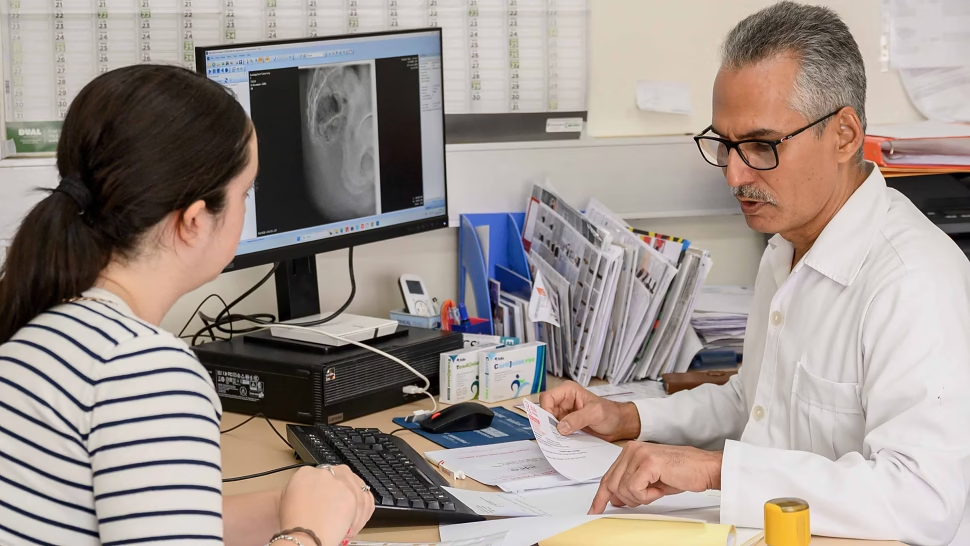
The Italian region of Calabria continues to hire Cuban doctors to support its health system, despite pressure from the United States to cancel these agreements.

Currently, more than 200 professionals from the island work in hospitals in this area of ​​southern Italy. Its arrival, starting in 2023, has been decisive in reversing the closure of services due to lack of personnel.

Local health authorities report that Cuban doctors managed to drastically reduce waiting times. At the Polistena hospital, for example, patients went from waiting up to 12 hours to being treated in less than an hour.

The shortage of medical personnel in Calabria was critical. The incorporation of these professionals allowed us to keep emergency areas open and improve general care. Despite warnings from Washington, Italian authorities defend cooperation as a pragmatic solution to an urgent need.

Continue reading

Storm Maysak leaves 39 dead in Guangxi, China

Storm Maysak leaves at least 39 dead and 9 missing in Guangxi.

Floods in Guangxi

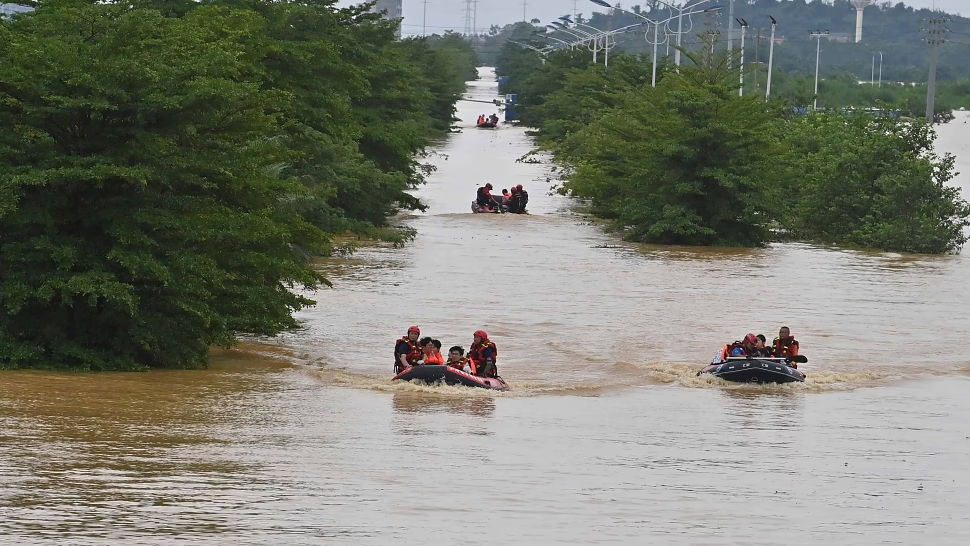
At least 39 people died and nine remain missing after severe flooding caused by Tropical Storm Maysak in the Chinese region of Guangxi, authorities reported this Thursday.

Most of the deaths occurred in the city of Hengzhou, where the partial collapse of a dam unleashed a flood of water that devastated entire communities.

Record rains, which began over the weekend, caused reservoirs to overflow, left thousands of people trapped and forced approximately 130,000 residents to evacuate.

Continue reading

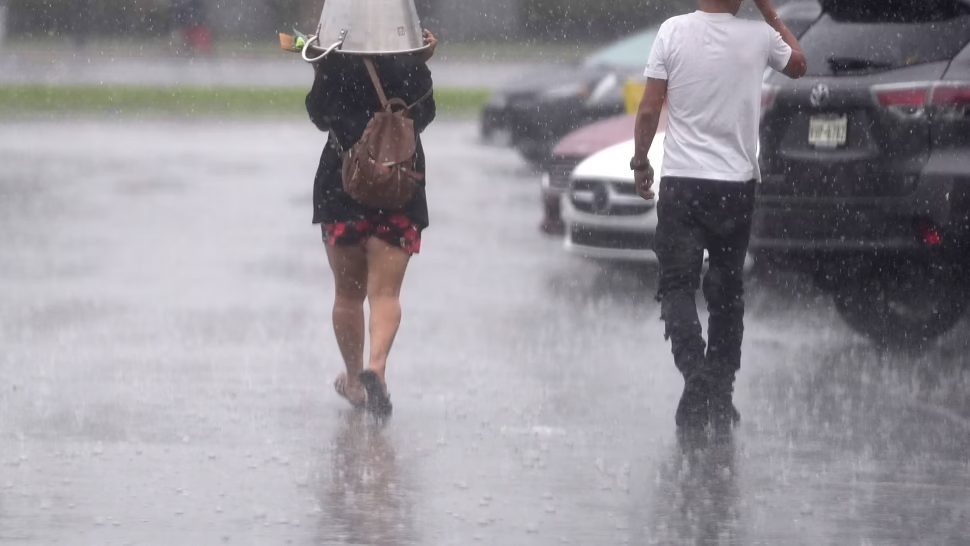
El Niño could be one of the most intense since 1950, NOAA warns

NOAA warns that El Niño could be one of the most powerful since 1950.

NOAA Forecast

The El Niño phenomenon is heading towards an intensity that could be historic. The National Oceanic and Atmospheric Administration (NOAA) of the United States reported that there is an 81% probability that it will reach the “very strong” category during the fall of 2023. If so, it would become one of the most powerful recorded since 1950.

According to specialists, El Niño quickly went from a weak to moderate phase and continues to strengthen with no signs of slowing down. Equatorial Pacific Ocean temperatures are at record levels for this time of year. This increase is driven by both the natural phenomenon and global warming derived from human activity.

The most intense effects are expected for autumn and winter. Droughts, torrential rains, heat waves and alterations in weather patterns are expected in various regions of the planet. In the United States, the forecast calls for a wetter winter in the south and warmer temperatures in the north. On the other hand, the Atlantic could experience a below-average hurricane season.

Continue reading