The geopolitical ball in the air
Iranian Sports Minister Ahmad Donyamali released a statement that resonates beyond the stadiums. He stated that his country will not be able to participate in the 2026 World Cup in North America after what he described as perverse actions by the United States.
“Due to the perverse actions they have committed against Iran… it is definitely not possible for us to participate in the World Cup,” he told state television.
Their argument is clear: the safety of the players would be at risk on American soil. Iran has matches scheduled in California and Seattle in June next year.
Guarantees versus realities
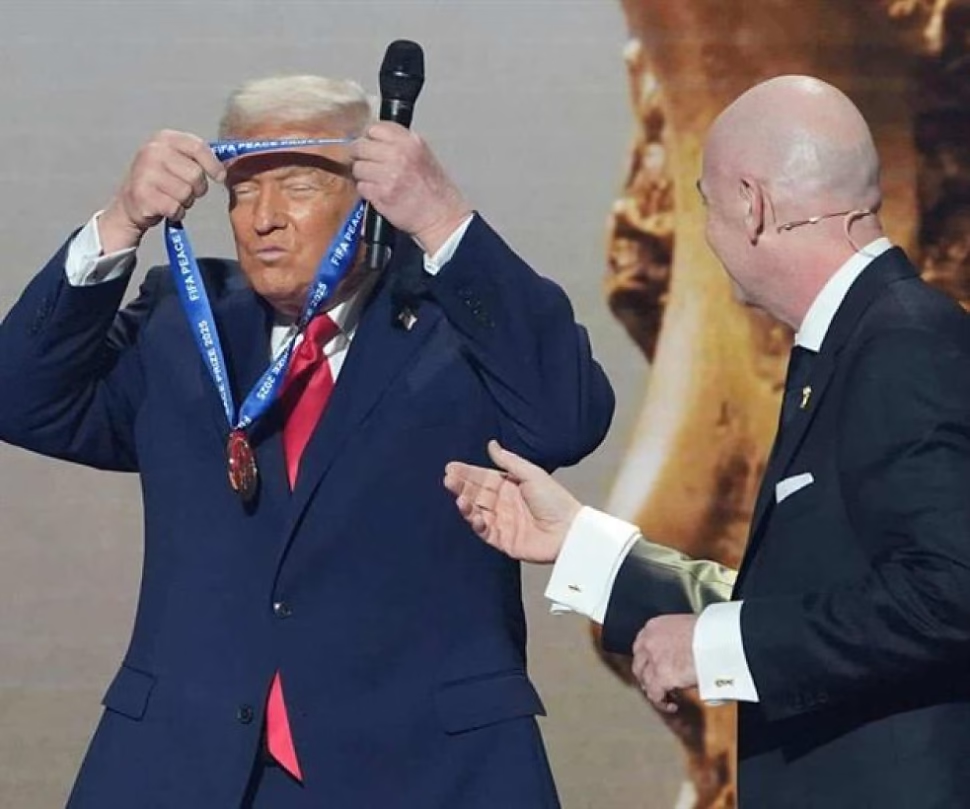
Meanwhile, FIFA is trying to put out the fire. Gianni Infantino, its president, met with Donald Trump to receive guarantees.
“During the talks, President Trump reiterated that the Iranian team, of course, is welcome to compete,” Infantino added.
But here’s the detail that many overlook: Infantino and Trump have a close relationship. So much so that FIFA created a peace prize thinking about him. Conflict of interest? The body insists that the tournament is “too big” to be postponed.
The shadow of Indonesia hangs over this situation. Three years ago, that country lost the venue of a youth world cup for refusing to host Israel. FIFA acted quickly and without regard.
Now the US could face the same threat if it formalizes its rejection of Iran. A political move could cost you the biggest sporting event on the planet.
What’s worrying is how this tension affects what it should unite: a game. As Infantino said, “we all need an event like the World Cup to bring people together.” But when geopolitics enters the field, the rules of the game change completely.