IPN launches space mission to study climate change

IPN satellite will measure magnetic field and atmospheric temperature from 800 km altitude.

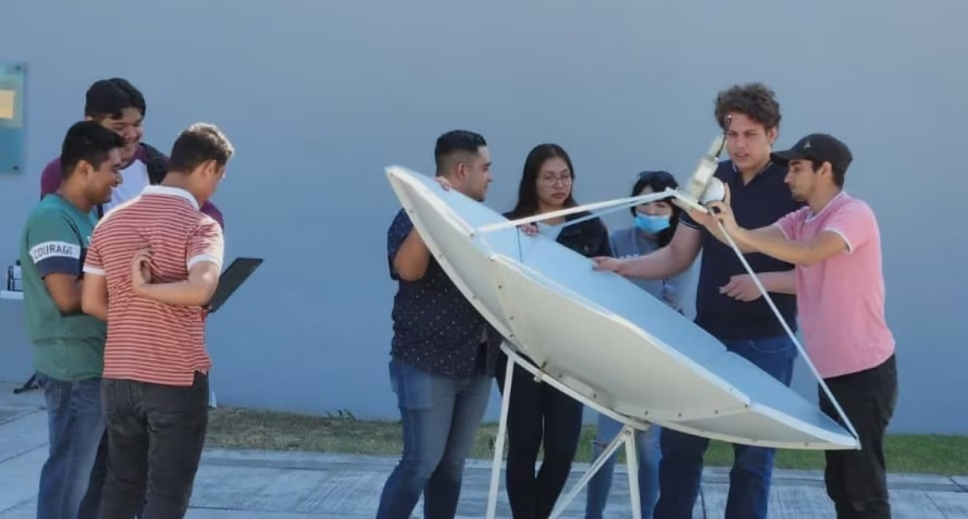
The National Polytechnic Institute (IPN) develops the THERMAG-1 space mission, a scientific project that will analyze the relationship between the Earth’s magnetic field and changes in the temperature of the atmosphere. The objective is to contribute to the understanding of climate change.

The mission

The launch of a low orbit satellite is scheduled for the first half of 2027. The device will carry a specialized payload that will measure magnetic variables in different axes from approximately 800 kilometers in altitude. The data generated will be of high scientific precision.

RelatedJapan launches its latest satellite to combat climate change

According to Mario Alberto Mendoza Bárcenas, researcher at the IPN Aerospace Development Center and project director, the mission will allow the study of the interaction between the Earth’s core, the atmosphere and different climate phenomena. This could help understand processes that affect the planet.

Scientific implications

The analysis that THERMAG-1 will carry out is fundamental to understanding how climate change impacts the Earth and how it is linked to the magnetic field. The results could have significant implications for both science and society.

Applicants demand in-person exam after complaints of irregularities

Not admitted applicants demand a new in-person exam after denouncing the use of AI in a virtual test.

Demonstration in CU due to alleged irregularities in virtual exam

Applicants not admitted to the first virtual UNAM bachelor’s entrance exam gathered at 11:00 a.m. in the vicinity of the Ciudad Universitaria Metro and Insurgentes Sur. They marched towards the Rectory Tower demanding the cancellation of the process and the completion of a new in-person test.

The protesters reported alleged irregularities in the online evaluation, such as the use of artificial intelligence to gain advantage. With slogans like “No to AI, yes to the solution!” and “Clean and transparent exam!”, asked the authorities to guarantee equal conditions.

Melanie Maya, 18, a Psychology applicant who failed by one hit, noted that many students prepared for months. He considered it unfair that those who used improper tools had an advantage. The young woman asked to regulate the use of AI in the exam and for UNAM to investigate and sanction those who engaged in dishonest practices.

The protesters reiterated their request that the exam be held in person again to ensure transparency and equity for all young people seeking to enter the highest educational institution.

Continue reading

New audio reveals Marina del Pilar’s visa procedures

Leaked audio shows the governor's efforts to recover her US visa.

A new audio of intercepted calls from the governor of Baja California, Marina del Pilar Ávila, was released by journalist Héctor de Mauleón. The recording reveals alleged approaches by the president to United States authorities to recover her visa, withdrawn last year without public cause.

Deals with former FBI agent

In the audio, Ávila points out that she hired Juan Sandoval, an alleged former FBI agent, and lawyer Michael Nadler to support her in the process. He sought to establish communication channels with Washington. According to De Mauleón, there are also WhatsApp messages between the governor and an intermediary who acted through American contacts. Ávila requested that the following meetings be only between his lawyers and representatives of the United States to avoid appearing to seek other negotiation mechanisms.

Opposition criticism

The revelations raised questions from the opposition about the scope of the approaches and the possible delivery of security information. Ávila maintains that their conversations were only intended to clarify his visa situation.

Accusations against Jaime Bonilla

The governor accused her predecessor, Jaime Bonilla, of being behind the intervention and dissemination of the calls. Bonilla rejected the accusations. The government of Claudia Sheinbaum has expressed support for Ávila in the face of the leaks, although new audios are expected that the president herself acknowledged could be disseminated.

Continue reading

Hurricane Genevieve reaches category 5 in the Pacific

The cyclone strengthens far from the coast but generates dangerous waves in southwest Mexico.

Genevieve and Fausto: two hurricanes in the Pacific

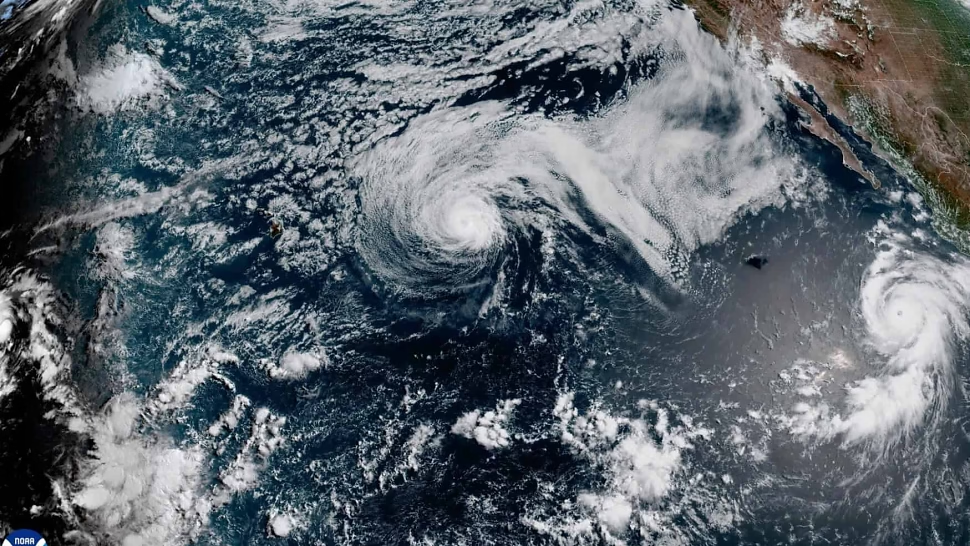
Hurricane Genevieve intensified into a Category 5 cyclone, the first of that magnitude to hit the eastern Pacific in two years. It is located 835 kilometers south-southwest of Baja California with sustained winds of 250 km/h. It advances towards the northwest, parallel to the Mexican coast, without touching land.

Despite the distance, authorities warn of high waves in southwest Mexico and the Baja California peninsula. There are no active coastal warnings, but the system is expected to fluctuate in intensity before weakening this week.

On the other hand, Hurricane Fausto is moving through the Pacific as a category 1, with winds of 130 km/h. Its trajectory points towards the Hawaiian archipelago, although forecasts indicate that it will pass north of the islands without touching land. However, waves and ocean currents are already intensifying along the eastern shores of Hawaii.

Specialists recommend that the population remain attentive to the evolution of both systems and follow civil protection instructions. Although they do not represent a direct threat to populated areas, their maritime effects can generate dangerous conditions for navigation and coastal activities.

Meteorological authorities maintain constant monitoring of Genevieve and Fausto.

Continue reading