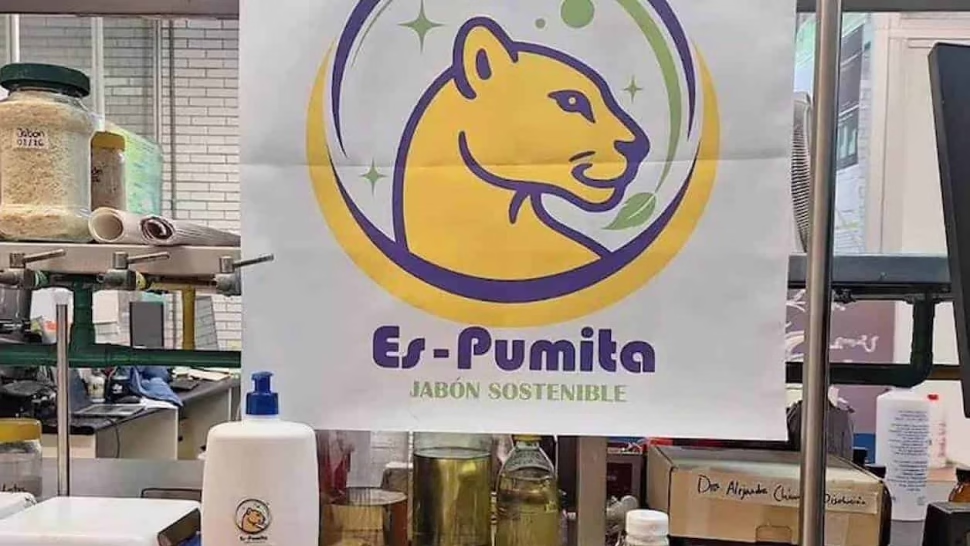
Students and researchers from UNAM’s Faculty of Higher Studies (FES) Zaragoza developed Es-Pumita, a biodegradable liquid soap made with used cooking oil. The raw materials come from the cafeterias on Campus II, as part of a circular economy and sustainability project.
From waste to resource
Alejandra Chávez Riveros, a researcher at the entity, leads the initiative. Every week they collect about 20 liters of oil to transform them into between six and 10 liters of liquid soap. The process includes filtering, cleaning and purification to remove impurities, solids, moisture and odors. Then they apply saponification: the fat reacts with a strong base to obtain soap.
The environmental impact is the main benefit. A single liter of oil disposed of improperly can contaminate up to 40 thousand liters of water. Furthermore, when it reaches the drainage, it contributes to clogging pipes and worsens flooding, especially in the eastern area of Mexico City.
“Unlike commercial products, our soap has fatty acid salts obtained by saponification as an active ingredient, which gives it high biodegradability. It also highlights its approach to circular economy and environmental education,” explained Chávez Riveros.
The academic pointed out that the project seeks to formulate a product with few additives, favoring simple ingredients to reduce the environmental impact and promote education among the university community.
Es-Pumita already has a brand registration and is the first product of the research line “Green chemical engineering and sustainability”. Initially they tried to make a solid soap in the shape of puma claws, but later they achieved a liquid version. It is currently used as a pilot in the bathrooms on Campus II, with the goal of extending it to Campus I.
The team is looking for a larger space to increase production and become a collection center. Society’s interest in participating drives this expansion.