The threat that paralyzed a strait
Donald Trump raised the pressure to a level that few expected. He demanded the “complete, immediate and safe” reopening of the Strait of Hormuz as a condition for maintaining the ceasefire. But what really shook the foundation was the attached threat: the possibility of “wiping out an entire civilization,” clearly referring to Iran.
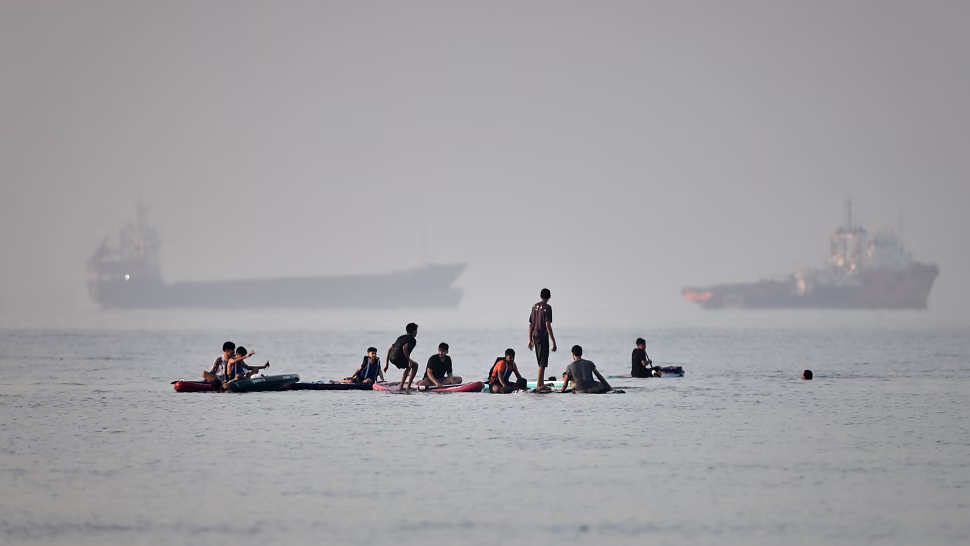
The result has not been submission, but total collapse. Instead of complying, shipping traffic has plummeted. On Wednesday, only five ships crossed—no oil tankers—and on Thursday the number continued to fall. This is a tiny fraction of the dozens that used to pass through this vital artery of world trade daily.
The situation has deteriorated in recent days. Traffic has dropped significantly.
The reality is that we were already doing badly. Even before the ceasefire, activity was severely reduced: barely 80 ships in a week compared to the usual around 700 before the conflict. The few that managed to cross were usually from countries with agreements with Iran, such as China, India or Türkiye.
But now even that doesn’t work. Preferential routes are also paralyzed, aggravating a global energy uncertainty that was already palpable.
Adding to this tension is now the real possibility of new restrictions by Tehran. What Trump intended as an ultimatum to reopen the strait has had the opposite effect: closing it almost completely. And as long as the tankers do not sail, the entire world will feel the pressure on their economies and their homes.
It is the classic geopolitical backfire. An extreme threat intended to force a solution has created an even bigger problem. And we all look at the map wondering how long this controlled asphyxiation can last.