A Mexican classic in football times
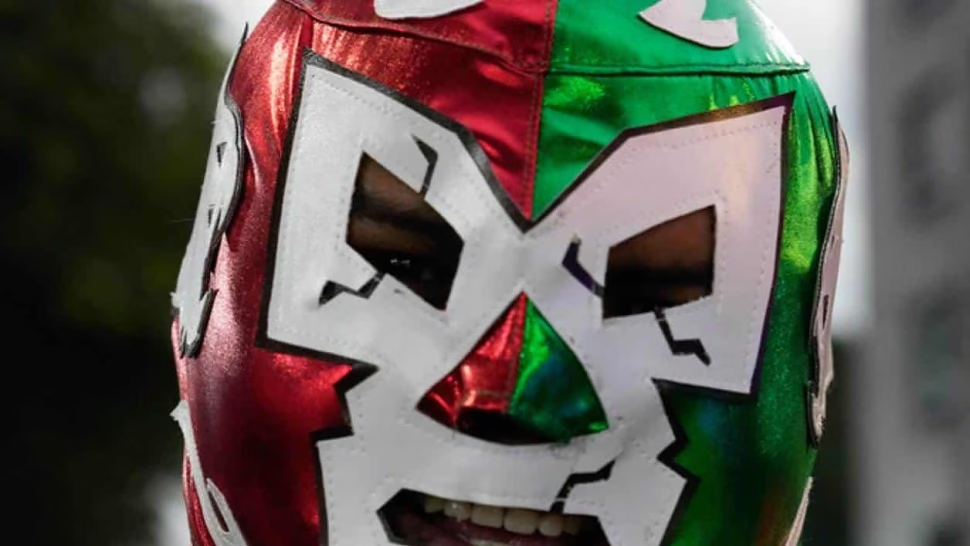
It appears everywhere: around stadiums, at celebrations, having a beer in bars. The anonymous masked wrestler has become one of the emblematic images of the World Cup in Mexico. Mexican wrestling found a new showcase in the soccer arena.
Travelers from all over the world have surrendered to this sport that, along with football, leads national passions. Inside the arenas, they forget about the World Cup fever for a few hours to live a unique night.
How is wrestling experienced in the context of the World Cup?
As Spain took on Uruguay in Guadalajara, tens of thousands of fans tuned in to another spectacle: Místico and Máscara Dorada against The Bestia Mortos and Sammy Guevara in the iconic Arena México, known as the cathedral of wrestling.
“It was just fantastic, we really enjoyed it,” said Andy Winston, a native of Manchester, who has visited the three World Cup venues with his family. “You can’t come to Mexico and not come to wrestling. It’s a great tradition, a classic.”
In the stands, fans supported their favorites wearing jerseys from teams such as England, Japan, Brazil, Colombia and Mexico.
“It was a wonderful night, much better than I imagined,” said Brazilian Henrique Nunes dos Santos. “You connect in a way that seems like it’s all real… there’s a gigantic energy.”
The identity of a country
The origins of Mexican wrestling date back to the beginning of the 20th century. His style fuses techniques from American wrestling and Greco-Roman wrestling with aerial acrobatics. It was declared cultural heritage of Mexico City in 2018.
“Wrestling is in our roots. For almost 93 years of history it has been part of us Mexicans and it has also become a letter of introduction,” explained Julio César Rivera, spokesperson for the World Wrestling Council (CMLL).
The show combines sport, theater and tradition. The vibrant and colorful masks represent superheroes, animals or symbolic figures. Each one is designed to convey a unique visual language.
“Wrestling is my life,” said Star Black, a 30-year-old wrestler. “I began to fall in love with the masks, the capes, the flights, the sets and one day I made the decision to train.”
High prices at other tournament venues made Mexico a popular destination for tourists, according to José Ángel Garfias Frías, a UNAM wrestling expert. “The arenas are much more crowded and we see many tourists wearing t-shirts of their teams,” he said.
Although FIFA banned the use of masks in stadiums for safety, many fans wore them outside. “Wrestling is Mexico. It is part of our identity and it is as popular as soccer,” said Claudio Díaz, one of the masked men at the celebrations.
For some, wrestling best represents the country. “I feel that soccer does not represent us Mexicans so much; wrestling represents us more,” said the Legendary Dragon wrestler. “Here comes from all types of social classes: from the grandmother to the businessman.”