Berlin points to Moscow: Cyberwarfare and disinformation in full swing
It seems that Russia’s “How to be a difficult neighbor” manual has a new bestselling chapter, and Europe is, once again, its mandatory reading club. European governments have been raising the alarm for months, warning about the Kremlin’s growing aggressiveness. And no, it’s not just because of the cold. Analysts and military experts paint a geopolitical thriller scenario: in a three- to four-year horizon, Moscow could be in a position to launch a direct attack against a NATO member country. But why wait for the big premiere if you can already broadcast the prequel? Low intensity operations, that thing that academics call hybrid warfare and that the rest of us understand as “the art of doing harm without signing the work”, are already on the cards.
The European alert: More than a bad feeling
The concern in European capitals is not a simple generational drama. Governments in the region have raised their tone, pointing out that Russia’s actions are a tangible and direct risk to collective security. It’s not paranoia; it is the recognition of a calculated strategy that seeks to test the limits and find weaknesses in the Western defense architecture. The Atlantic alliance faces an adversary that has perfected the art of ambiguity and plausible deniability.
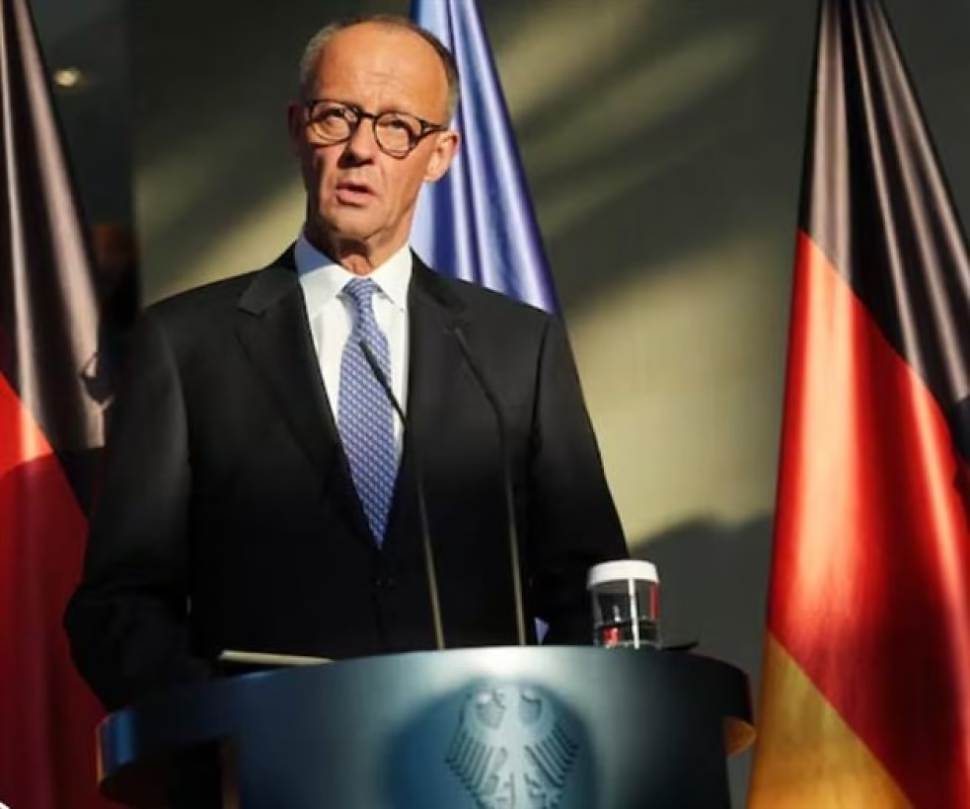
The current focus, as Berlin has denounced, is on a double offensive: sophisticated cyberattacks and massive electoral disinformation campaigns. Imagine combining the skills of an elite hacker with the morals of an internet troll, but on a state scale and with an unlimited budget. The objective is clear: to erode trust in institutions, sow social division and manipulate democratic processes from within, without the need to move a single tank. It is the silent invasion, the asymmetric conflict that uses our own data and our access to information as its main weapons.
Hybrid Warfare: The Toolkit of Modern Chaos
What exactly does this hybrid war in Europe consist of? Forget about trenches and clear fronts. This playbook includes a mix of tactics that would make any thriller scriptwriter pale: interference in cyberspace, influence campaigns on social networks, covert financing of extreme political groups, and covert intelligence operations. It’s a whole new security challenge, where the line between peace and conflict is as blurry as an app’s terms of service. It represents a major challenge because it forces democracies to defend themselves in an area where the rules of conventional war do not apply, and where anonymity is the perfect shield for the aggressor.
This Russian offensive is not an isolated event; It is a persistent and adaptive campaign. Digital attacks target critical infrastructure, from energy to healthcare, while propaganda and fake news are designed to polarize and paralyze public debate. Moscow’s underlying message is one of permanent destabilization, a way to exert power and project influence without bearing the costs of open military confrontation. For European security, it means that defense is no longer only in the barracks, but also in the servers, in the algorithms of social networks and in the resilience of its civil society.
In summary, we are facing a shadow pulse that defines the geopolitics of the 21st century. Germany’s complaint is not just a diplomatic accusation; It is a reflection of a reality where the battle for truth and the integrity of systems is as crucial as the defense of territory. The era of unconventional warfare is here to stay, and its playing field is global, digital and deeply personal.
Does this new form of conflict seem relevant to you? Share this analysis on your social networks to alert more people and explore other content on geopolitics and digital security on our website.