Smuggling in Matamoros: growth under military control
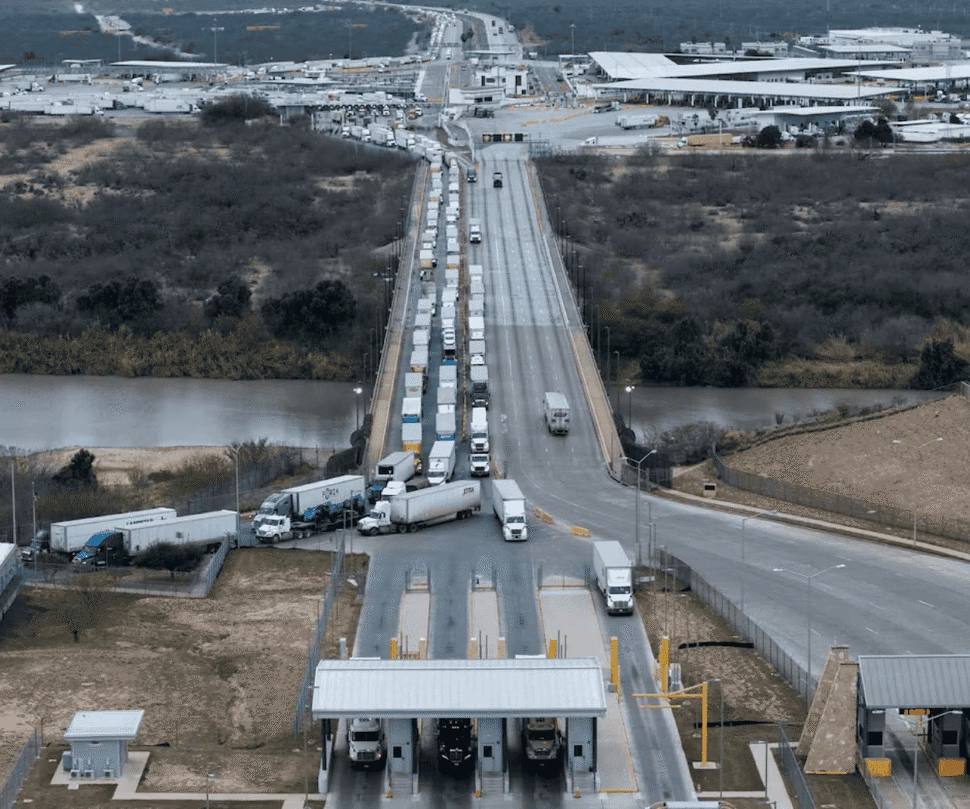
Fuel smuggling from the United States to Mexico, a practice that intensified during the six-year term of Andrés Manuel López Obrador, now involves three high-ranking soldiers from the Secretariat of National Defense (Sedena). The Attorney General’s Office (FGR) accuses them of facilitating the illegal entry of gasoline into the customs office in Matamoros, Tamaulipas, between June 1, 2024 and July 15, 2025.
An investigation by EL PAÍS, based on confidential documents and foreign trade databases, reveals that crime has multiplied in that border area since Sedena assumed control in mid-2020. The militarization of customs, justified by the former president as a measure to guarantee honesty and efficiency, did not prevent the fiscal huachicol – as hydrocarbon smuggling is known – from finding new ways of operating.
Ghost companies and figures that explode
Records show that in 2019 and 2020, suspicious imports of additives and lubricating oils did not exceed 2 million liters. Starting in 2021, with customs in military hands, the volume skyrocketed. That year, the company Nafta Aditivos Orgánicos, indicated in military documents as linked to illegal trade, imported 80 million liters of additives supplied by the American Hevi Logistics.
In 2022, Hevi Logistics shipped another 80 million liters. But the biggest jump occurred in 2023, when imports reached 690 million liters. Most of it came from Hevi Logistics and the rest from Ikon Midstream, another export firm under investigation by US authorities. The importers were old acquaintances, such as Sensive Solutions, which shares management with companies linked to the network of the Ministry of the Navy, or JSC Servicios Aduanales, which received millions of pesos from Ahavat Logistics Solution, identified as an intermediary for the Jalisco New Generation Cartel.
By 2024 and 2025, the numbers fell to pre-2021 levels. However, the FGR discovered a new method: using calcium chloride solution as a disguise. The JR Customs Services company would have smuggled 144 million liters of fuel between June 2024 and July 2025 with the complicity of the three fugitive soldiers.
Official response and previous evidence
Sedena responded to EL PAÍS that operational control of customs corresponds to the National Customs Agency of Mexico, although it reiterated its willingness to collaborate with the FGR. The prosecution described the case as “one of the largest smuggling schemes detected in the country.”
Internal documents leaked by Guacamaya Leaks indicate that the Government had information since January 2020 about the unusual increase in lubricant imports without economic support. In recent weeks, the United States Department of the Treasury sanctioned companies and individuals complicit in a tax huachicol network linked to the Jalisco Nueva Generación Cartel, with 160 reports of suspicious activities worth $7 billion from Texas and Florida.