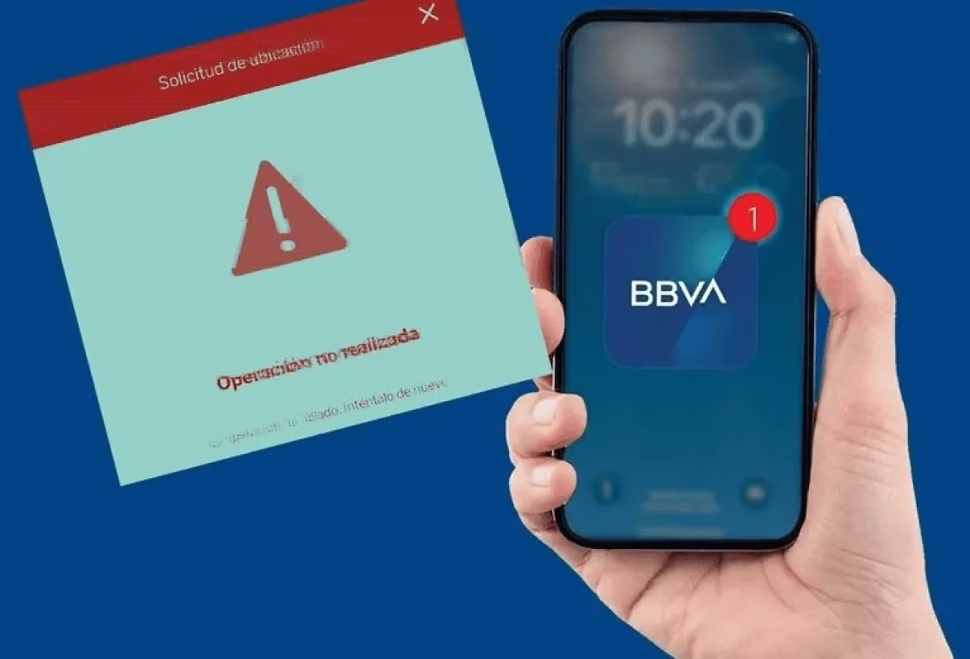
Widespread Disruption in BBVA Digital Banking
This Monday, October 13, at approximately 12:00 p.m., BBVA México’s digital platform experienced a massive interruption that affected a multitude of customers. The collapse of the system prevented the execution of essential financial operations, including interbank transfers, deposits and cardless cash withdrawal functionality, generating a significant disruption in the personal economic activity of thousands of users.
The technological crisis was immediately manifested through the main social networks, where the affected users expressed their frustration and discomfort. The inability to access funds or complete payments on a business day triggered a wave of complaints on digital platforms, evidencing the population’s deep dependence on online banking services. However, in an unexpected twist, a part of the digital community channeled their frustration through humor and satire, creating and sharing memes that temporarily relieved collective tension.
Official Statement and Reactions in the Digital Community
Faced with growing pressure, the financial institution issued an official statement through its account on the social network This statement, although brief, confirmed to customers that the institution was aware of the problem, although without offering a clear schedule for the full restoration of service.
The online reaction was polarized. While many users criticized the lack of robustness of the bank’s digital infrastructure, others tried to find contextual explanations. A recurring argument pointed out the proximity of the fortnight period, a time of high transactional demand that usually saturates banking systems. This perspective suggests that the spike in concurrent activity may have been a triggering factor for the application crash. Others pointed directly to a recent software update of the mobile app, arguing that previous versions of the interface were more stable and efficient, which raises serious questions about the testing protocols and deployment of new versions.
The ingenuity of Internet users was immediate. The situation generated a vast collection of memes and sarcastic comments that quickly went viral. One of the most repeated phrases, resonating with a popular sentiment, was: “But to get paid if they are good”, a scathing criticism that reflects the perception of asymmetry in the efficiency of banking services. This social phenomenon demonstrated how communities use humor as a coping mechanism against systemic failures that are beyond their control.
Implications and Consequences of Lack of Availability
The prolonged unavailability of a channel as critical as the mobile application has repercussions that transcend mere inconvenience. In an economic context where immediate liquidity is crucial, the inability to make transfers, pay for services or withdraw cash can lead to tangible consequences for users, such as incurring late fees or the inability to honor financial obligations in a timely manner. This incident underscores the inherent vulnerability of digitalized financial systems and the critical need for institutions to invest in resilient infrastructure and robust contingency plans.
In addition, the event erodes an invaluable asset for any banking entity: customer trust. Each service interruption has a negative impact on the perception of reliability and security that users place on the platform. For many, the instinctive reaction was to restart their mobile devices and internet-connected equipment, initially assuming that the problem was local, which speaks to a widespread expectation that the service should always be operational.
This episode serves as a case study on the modern reliance on digital banking and the associated operational risks. The high concentration of transactions on a few major platforms means that a failure on one of them can create a domino effect in the informal and formal economy. The key lesson for financial institutions is clear: investing in high availability technology, system redundancy and transparent and agile communication protocols during crises is not a luxury, but a fundamental necessity to operate in the digital era.
Were you affected by this service interruption?Share this information on your social networks to keep your community informed and explore more analysis about the evolution of digital banking on our site.