Sweltering Europe: France on red alert due to extreme heat

France activates alerts and restrictions in the event of temperatures exceeding 40°C in the midst of an exceptional heat wave in Europe.

France is facing an exceptional heat wave that has forced the cancellation of trains, concerts and sporting events, in addition to restricting alcohol consumption in areas under red alert. Almost a third of the country is at that level, with thermometers reaching 40°C. An even hotter Monday is forecast.

Authorities installed misting stations at the Eiffel Tower and other points in Paris to cool the population. However, drownings are increasing: French media reported four deaths of minors on Saturday, while swimming to beat the heat. In Germany, a man lost his life in the Rhine River and three people are still missing. Health authorities warn that these incidents worsen during periods of high temperatures.

RelatedHeat and alcohol: the risks of drinking during the World Cup

Measures and concerns

The government banned drinking alcohol outdoors in areas under red alert and asked the organizers of Music Day – a festival that brings together crowds throughout the country – to limit alcohol consumption to “preserve emergency services and allow medical personnel to concentrate on caring for the most vulnerable.”

“In this heat, it’s the only way to have fun going out,” swimmer Nicolás Cruz told The Associated Press, while splashing in the Saint Martin Channel.

Zouzou Hobbs, initially skeptical about swimming in the murky urban canal, decided to take a chance: “But it’s hot. I’m going to take my chances. We need to cool off before tonight, when we’re going to be dancing.”

The authorities are especially attentive to homeless people and older adults. Some 15,000 older people died in the 2003 heat wave in France, prompting national reflection. This year, the government mobilized emergency services and armed forces to prepare for wildfires, imposed surveillance on water supplies for nuclear reactors and ordered the closure of 845 schools on Monday.

The heat spreads across Europe

Spain began the summer with much of the country on alert, with temperatures around 40 °C, even in the interior of the Basque Country. Outdoor sports and cultural activities have been suspended. In Italy, eight cities extended heat advisories (“red flags”), with temperatures in the 30s and 40s. In Milan, farm owners installed fans and sprinklers for cows, while Fashion Week attendees fanned themselves under umbrellas.

Germany expects up to 39C on Wednesday, and the UK has issued an “extreme heat” warning for southern England and Wales, with highs of 38C possible. The British Met Office recalled that the record for June is 35.6 °C since 1976. Thunderstorms threaten Germany and Poland.

French Prime Minister Sébastien Lecornu called a crisis meeting and ordered planning for better adaptation to heat waves “through air conditioning, if necessary.” The World Health Organization said more than 200,000 people in Europe died from heat-related causes in the last four years, most of them preventable.

Venezuela: hospital crisis after earthquakes and thousands of people affected

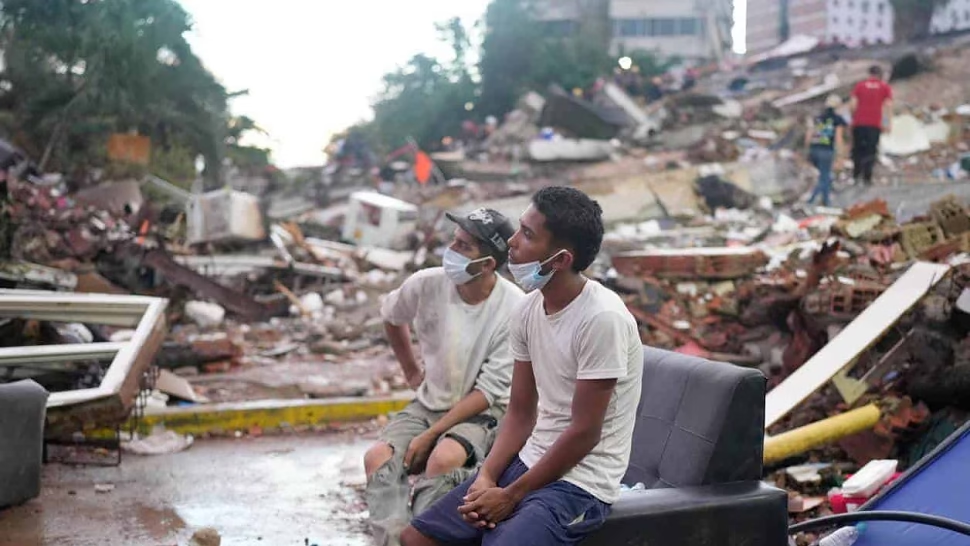
The earthquakes in Venezuela left more than 1,700 dead and a health crisis that overwhelmed hospitals.

Last week’s earthquakes in Venezuela have collapsed the health system. More than 1,700 people died and thousands were injured. Hospitals operate at their limit, according to international organizations.

Hospital damage and disease risk

The WHO reports dozens of hospitals affected, several out of service. Those that work face overcrowding, lack of staff and delays in surgeries. In addition, thousands of displaced people live in makeshift shelters. The UN warns of possible outbreaks of measles, dengue, malaria and yellow fever due to overcrowding.

Figures and call for help

Venezuelan authorities count more than 15,000 affected, but the number could be higher, according to international organizations. NASA estimates that 59,000 buildings were damaged or destroyed. UNICEF estimates that 680,000 children need humanitarian assistance. While search and rescue efforts continue, national and international organizations are asking to reinforce humanitarian and medical aid. The priority is to care for the affected population, prevent the spread of diseases and strengthen the response capacity of the health system to the magnitude of the emergency.

Continue reading

The ‘Flemish Revolution’ shakes Albania against Kushner’s project

Albanian environmentalists use foam flamingos to protest a tourism project linked to Jared Kushner.

The ‘flamingo revolution’ that challenges a Kushner project in Albania

Thousands of people have demonstrated in Tirana against a luxury tourism megaproject linked to Jared Kushner, son-in-law of US President Donald Trump. The mobilizations, baptized as the “flamingo revolution”, have a peculiar symbol: figures of flamingos made of foam by the activist Natma Paja, used to make visible the rejection of development.

The project includes hotels, villas, apartments and a marina on Sazan Island and Narta Lagoon, a protected area that is home to migratory birds. Civil organizations denounce a risk to biodiversity and demand the suspension of the works.

The government defends investment

Prime Minister Edi Rama has backed the project, arguing that it will boost high-end tourism, strengthen the economy and support Albania’s aspiration to join the European Union. But the opposition does not give in.

As protests continue, the Special Prosecutor’s Office against Corruption and Organized Crime opened an investigation into the case, without revealing details. The European Union, for its part, monitors that the initiative complies with the environmental standards required of the candidate country.

Rama has reiterated that he will not stop the project, which he describes as a historic opportunity. The conflict keeps open the debate between economic growth, environmental protection and transparency in large investments.

Continue reading

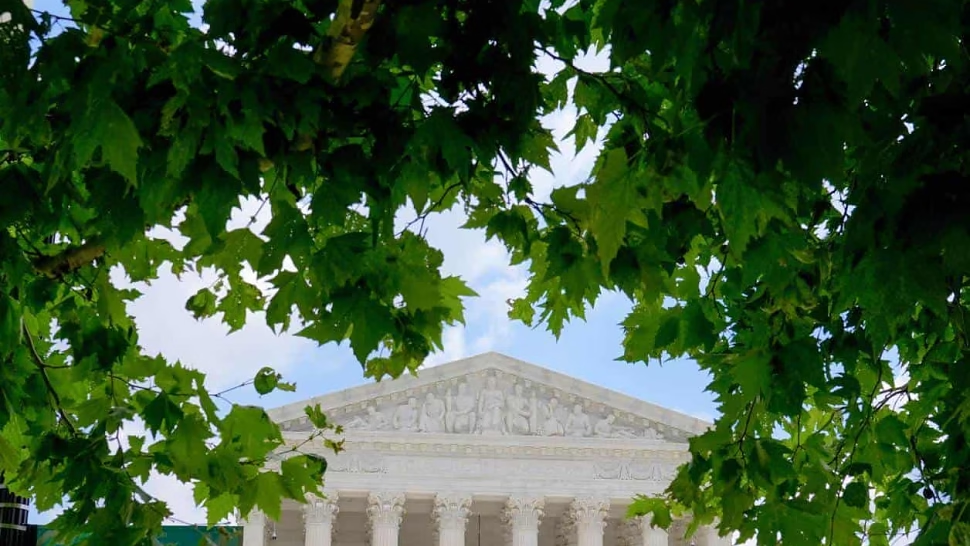
US Supreme Court rejects Trump order on citizenship

The highest court maintains the right of birthright citizenship with a vote of 6-3.

The United States Supreme Court confirmed this Tuesday the principle of citizenship by birth. With a vote of 6-3, the highest court rejected President Donald Trump’s executive order that sought to deny nationality to children of people in an irregular immigration situation or with temporary status.

The weight of the Fourteenth Amendment

The president of the Court, John Roberts, noted that citizenship represents “the right to have rights.” He recalled that the Fourteenth Amendment extended that guarantee to every person born in United States territory. The decision reaffirms that, with limited exceptions — such as children of diplomats or occupying forces — anyone born in the U.S. acquires nationality at birth.

The executive order never went into effect. It was suspended by federal courts considering that it contravened the Constitution and the precedent of the case United States v. Wong Kim Ark(1898). The Trump administration argued that children of non-citizens or temporary residents were not fully under the country’s jurisdiction. But the majority of the justices rejected that interpretation.

Impact on the migrant community

According to estimates by specialized organizations, the measure would have affected more than 250,000 babies born each year in the United States to non-citizen parents. It includes children of undocumented migrants, foreign students and people waiting for permanent residency. The decision represents a setback for one of Trump’s most visible immigration proposals.

Continue reading