The silence of the soft drinks
In the great theater of public policy, sometimes what is not said is more revealing than the speeches. President Claudia Sheinbaum has just dropped a silence bomb: large beverage and snack companies have not filed a single formal complaint to reverse restrictions in schools.
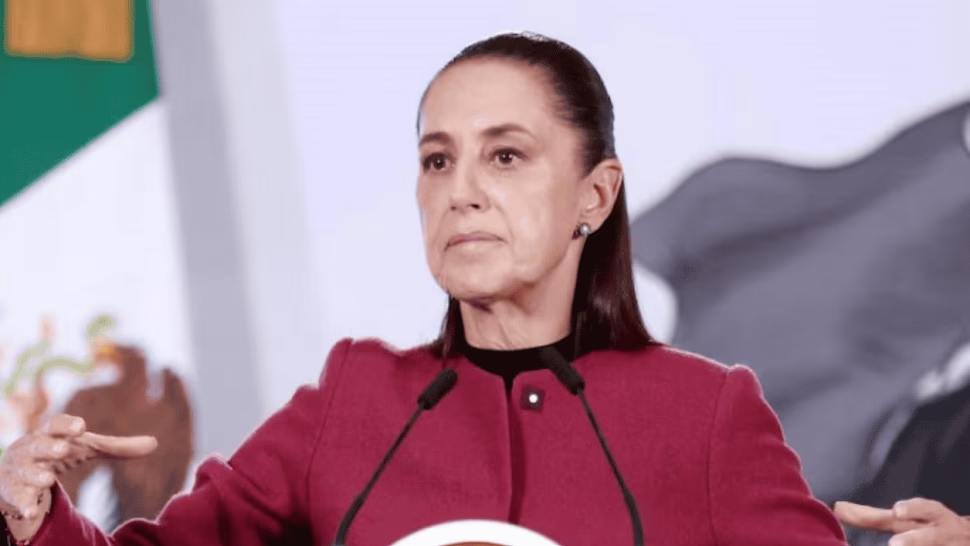
“We have spoken a lot with all the soft drinks companies and they agree. There has been no request in the meetings to return soft drinks or even sweets,”
That was his forceful statement in the morning. Think about the weight of that phrase. We are talking about a gigantic industry, with historic lobbying power, that seems to be accepting without question that its products are limited in one of its key markets: children during school hours.
Strategy or resignation? It’s the million dollar question.
A regulation with clear limits
Sheinbaum was very clear in marking the court. This is not an outright ban, as some might misunderstand. It is a regulation with a precise objective.
“It is not that soda is prohibited; what we are doing is limiting consumption in schools. Outside of school hours, under family supervision, they can decide,”
he explained. The battle is fought within the educational establishment. Outside of him, the decision returns to the family sphere.
The message is clear: the State places a limit on the space it controls (the school) to protect children’s health, but it does not intend to invade the kitchen of each home. It’s a fine line, but a crucial one.
Here is the juicy political fact: if companies do not openly oppose, is it because they see it as impossible to win this image battle? Or because they are negotiating something behind the scenes? In this theater, the lack of shouting from the stage sometimes means that the real fight is happening backstage.
The truth is that, for now, the measures remain in place. And the silence of big brands speaks louder than any press release.