Bicentennial Park is reborn with a social and cultural commitment

A new chapter of inclusion and art: discover how these projects are changing lives.

A space for everyone! Bicentennial Park returns with more life than ever

Let’s celebrate this great news together! The Bicentenario Park, that green lung in the heart of the Miguel Hidalgo mayor’s office, is ready to reopen its doors next July 1. And it’s not just a park, it’s a symbol of transformation! Thanks to the Government of Mexico and the Ministry of Culture, this space, which was previously privatized, is now 100% for the people. The best? It will have 55 renovated hectares, seven ecosystems cared for in detail and green areas that invite you to reconnect with nature. A true gift for the city!

More than a park: a legacy of inclusion and sustainability

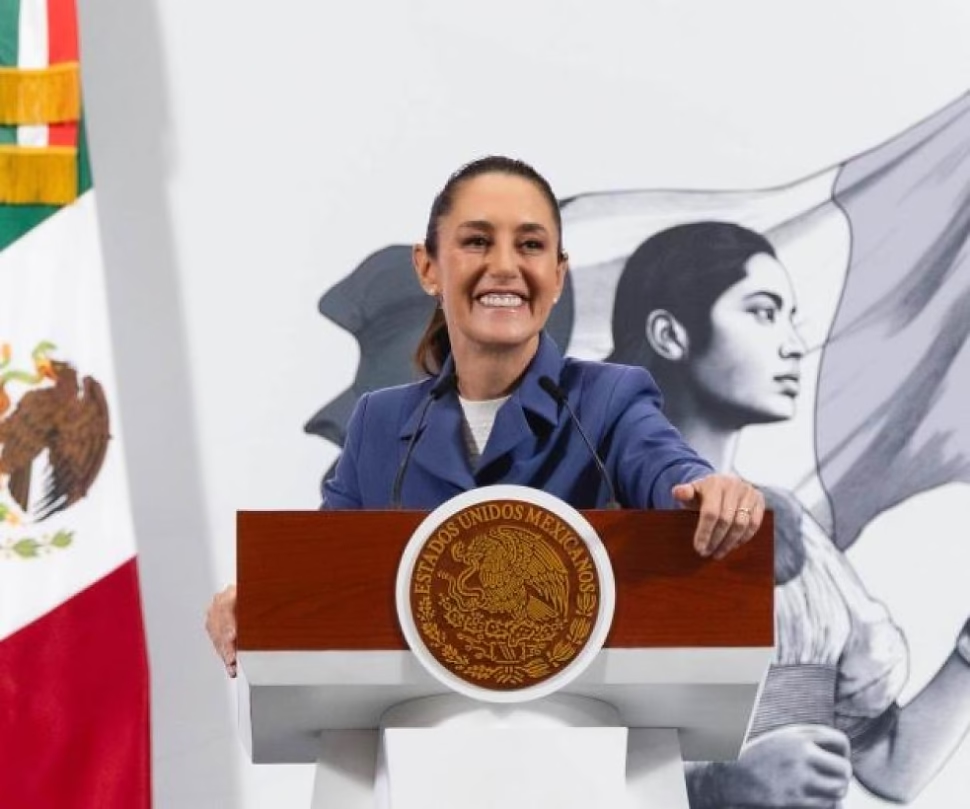
The Secretary of Culture, Claudia Curiel de Icaza, shared with emotion in the morning conference that this project is not only about green spaces, but about rights: the right to the city, to culture and to a sustainable future. With the support of Semarnat, SEDATU and other institutions, the park will operate under a mixed scheme that guarantees its maintenance and free activities for all ages. From Tuesday to Sunday, from 7:00 a.m. to 6:00 p.m., it will be your new favorite place!

RelatedNeighbors demand that Bicentennial Park be returned to its original vocation

“Rescuing public spaces is giving back to the people what was always theirs,” Curiel de Icaza highlighted. And that includes a running track, coexistence areas and collaborative management with the National Auditorium. Because when we work together, dreams come true!

Music that transforms: the “México Canta” contest unites talents

But the good news doesn’t end there. At the same conference, part of the jury of the “Mexico Sings for Peace and Against Addictions” contest was presented. Imagine! Personalities such as Regina Orozco, Mónica Vélez and Miguel Trujillo are supporting more than 15 thousand young people who sent their proposals. Of them, 365 will be the finalists announced on July 4. The goal? Create musical narratives that inspire, far from violence and full of Mexican identity.

“Young people are the fresh voice that Mexico needs,” said Curiel de Icaza. And this contest is not only about talent, but about opportunities. Starting in August, the in-person qualifiers will be broadcast on public television, bringing messages of hope to the entire country. Art changes lives!

A call to action: be part of the change!

Are you as excited as we are? Share this news and help spread projects that build a fairer and more colorful Mexico. Have you already marked the reopening of Bicentennial Park on your calendar? See you there! And if you love music, follow the “México Canta” contest closely. Together, we are writing a story of pride, community and future.

#ParqueBicentenario #CulturaPara todos #MéxicoSing – The change starts today!

They dismantle two clandestine laboratories in Michoacán and Nayarit

The Navy located and disabled two laboratories with the capacity to produce 17.5 tons per month.

The Secretary of the Navy (Semar) reported that in recent days, naval personnel located and disabled two clandestine laboratories in Michoacán and Nayarit. In the operations, 11 reactors of approximately 30 thousand liters were seized, as well as 2.5 tons of chemical precursors and specialized infrastructure for the production of illicit substances.

Details of the operation

According to a statement from the agency, both facilities had a production capacity of more than 17.5 tons per month. The estimated value in the illicit market reaches 412 million dollars. Semar stated that this seizure represents resources that stopped strengthening financial structures of criminal organizations.

The laboratories were identified through naval intelligence work, aerial and ground surveillance, operational reconnaissance and coordinated actions between security authorities.

Semar highlighted that under the current administration it has located and disabled a total of 75 clandestine laboratories. This is equivalent to an economic impact for organized crime of 20 thousand 186 million 608 thousand 766 Mexican pesos.

The agency assured that it will continue with these tasks as part of the National Security Strategy. Just on July 14, the Secretary of Security and Citizen Protection, Omar García Harfuch, reported that from October to June the Security Cabinet has dismantled 2,627 clandestine laboratories and methamphetamine concentration areas. In addition, it reported 498.98 tons of drugs seized, including 5 million 546 thousand fentanyl pills.

Continue reading

INE defines rules to stop early campaigns

The INE seeks to avoid abuses in the internal selection of candidates towards 2027.

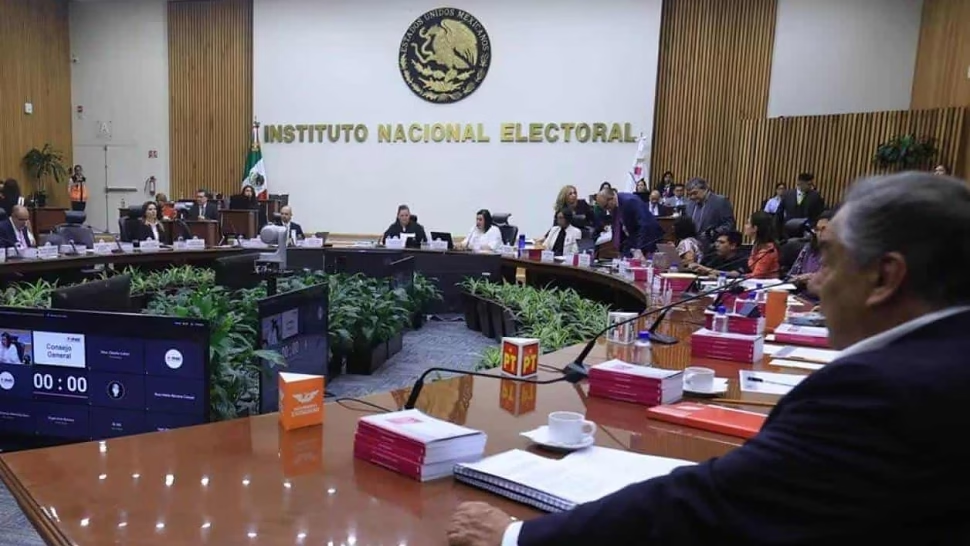
The National Electoral Institute (INE) will discuss this Thursday the guidelines to regulate the so-called “advance campaigns”, the period in which the parties choose their candidates for the 2026-2027 Electoral Process. The proposal, promoted by counselor Jorge Montaño, seeks to avoid abuses and guarantee an even floor among applicants.

What do the new guidelines contemplate?

The project establishes that internal selection expenses be charged to the parties as ordinary expenses, with limits: 3 million pesos for activities of candidates and 800 thousand for events with militants. In addition, the INE may send representatives to public events of the so-called “coordinators” or “defenders” to verify that they are not calling for voting before the pre-campaigns.

It also requires aspiring public servants who have not left office to avoid the use of public resources, submit expense reports and comply with rules on artificial intelligence. The proposal, perfected in working groups with parties, now covers all positions and not just governorships.

Adjustments for the Verification Commission

The General Council will also modify the Commission Regulations to allow the integration of the Candidacy Integrity Verification Commission, created in Claudia Sheinbaum’s electoral reform. Its goal is to prevent organized crime from infiltrating the ballots. Sources from the INE announced that next week the formation of this new body will be defined.

Continue reading

Sheinbaum and Greer review progress of the T-MEC in the National Palace

Sheinbaum and Greer discussed the review of the trilateral trade agreement.

Key meeting for the T-MEC

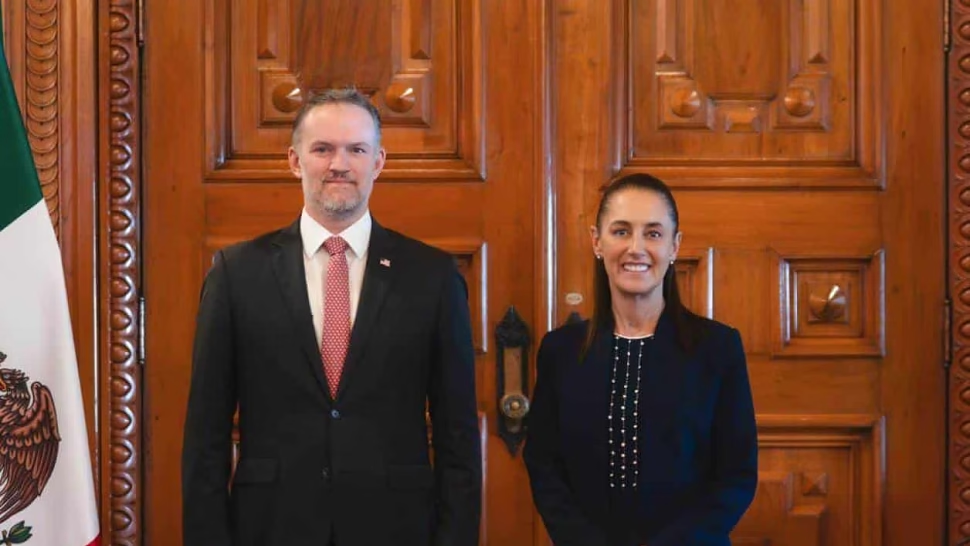
The United States trade representative, Jamieson Greer, left the National Palace at 11:31 a.m. after an hour and a half meeting with President Claudia Sheinbaum. An extensive security operation protected his departure, accompanied by Ambassador Ronald Johnson.

The meeting was attended by Marcelo Ebrard, Secretary of Economy; Julio Berdegué, former head of Agriculture; and Altagracia Gómez Sierra, coordinator of the Regional Economic Development Advisory Council. No official offered statements at the exit.

Sheinbaum published on social networks: “At the National Palace, we met with the United States trade representative, Jamieson Greer; we made progress in the review of the T-MEC and bilateral agreements for the benefit of both peoples.”

In her morning conference, the president affirmed that her government has done “everything humanly possible” so that Mexico faces the trade review in the best conditions. Sheinbaum assured that they will continue to defend national interests against unilateral decisions from Washington.

“We don’t know exactly what the United States is going to do; what we do is our best work to find the best conditions for our country,” he said.

The president rejected statements by US legislators about an alleged failure to deliver water. “We are complying perfectly and there is total agreement with the United States. This year we expect more rain and it will still be fulfilled; there is no problem at this moment with the issue of water,” he said.

He indicated that the meeting focused on trade issues, while security and other bilateral issues will be addressed at the coordination tables. Sheinbaum added that he will not respond to every statement made by US officials or legislators, as many correspond to other spaces for dialogue.

Continue reading