


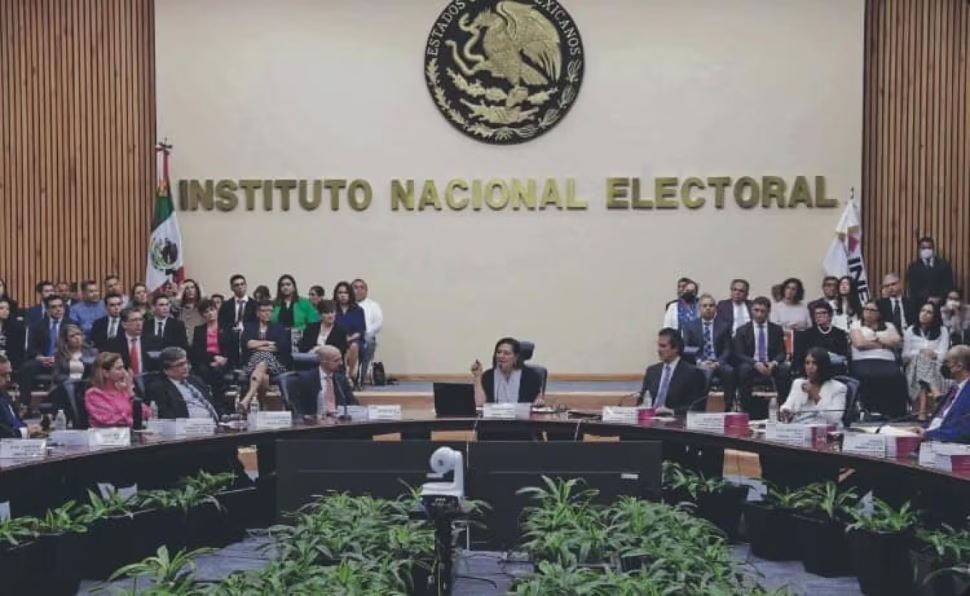
The great electoral queue: when 21 thousand dreams collide with 333 realities
The National Electoral Institute has just released the figures. Nearly 21 thousand people have applied for 333 positions in its 2026 Public Competition. Yes, you read that right. The math is brutal: for every available seat, there are about 63 people waiting in line.
The INE sells it as one of the “most extensive and inclusive” processes in its recent history. The positions are divided into 49 different positions, from Executive Directorates to decentralized bodies. The stated objective: “strengthen the electoral function” with “highly qualified” personnel.
“This process is based on principles of merit, clear rules and objective evaluations,” says the official statement.
Parity as a flag (and as a cipher)
This is where the institutional discourse gets interesting. Of the 20,900 applicants, 11,213 are women, 9,604 are men and 83 are non-binary people. The INE not only boasts the numbers, but also announces that 66.67% of the vacancies will be filled by women.
Sounds good on paper. Exclusive places for women, parity criteria, inclusion for historically discriminated groups. All wrapped in the neat language of 21st century public service.
But allow me a cynical-institutional moment. When an organization trumpets its inclusion mechanisms, I always wonder: are we celebrating progress or excusing centuries of exclusion? Is this the quota that corrects or the one that perpetuates?
The most revealing thing is usually what is not said. For example: how many of these positions are really new and how many are simple internal retraining? The INE mentions that the contest offers “growth opportunities” for those who are already within the SPEN. Translation: part of the pie has already been shared.
And then there is that uncomfortable detail: 83 non-binary people among more than twenty thousand applicants. Symbolic figure that shouts more about what is missing than about what has been achieved.
In the end, behind the impeccable statement and the round figures there is a simple truth: thousands of people still believe in the possibility of changing the system from within. Or at least, to get a stable job.
The question that remains is whether this contest will really strengthen democracy or simply renew the electoral bureaucracy with a more diverse face. Time—and the upcoming electoral processes—will tell.


