The future of the Catholic Church is decided in the next Conclave

The election of the next Pontiff faces two opposing visions: reformist continuity or return to conservatism.

After the death of Pope Francis: a rigorous analysis of the succession scenario

The death of Jorge Mario Bergoglio at the age of 88, which occurred on April 21 due to a stroke, marks the beginning of a historic process for the Catholic Church. The next Conclave, which will bring together 138 cardinal electors (out of 252 total), will define whether the reformist legacy of the first Latin American Pontiff prevails or conservative positions resurface.

Ideological division and key profiles

According to the academic Felipe Gaytán, a specialist in the Sociology of Religion, the election will transcend individuals: “Two ecclesial projects will be debated: the social opening promoted by Francisco versus dogmatic traditionalism”. This polarization is reflected in the main candidates:

RelatedCelebrities say goodbye to Pope Francis with emotional messages
  • Pietro Parolin (Italy, 70 years old): Moderate and former Secretary of State, architect of the diplomatic rapprochement with China.
  • Luis Antonio Tagle (Philippines, 67 years old): Progressist and media figure, favorite to continue inclusive reforms.
  • Fridolin Ambongo (Congo, 64 years old): Open critic of blessings for LGBTQ+ couples.

The trend analysis reveals that 60% of the electors were appointed by Francis, which could tip the balance towards candidates related to his doctrine of “Poor Church for the poor”. However, as Bishop Francisco Javier Acero warns, “the Holy Spirit operates in the unpredictable.”

Determining variables

Geopolitical factors add complexity to the process:

  • Average age: 72 years among electors, with 11 cardinals bordering on the 80-year limit.
  • Global representation: Only 28% come from Europe, compared to 35% from Latin America and Africa.
  • Recent scandals: Cases like that of Canadian Marc Ouellet (accused of abuse) could rule out candidates.

The process, estimated to take three weeks, will occur under strict secrecy in the Sistine Chapel, following the Apostolic Constitution Universi Dominici Gregis of 1996.

Interested in the future of the most influential religious institution in the world? Share this analysis on your social networks and follow our exclusive coverage of the Conclave. #PapalSuccession
US celebrates 250 years of independence amid record heat and political tension

Extreme heat and political divisions overshadow the celebration of the 250th anniversary of American independence.

The United States commemorated the 250th anniversary of its independence on Saturday amid a heat wave that affected millions and political polarization that marked the day. President Donald Trump spoke on the National Mall in Washington, before a fireworks display touted as historic. On Friday, at Mount Rushmore, he gave a somber speech about the threat of communism.

The celebrations spread throughout the country. In Chicago and New York there were fireworks; The Big Apple began the holiday with a midnight ball drop, similar to New Year’s, and sailboats paraded in front of the Statue of Liberty. However, much of the East Coast suffered temperatures exceeding 100°F (38°C). In Washington, a rodeo and the main parade were canceled; only a smaller parade moved down Capitol Hill as spectators sought shade.

Extreme heat and tight events

In the District of Columbia, an extreme heat warning was issued, with rates that could reach 46 °C (115 °F). National Mall organizers monitored the weather. Temperatures above 38°C were forecast from the southeast to New England, with possible relieving thunderstorms. Despite the heat, a Guinean-born Marine was naturalized at George Washington’s Mount Vernon estate in Virginia, wearing his dress uniform. In Brattleboro, Vermont, a 7-year-old girl ran to pick up candy during a parade. In Louisville, Kentucky, people signed a copy of the Declaration of Independence with a handmade pen.

Polarization and ultranationalist presence

Dozens of members of the white nationalist group Patriot Front marched in Washington wearing masks and Confederate flags. No arrests were reported, according to the Metropolitan Police. In Philadelphia, the birthplace of the nation, fireworks began at noon near Independence Hall. Hundreds of visitors endured the heat as they awaited the celebrations, which coincided with a World Cup match between France and Paraguay.

“It’s a big party here,” said Carlos Alban, who traveled from Chicago to see the game, upon arriving at the stadium. He added that he saw a fan dressed as one of the Founding Fathers.

In Houston, before another World Cup match, astronauts from the International Space Station sent a message alluding to the holiday. The 250th anniversary, which was supposed to be a reflection on the history of the superpower, was marked by extreme weather and deep political divisions.

Continue reading

AfD ratifies its leaders amid massive protests

Alice Weidel and Tino Chrupalla were re-elected amid strong demonstrations in Erfurt.

Convention amidst tensions

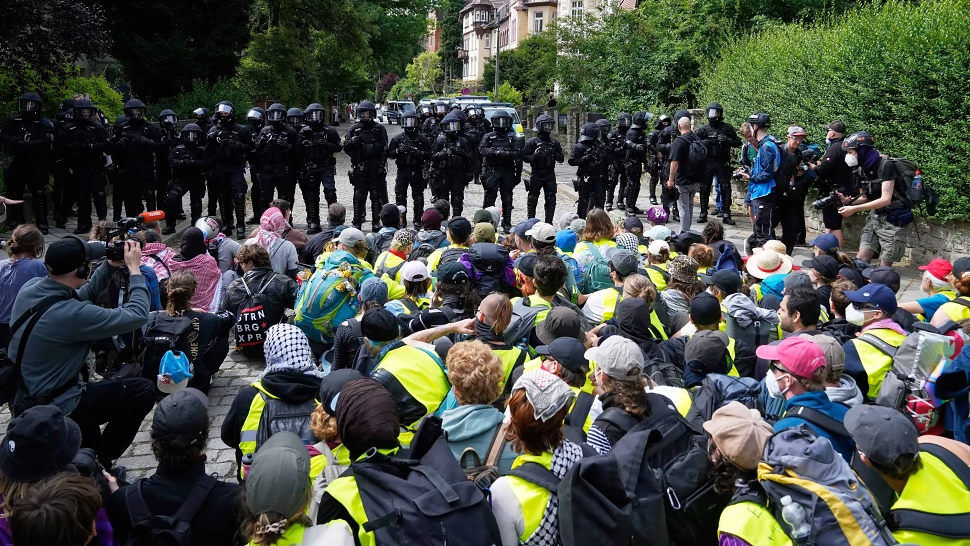
The Alternative for Germany (AfD) party held its national convention in Erfurt, where it re-elected its main leaders. The day was marked by massive demonstrations and some incidents between attendees and the police.

Alice Weidel was confirmed as co-leader with 81% of the votes. Tino Chrupalla obtained the support of 70% of the delegates. Both ran unopposed for a new two-year term, seeking to project unity in the upcoming elections.

The party arrives strengthened after consolidating itself as the main opposition force in Germany, with significant support in several regions in the east of the country. The protests reflect the polarization that political formation generates in German society.

Continue reading

Largest naval parade in history brought together sailboats from 20 countries in New York

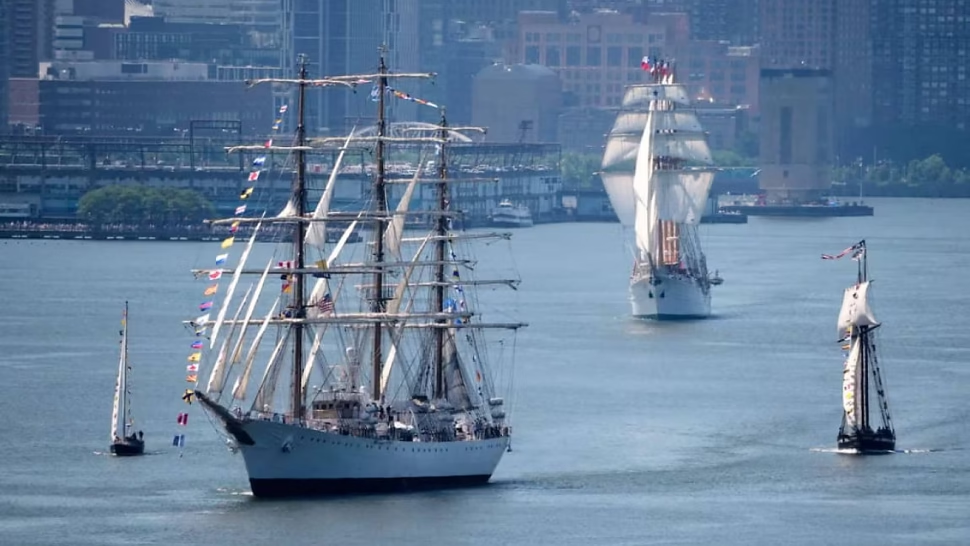
More than 40 sailboats from 20 countries sailed down the Hudson in an unprecedented event.

The Hudson River became the scene of a historic naval rally this Saturday. On the occasion of the 250th anniversary of the independence of the United States, more than 40 tall ships and training ships from twenty countries participated in the parade. Organizers called it the largest meeting of its kind ever recorded.

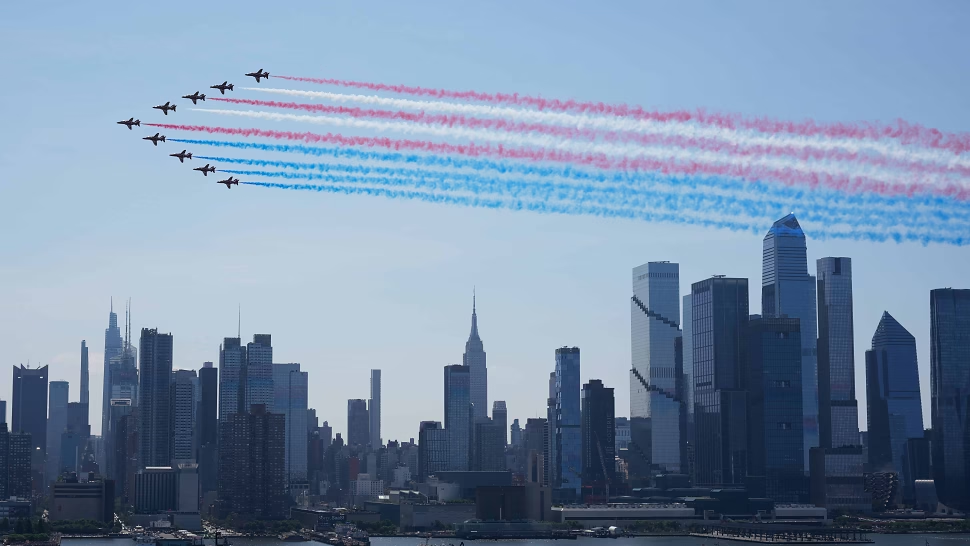
Vice President J. D. Vance headed the boat review. The flotilla sailed between the Statue of Liberty and southern Manhattan, accompanied by overflights of military aircraft and a large attendance of tourists and residents.

Among the most notable ships were the Peruvian BAP Unión, the Spanish Juan Sebastián Elcano and the Chilean Esmeralda, recognized as some of the main training ships in the world.

The celebration occurred in the midst of an intense heat wave that affects New York, in addition to the damage caused by a storm recorded the previous night. Due to those conditions, organizers canceled access to one of the viewing areas on Governors Island to ensure the safety of attendees.

Continue reading