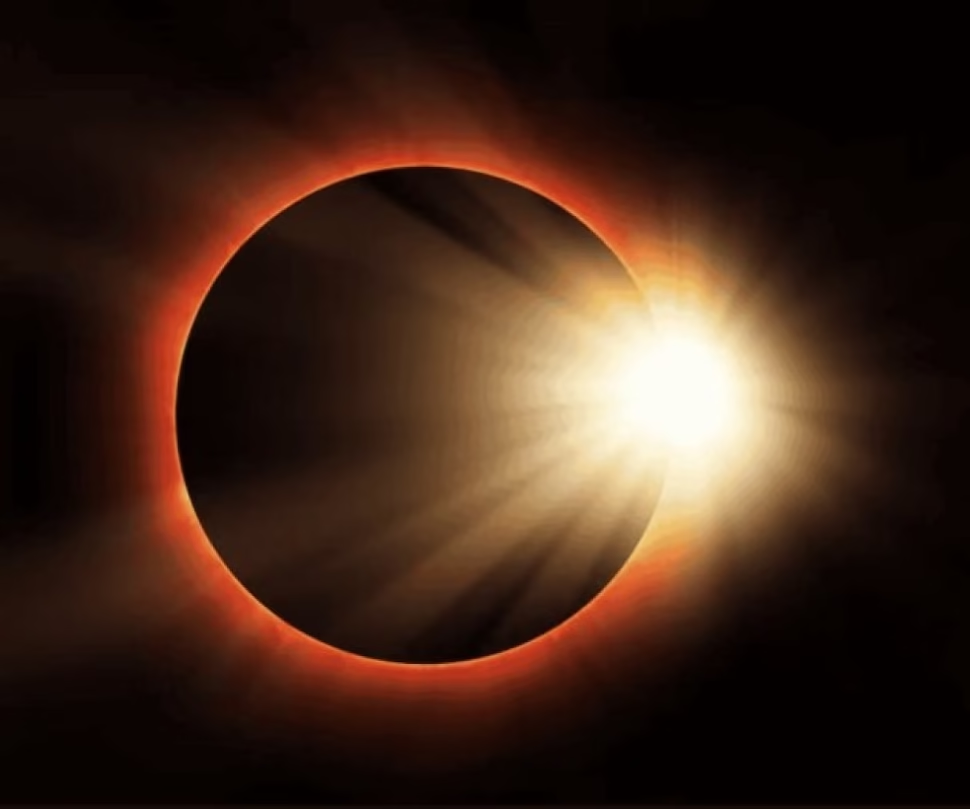
An unprecedented astronomical phenomenon
Solar eclipses are usually fleeting events, lasting an average of a few minutes. However, on rare occasions, the universe surprises us with an exceptional spectacle. According to NASA data, on July 8, 2186 the longest solar eclipse ever recorded will take place, lasting 7 minutes and 29 seconds, surpassing the previous record of 6 minutes and 39 seconds set in 2009.
The science behind exceptional durability
This phenomenon will occur thanks to an almost perfect planetary alignment between the Earth, the Moon and the Sun. Three key factors influence it:
- Lunar distance: The Moon will be close to its perigee (closest point to Earth), increasing its apparent size.
- Earth position: The Earth will be located near aphelion (maximum distance from the Sun), reducing the visible solar disk.
- Orbital speed: The combination of planetary movements will slow down the movement of the lunar shadow.
Visibility and geographical limitations
The path of the shadow will begin in the Atlantic Ocean, near French Guyana, crossing areas of Venezuela and Colombia. Unfortunately, as astronomers point out, Mexico and much of America will be outside the area of total visibility. However, scientific institutions are already planning multidisciplinary studies to analyze atmospheric effects and animal behavior during the event.
Eclipse classification: more than shadows
This event belongs to the category of total solar eclipses, but there are other variants:
Solar eclipses
- Total: The Moon completely hides the Sun, revealing the solar corona.
- Partial: Only a fraction of the solar disk is covered.
- Annular: The Moon, further away, leaves a “ring of fire” visible.
- Hybrid: Combination of ring and total according to geographic location.
Lunar eclipses
- Total: The Moon completely enters the Earth’s umbra.
- Partial: Only a portion passes through the main shadow.
- Penumbral: The Moon crosses the zone of secondary shadow, almost imperceptible.
This record-breaking eclipse will not only be a visual milestone, but a unique opportunity to advance the study of solar physics, atmospheric optics and orbital dynamics. Although 162 years away, projects like NASA’s Solar Dynamics Observatory are already collecting data to accurately model the event.
Are you fascinated by astronomy? Share this article to spread scientific knowledge and continue exploring our content on celestial events. The next generation of astronomers will appreciate your curiosity.