When life gives you a script more dramatic than an episode of La Casa de Papel (but without the appeal of red suits)
Imagine that one day your teenage daughters, in the midst of their rebellion phase (because, let’s be honest, what teenager doesn’t?), decide that their next family trip will not be to the beach, but to join the Islamic State. Yes, as you read it. This is how raw the story of Olfa Hamrouni begins, a Tunisian mother whose personal drama seems straight out of a political thriller, but with zero Hollywood glamour.
From real drama to the Oscar: when fiction cannot compete with reality
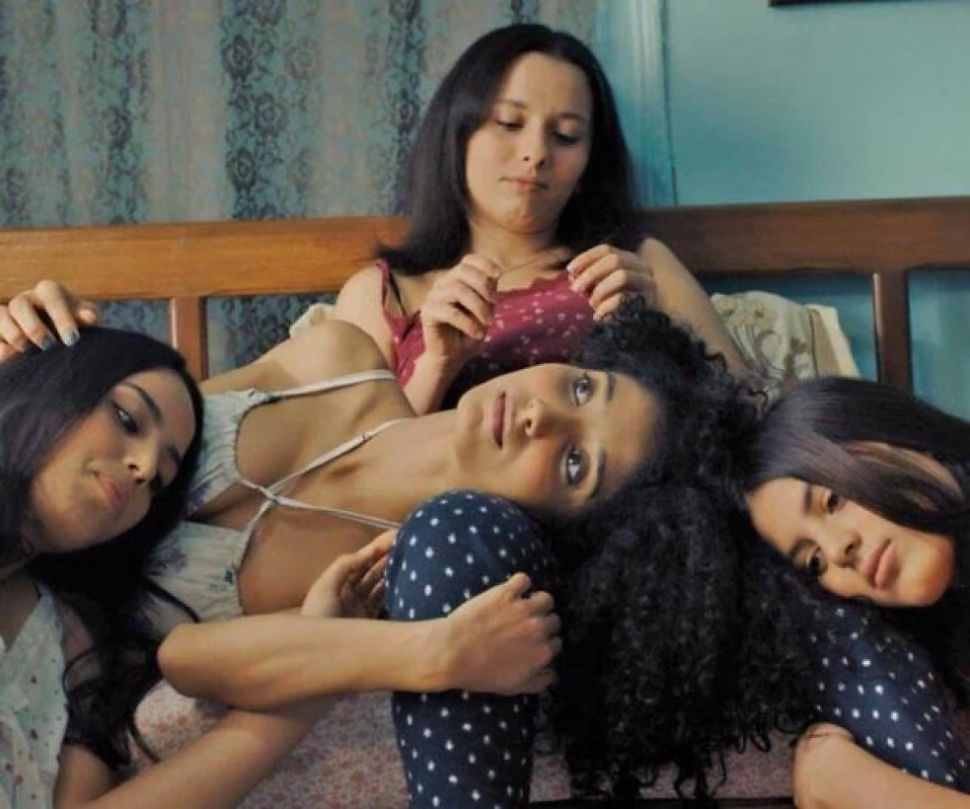
Filmmaker Kaouther Ben Hania (who, by the way, is more talented than most of the directors flooding Netflix with “quarantine love” movies) decided to tell this story in Four Daughters. A documentary that mixes tears, performances and a dose of “when did life get so surreal?”. The film, nominated for an Oscar (because of course, the Academy loves a good drama with a bitter coffee flavor), reconstructs how Olfa went from being an ordinary mother to a public figure without wanting it.
Here is the irony: while Ghofrane and Rahma (the daughters who joined ISIS) lived their own dystopia, the younger sisters and Olfa became the protagonists of a story that no one chose. Ichraq Matar, the actress who plays Ghofrane, gives a touch of “meta-drama” to the matter: how to act the pain of someone who exists, but whose life is unimaginable?
And in case something was missing, the documentary plays with the limits between what is real and what is recreated. Because, let’s face it, what’s more millennial than questioning the veracity of everything? Kaouther not only portrays pain, but wraps it in a narrative so bold that it even makes you wonder: “Is this a documentary or an episode of Black Mirror with less technology and more human heartbreak?”
The B side of the story: when cinema becomes therapy (or torture)
Olfa not only lost her daughters: she lost control of her own history. While the world debates extremism, she carries a grief that does not fit into political slogans. The film, without falling into morbidity, shows how family pain and fanaticism collide in a society that prefers to look the other way. And you, how would you react if your life became film material?
Bonus track: For those who think that Tunisia is only beaches and Star Wars (yes, they filmed scenes from the saga there), this documentary will remind you that the country is also stories like Olfa’s: raw, unfiltered and with an open ending that hurts more than a spoiler for your favorite series.
Are you left wanting more cinema that moves you inside? Share this article and discover other films that challenge what you thought you knew about the world. Because sometimes, the best entertainment is the one that doesn’t leave you indifferent.
PS: If after watching the documentary you feel like hugging your family, you’re not the only one. Real life always gains in intensity.