A New York childhood far from the Hollywood stereotype
The public figure of Ben Stiller, widely recognized for his career in comedy and film direction, is the reflection of a family formation that, although it developed within the entertainment industry, remained notably distant from the archetypal glamor associated with the Hollywood entertainment industry. Their parents, legendary comedians Jerry Stiller and Anne Meara, forged their careers as a comedy team that depended inexorably on creating their own comedic material. According to the memories of the “Zoolander” performer, this professional dynamic was not a mere artistic choice, but rather an imperative economic necessity to support the family. This reality, where nothing was taken for granted, created a domestic environment where the values of work and perseverance were deeply internalized, resulting, paradoxically, in what Stiller himself describes as a happy and rewarding childhood.
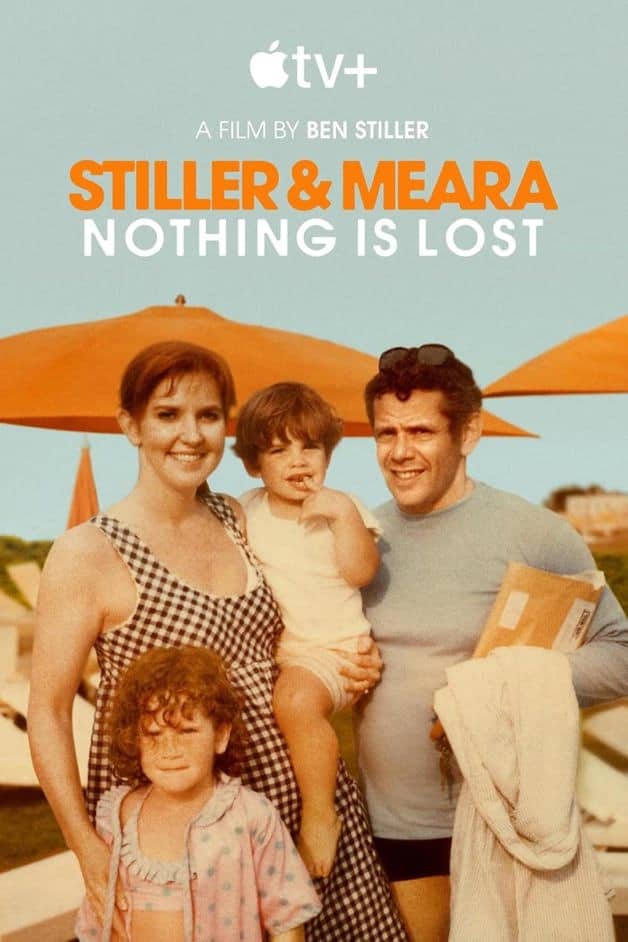
The documentary “Stiller & Meara: Nothing is Lost” emerges as the vehicle through which the artist captures the essence of that time. The production does not focus on fame per se, but on the human experience of growing up in New York in the 1970s and 1980s with parents who, despite their notoriety on television and film, led a radically different existence from that of the stars cloistered in Beverly Hills mansions. Stiller articulates his primary motivation: to document the feeling of that period, exploring the complex interactions between creative and family life in an apartment on Manhattan’s Upper West Side. This methodological approach allows for a thorough investigation of how identities and values are constructed at the intersection between art and everyday life.
The osmosis of the parental legacy
The analysis that Stiller proposes in his documentary work transcends the anecdotal to delve into the psychological and emotional mechanisms of family inheritance. The actor and director postulates that a substantial part of filial learning occurs through a process of cultural and ethical osmosis, that is, through the mere exposure and observation of parental attitudes and behaviors. At the core of his research, Stiller identifies and breaks down the distinctive influences of each of his parents. From his father, Jerry, he internalized an unwavering work ethic, a constant creative drive to improve himself, and a tireless curiosity to explore the past to generate new content. Jerry Stiller wasn’t just an actor; He was a perpetual creator, and that model of dedication and resilience was absorbed by his son as a guiding principle.
On the other hand, from his mother, Anne Meara, Ben Stiller inherited a acute artistic sensitivity and an extremely high standard of professional excellence. This dual heritage—paternal labor discipline and maternal aesthetic sensibility—provides a fascinating analytical framework for understanding Stiller’s own multifaceted career. Furthermore, the documentary examines his parents’ marriage not as a perfect entity, but as a human institution, with its conflicts and reconciliations, which offered the future director a complex and realistic model of relationships. This honesty in addressing family dynamics is what, according to the filmmaker, can generate massive identification with the story, as it reflects the universalities of the relationships between parents and children.
A documentary as a process of healing and closure
The creation of “Stiller & Meara: Nothing is Lost” did not respond solely to an archival or narrative impulse, but rather fulfilled a cathartic and therapeutic function for its director. The death of his mother, Anne, in 2015, and especially the death of his father, Jerry, in 2020 due to COVID-19, created a circumstance of incomplete grief. Health restrictions prevented a conventional funeral from taking place, depriving the family of the collective farewell ritual. In this context, the documentary stood as a substitute act of emotional closure, a space where Ben Stiller could honor the memory of his parents, examine his own legacy and, ultimately, say goodbye in a creative and personally meaningful way.
The decision to document the family apartment before its sale symbolizes this process of preserving memory against oblivion. Stiller approaches this project with calculated vulnerability, prioritizing introspective honesty over the possible comfort of maintaining a pristine public image. His goal was not to project an idealized family, but to faithfully reflect how the personalities, successes and mistakes of Jerry and Anne Meara impacted his sister, Amy, himself and, by extension, the next generation: his own children. This meticulous and courageous approach transforms the documentary into a case study in the intergenerational transmission of trauma, love and values.
Historical context and availability of the work
It is crucial to frame this project within a specific historical and media context. Stiller reflects on how the entertainment world of his parents’ era—dominated by variety shows, game shows, and a very different television structure than today—shaped their lives and, consequently, his own. The documentary thus serves as a valuable cultural artifact that captures not only a family history, but also the evolution of the American entertainment industry. After premiering in select theaters on October 17, the production will have its global launch on the Apple TV+ streaming platform on October 24, guaranteeing access to an international audience to this deep and moving examination of life, legacy and family love.
Share this deep analysis of the family legacy on social networks and explore more content related to documentary film and behind-the-scenes stories.