War on drug trafficking or extrajudicial executions?
An American fighter flies over international waters of the Caribbean. It is the postcard of a strategy that increasingly generates more questions than answers.
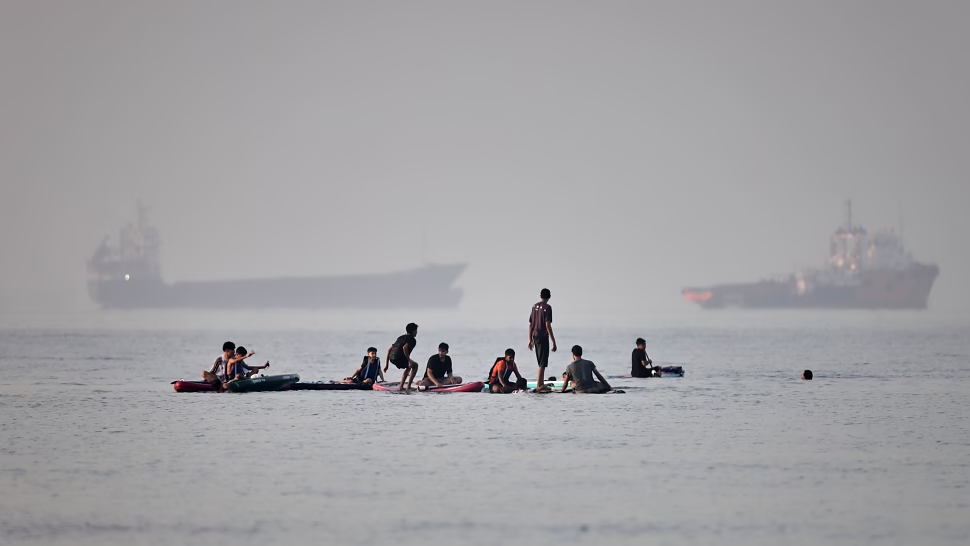
This Tuesday, the Southern Command announced three new attacks against vessels. Eleven people died in waters of the eastern Pacific and Caribbean. Washington identifies them as “narcoterrorists.”
But here’s the detail that makes me raise an eyebrow: they haven’t presented public evidence that those ships were carrying banned substances. They only say that they traveled along “recognized routes.”
“US authorities maintain that the attacked vessels were operated by designated terrorist organizations”
This is part of Operation Southern Lance, which began in September 2025. The number already exceeds one hundred dead and dozens of vessels destroyed.
The legal debate that nobody wants to have
While official statements speak of successes, concern is growing in Washington. Legal experts and Democratic legislators point out something uncomfortable:
“These types of attacks could constitute extrajudicial executions and violate international law”
The US government insists that its actions are legal and necessary. But when I look at historical precedents, I remember how many times we have seen this movie: military interventions justified with convenient labels.
The most worrying thing is the pattern. Each attack normalizes the next. And meanwhile, families in Latin America receive the news that a family member died in “anti-drug operations”, without trial, without public evidence.
Are we really fighting the problem or are we simply escalating a conflict that requires much more complex solutions? History will judge whether these were necessary acts or another chapter of disguised interventionism.