The US conditions its military presence in Europe on greater allied spending

Pentagon conditions its presence in Europe on allies increasing military spending.

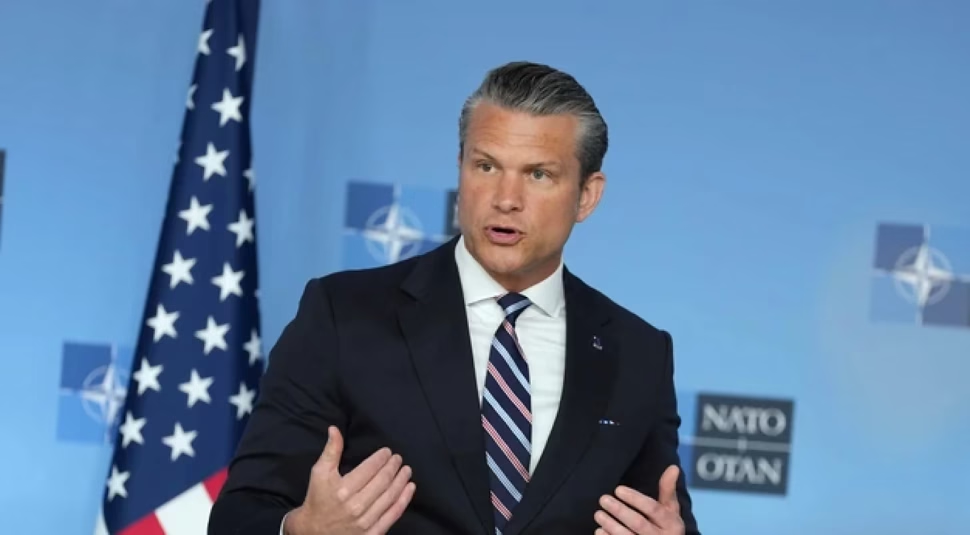
The Secretary of Defense of the United States, Pete Hegseth, issued a warning to NATO countries. He announced a six-month review of the US military presence in Europe, subject to allies making progress in taking over their own defense. The message generated uncertainty among Alliance partners, who face contradictory signals from Washington.

A call for European autonomy

During a meeting in Brussels, Hegseth said the review seeks to accelerate the transition towards European leadership in defense. He assured that the United States will reduce its participation if the allies do not increase their military capabilities. He also criticized access to military bases and questioned European policies on migration and gender equality.

RelatedThe United States carries out a military operation and captures Maduro in Venezuela

The statements come amid inconsistent messaging from the U.S. government about its role in NATO. They include prior warnings that Washington could limit its military support in the event of an attack on a member country. This has forced allies to urgently rethink their defense strategy and spending.

NATO Response

Alliance leaders defended European advances in military investment. They noted that spending has increased significantly in recent years. Secretary General Mark Rutte stated that Europe and Canada have strengthened their capabilities, although he acknowledged that there are still gaps to fill.

The tension between Washington and its allies comes on the eve of an upcoming NATO summit in Türkiye. European military autonomy and the future of American commitment are expected to dominate the agenda, in a context of growing uncertainty about the cohesion of the Atlantic Alliance.
EE.UU. condiciona su presencia militar en...

Earthquakes in Venezuela: health system on the limit and rescues decrease

The Venezuelan health system collapses after the earthquakes; diseases grow and disappear.

Health system under pressure

Almost a week after two powerful earthquakes, Venezuela’s fragile public health system is on the brink of collapse. The WHO reported that damaged and understaffed hospitals are facing a wave of injuries.

According to the government, the earthquakes damaged or put 38 hospitals at risk. The WHO evaluated 21 facilities: three are no longer operating, six were damaged and the rest are overflowing. “The findings reveal chaos in service provision, overcrowding and breakdown of biosafety measures,” said Christian Lindmeier, WHO spokesperson.

In addition, specialist doctors, including maternal care in La Guaira, are missing. This worsens the crisis in a country from which eight million people, many health professionals, have fled in recent years.

Humanitarian crisis and rescues

The government reports 1,943 deaths and 10,571 injuries. However, experts believe that the real figure is higher. NASA estimates that 59,000 buildings were damaged or destroyed.

The main rescue period of 48 to 72 hours has already passed. As of Tuesday, only four people were found alive by authorities. A minor rescued after six days under rubble was the exception.

UN agencies estimate 1.2 million tons of debris. Some 680,000 children require humanitarian assistance. Displaced people sleep in overcrowded cars or shelters, without access to toilets or soap, raising the risk of measles, dengue and malaria outbreaks.

In the absence of an official count of the missing, Venezuelans turn to WhatsApp groups. A non-governmental list registers at least 43,220 missing people.

“The health system, already stressed by decades of underinvestment, is now operating beyond its capacity,” Lindmeier warned. Humanitarian aid arrives late: the Red Cross and the World Food Program set up tents in La Guaira, where people line up for food, medicine and masks.

Continue reading

Merz defends the German team; Nagelsmann will remain in charge

Merz's support for the German team after its defeat sparks political criticism.

Merz’s support and the political storm

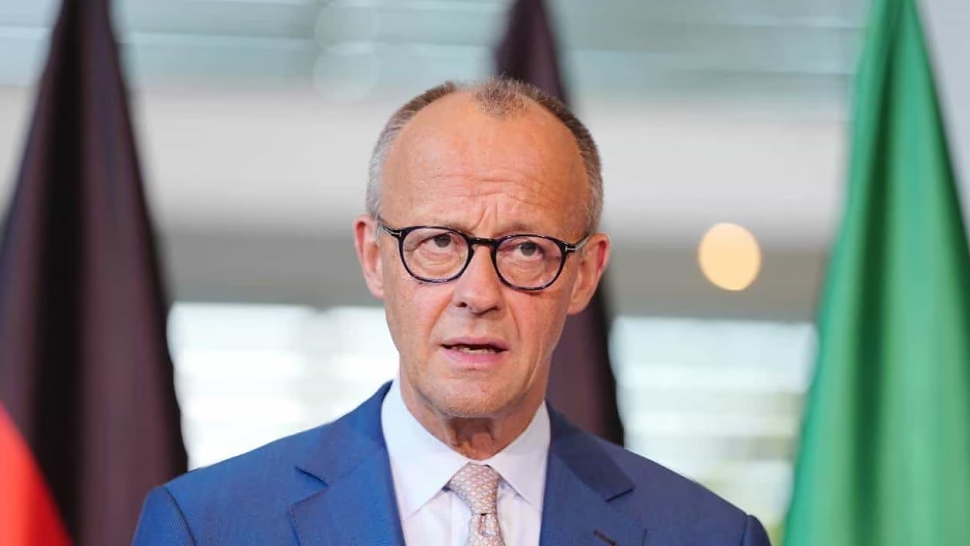
German Chancellor Friedrich Merz ignited the political and sporting debate by posting on social media his support for the national team, eliminated on penalties by Paraguay in the round of 32 of the 2026 World Cup. “Although the elimination hurts: What a game! With your commitment and team spirit, you moved our country. We are proud of you,” he wrote.

The reaction was immediate. MEP Marie-Agnes Strack-Zimmermann and opposition member Sevim Dagdelen accused him of losing touch with reality. The daily Tagesspiegel suggested that the publication was a mistake by an employee of the Federal Press Office.

The federation analyzes the performance

Bernd Neuendorf, president of the DFB, acknowledged the disappointment and held a workshop with coach Julian Nagelsmann and directors Andreas Rettig and Rudi Voeller to evaluate the team’s performance.

Despite rumors about his departure, Nagelsmann made it clear that he will not resign. “If the DFB wants me to continue, I will. And if not, they can tell me. I know how football works,” he said. Voeller backed him up: “He’s the right person in the right place.”

Klopp, meanwhile, ruled out any return. From the United States, where he works as a commentator, he said he was satisfied as Red Bull’s global football director. The German team thus begins an analysis process without immediate changes on the bench.

Continue reading

Mexican moles receive global recognition in Venezuela

Mexican rescue brigades are applauded online for their work in earthquakes in Venezuela.

Devastating earthquakes of magnitude 7.2 and 7.5 shook central Venezuela last Wednesday, June 24. Almost five days after the earthquake, which left thousands dead, the South American country remains in a state of emergency.

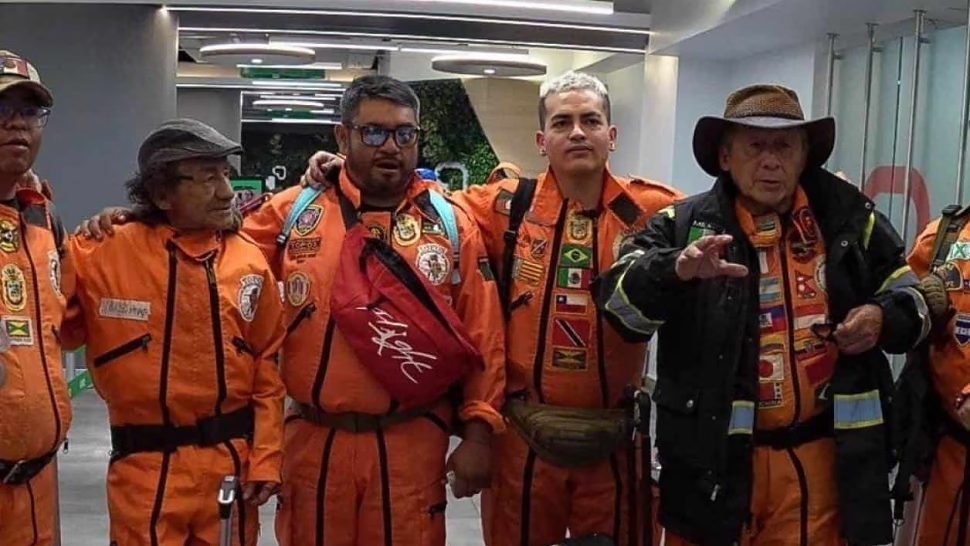
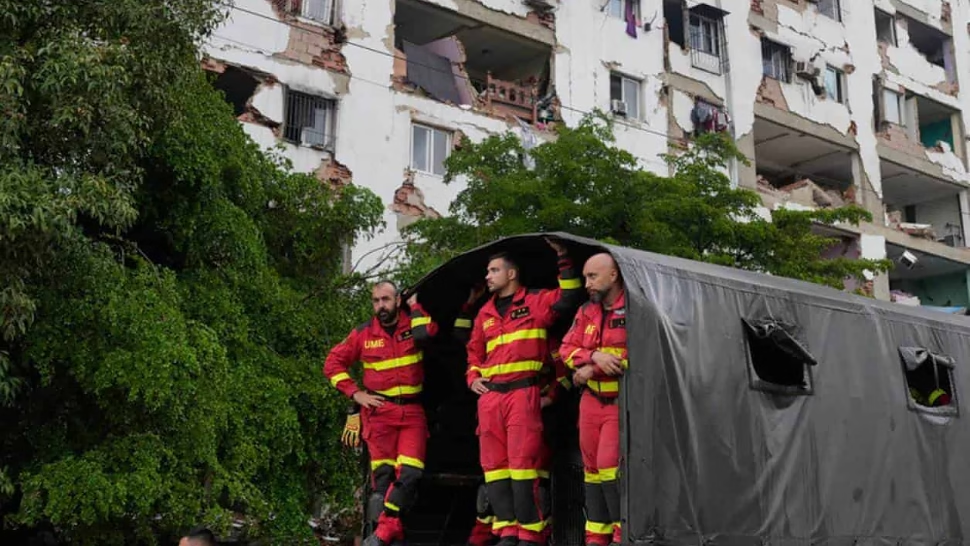
Rescuers from various nations are working tirelessly among the rubble to locate survivors. In this task, the Mexican Topos brigades have stood out for their dedication and vocation for service. His work has been recognized by millions of people around the world.

Recognition on social networks

Users of digital platforms like X have shared dozens of videos and images of the Moles’ work in Venezuela. The messages celebrate not only the rescues of people, but also animals. Some of the most replicated thank yous include:

“The Topos of Mexico are surreal! Forever great.”

“If ever, in the face of a natural disaster, you get trapped in the rubble and you hear that the Moles from Mexico have arrived, resist a little longer because you are about to be rescued, they will find you no matter what. The Mexican Moles have won heaven!”

“The Mexican Topos continue to carry out extraordinary work in Venezuela, working tirelessly among the rubble to save lives and provide hope in the midst of tragedy. Their bravery, solidarity and commitment have once again demonstrated why they are a source of pride for Mexico and an example for the world.”

The wave of publications reflects the global impact of the work of these emergency bodies. Their performance in Venezuela has reinforced the image of the Topos as a symbol of international solidarity.

Continue reading