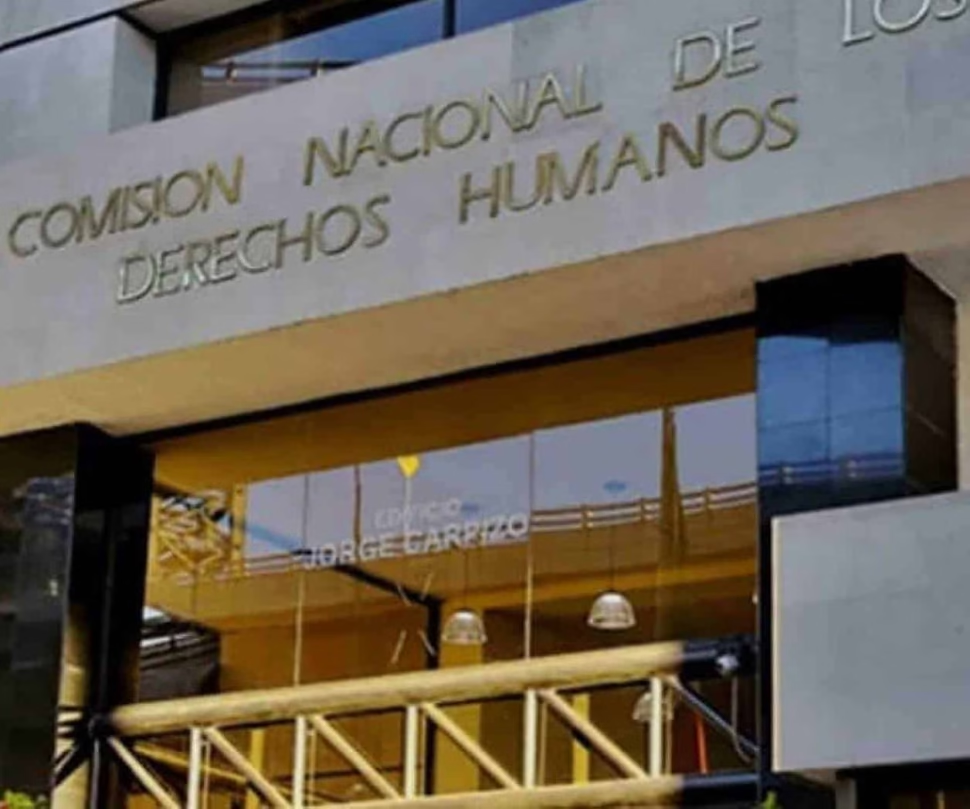
Almost three years have passed since the members of the CNDH Advisory Council collectively resigned. Since then, the organization headed by Rosario Piedra Ibarra functions without that body of citizen participation and internal counterweight that the law requires. The Senate of the Republic has not yet issued the call to appoint the 10 new councilors.
During this period, the Commission has issued recommendations, approved internal provisions, budgeted and modified its administrative structure. All without citizen supervision, despite the fact that the CNDH Law establishes this mechanism of institutional support and supervision.
The absence of the Council has direct consequences. Adalberto Méndez, former member of the body, explains it with a recent example: the recommendation of the CNDH on the Ayotzinapa case.
“One of the powers that the law gives to the Advisory Council is that these recommendations were passed by the opinion of the council. So, when you have an organization without this council, these types of recommendations are passed. Completely biased recommendations, aimed at protecting the public authorities and not the citizens.”
Méndez acknowledges that the official argument could be that the council’s opinions are not binding. But he maintains that even then there is legal non-compliance.
The six councilors who were still in office resigned on October 23, 2023. In a letter to the Senate they indicated that their opinions were no longer taken into account and that there were no conditions to work. Since then, the Senate has not completed the renewal process.
Shared responsibility
For Méndez, the omission is not only that of the presidency of the CNDH. The Senate is also to blame.
“The Senate of the Republic is equally responsible. The appointment of the advisors is an exclusive power of the Senate. It is the only one that has the power to issue the call and develop the selection process.”
Meanwhile, the CNDH continues to operate without that citizen counterweight that the law itself created to guarantee its autonomy and transparency.