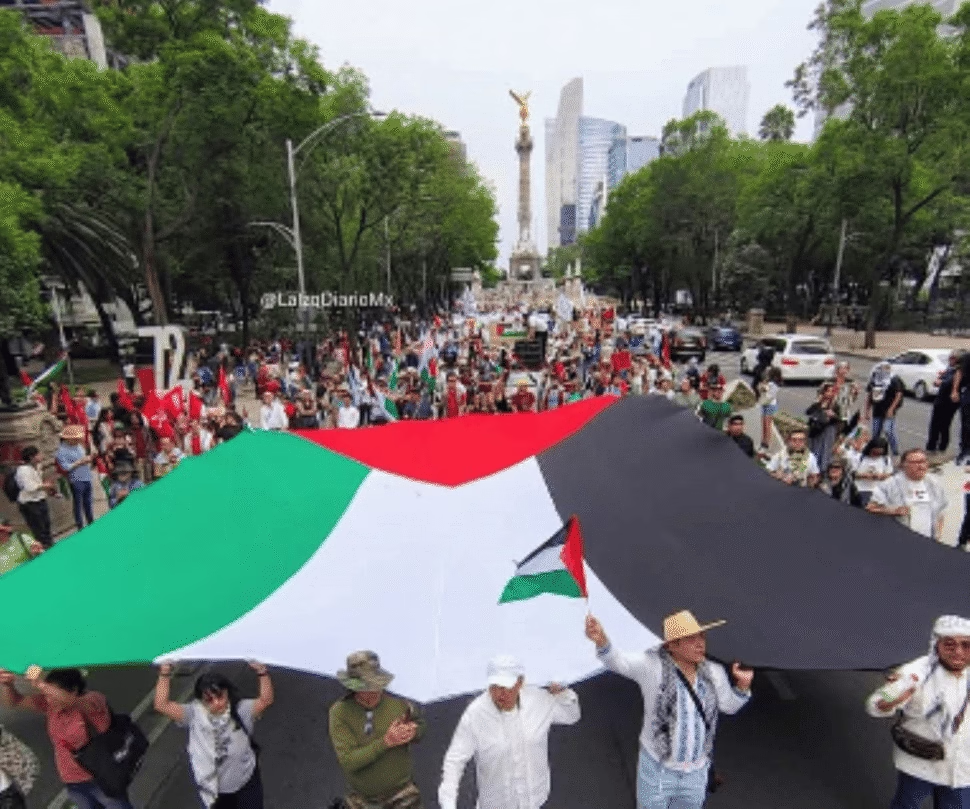
Civil unrest around the water cooperation agreement between the Chihuahua Central Water and Sanitation Board (JCAS) and the Israeli Mashav Agency has escalated to the national level. The mobilization, promoted on TikTok by the user @amigamagica, will take place on Saturday, August 1 at 9:30 a.m. in various cities across the country.
Meeting points include from the Estela de Luz towards the Zócalo in Mexico City, to concentrations in Tabasco, Pachuca, Ciudad Juárez and Jalisco. The agreement, signed in 2023 under the government of María Eugenia Campos Galván, is the center of the debate.
The legal vacuum of the agreement
According to Luis Andrés Rivera Levario, spokesperson for Save the Hills of Chihuahua, the Ministry of Foreign Affairs (SRE) confirmed that there are no legal instruments in force between Israel and Chihuahua. This, according to activists, violates the Law on the Conclusion of Treaties, which requires any inter-institutional agreement to be registered with the Foreign Ministry.
“It was left in a situation in limbo where it is impossible to request accounts, since it does not legally exist,” said Rivera Levario in an interview with IMER.
The civil organization maintains that the agreement operates in total opacity as it lacks registration with the Mexican Agency for International Development Cooperation (Amexcid).
Technical concern
Beyond the legal, protesters criticize the proposed technological model. Reverse osmosis, they explain, is not viable for Chihuahua due to the absence of the sea. They point out that aquifer wells are already becoming salinized due to poor management, and the technology would only aggravate soil salinization.
“They are coming to offer us a high-risk solution,” added the spokesperson.
The real solution, they insist, is to protect water recharge areas and carry out agricultural and industrial reconversion. The community demands that the authorities terminate the agreement, which they consider non-existent.