Tariffs on Japanese cars create a disadvantage for US manufacturers

The new US tariff policy raises concern in the local automotive industry, while Japan gains ground.

A shift in the automotive trade that challenges the American industry

Attention, lovers of economy and innovation! The trade landscape between the United States and Japan just turned upside down, and not everyone is celebrating. The US government’s decision to impose a 15% tariff on Japanese vehicles has set off alarms among local manufacturers, who fear being at a disadvantage compared to their international competitors. Because? Because while Japanese cars will enjoy preferential rates, American companies will continue to pay high taxes on key materials such as steel and aluminum.

Who wins and who loses in this new scenario?

Matt Blunt, president of the American Automotive Policy Council, has not hesitated to express his concern: “Our workers and companies are at a clear disadvantage”. And he is right: with tariffs of 50% on metals and 25% on parts, operating costs skyrocket. Although the trade agreement with Mexico and Canada offers some exceptions, the reality is that this measure could seriously affect states like Michigan and Wisconsin, where the automotive industry is the economic heart.

RelatedCanada asks to shield the T-MEC against Chinese electric cars

But it’s not all bad news. The White House assures that this trade framework will boost the creation of hundreds of thousands of jobs and will open the doors of the Japanese market to vehicles manufactured in Detroit. Imagine! American cars arriving directly on the streets of Tokyo without regulatory barriers. However, experts are skeptical: Japan only has a 6% market share for foreign manufacturers, and as Blunt says, “it’s a tough nut to crack.”

Stability or conflict? The strategy that defines the future

What is clear is that Japan has opted for long-term stability. With an investment of $550 billion in US projects and a fixed tariff rate, the Asian country secures a privileged place in the US market. Meanwhile, other international manufacturers could be forced to follow its example to avoid the vagaries of Washington’s trade policy.

Karl Brauer, analyst at iSeeCars, sums it up perfectly: “This could be the first domino to fall.” Will this be the beginning of a new era in global trade? Only time will tell, but one thing is certain: the automotive industry will never be the same.

Do you want to stay up to date with more analysis on the economy and global trends? Share it on your networks and join the conversation! #GlobalTrade #AutomotiveInnovation
Mexican Army rescues child trapped in rubble in Venezuela

Mexican soldiers rescued an 11-year-old boy after three days under rubble in Venezuela.

Rescue in Caraballeda

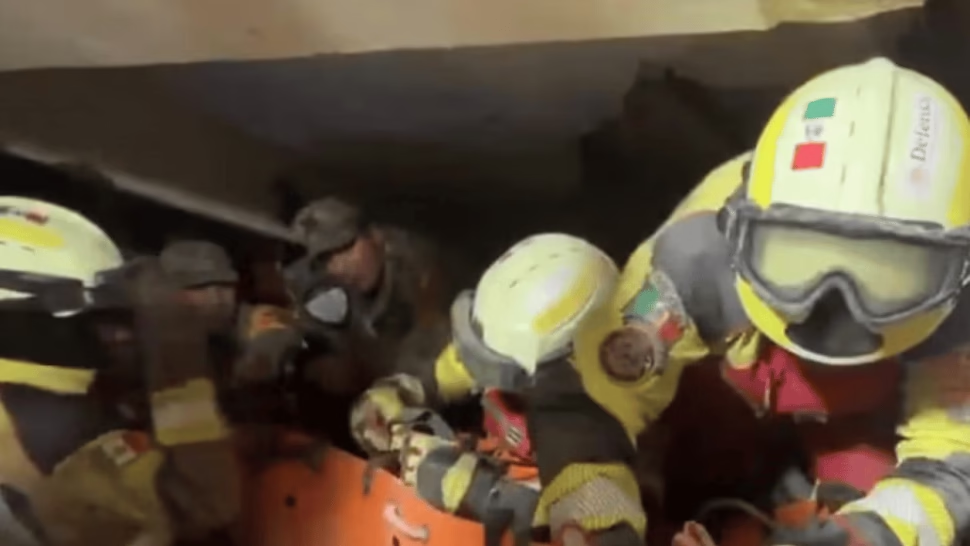
Three days after the earthquakes that shook Venezuela, elements of the Mexican Army managed to rescue an 11-year-old boy who remained under the rubble in Caraballeda, La Guaira state. The president in charge Delcy Rodríguez confirmed the discovery on the night of June 27.

The operation, led by personnel from the Ministry of National Defense sent as part of Mexico’s humanitarian aid, was recorded in a video released by journalist Enrique Acevedo. In the images you can see the soldiers extracting the minor on an orange stretcher, coordinating each movement to avoid hurting him.

The boy, visibly weakened more than 72 hours after the disaster, received constant instructions not to fall asleep. During the rescue, a Mexican soldier started a conversation with him, asking him his age, what year he was in and what his favorite color was, in order to keep him conscious and calm.

The images of the rescue generated reactions of recognition and gratitude on social networks. Among the comments stand out:

“They carry the name of Mexico high, this is Mexico… those who break their hearts to do good, how proud our Mexican army is.”

“Something very important, ask questions to discover the condition of the rescued and at the same time try to reassure him, let’s hope the child recovers.”

“We Venezuelans give a million thanks to the Mexicans, especially to their moles. It breaks my heart to see the face of this child fighting to live.”

“What geniuses these rescuers are trying to give peace of mind to that child amidst so much chaos, asking him questions about his daily life! Nationality does not matter, the humanity of these men matters. Thank you and strength to the Venezuelan people!”

“Thank you Mexico, we will never forget this.”

After being removed from the collapse area, the minor was transferred to receive medical attention. The double earthquake left the country in a state of emergency and international aid continues to reach the most affected areas.

Continue reading

Earthquakes in Venezuela: rescues and international solidarity

Earthquakes of 7.2 and 7.5 leave more than 1,400 dead in Venezuela; International teams search for survivors.

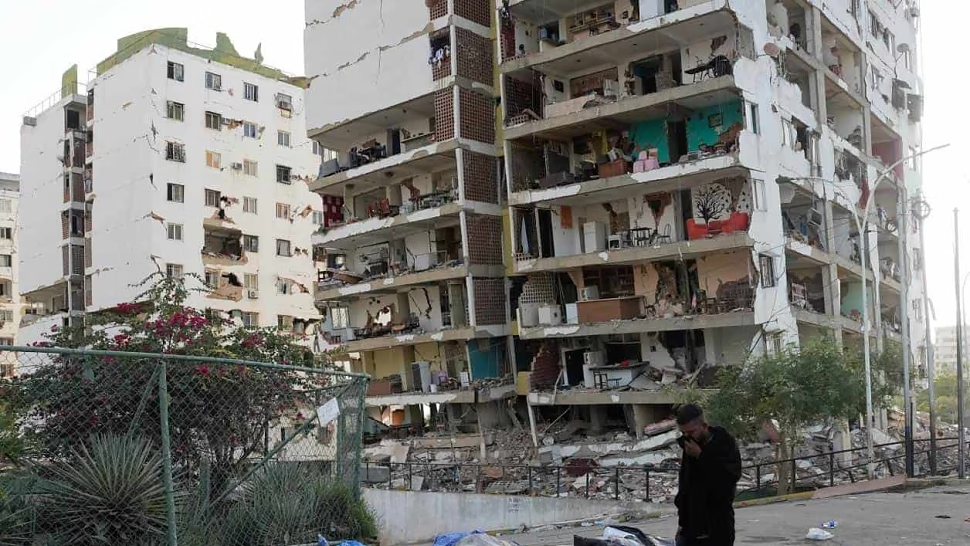
Devastation in La Guaira and global response

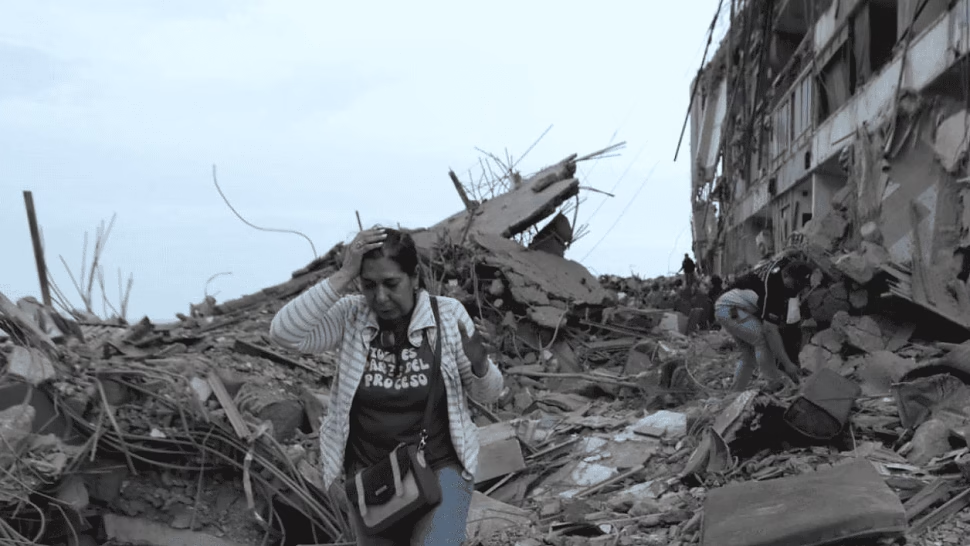
The Venezuelan authorities blocked access to La Guaira, the area hardest hit by the 7.2 and 7.5 magnitude earthquakes. So far, at least 1,430 deaths, more than 3,200 injuries and nearly 69,000 people are reported missing.

Rescuers from several countries work tirelessly. The president of El Salvador, Nayib Bukele, reported that they are trying to free Onai Quiñonez, trapped in an unstable structure. “First God, we are going to achieve it,” he wrote in X, where he shared images of the operation.

Gustavo Petro, his Colombian counterpart, insisted: “This is the time to unlock Venezuela, President Donald Trump.” The US Treasury temporarily suspended some sanctions until October 23 to facilitate humanitarian aid.

Miracles among the rubble

The State Department confirmed the rescue of a baby alive, after 72 hours. “Despite impossible circumstances, hope endures,” he posted.

In Playa los Cocos, volunteers pulled out a man who, disoriented, was screaming for his family. Salvadoran teams rescued Marlene Angulo, 69, who asked for a Coca-Cola upon being released. Colombian rescuers found Moisés alive, an 11-year-old boy who was three meters under the rubble.

In Caraballeda, more than 200 bodies were placed outdoors for identification. Families face costs of $350 to $450 to cremate their loved ones. The Domingo Luciani Hospital, in Caracas, cares for numerous injured people with fractures and trauma.

Colombia reported at least 24 dead citizens and repatriated 47, including 19 child athletes. Mexican rescuers ask for silence among the rubble, waiting for signs of life.

International solidarity does not cease, but the magnitude of the tragedy is still measured between pain and hope.

Continue reading

1,430 dead and 3,238 injured left by earthquakes in Venezuela

Official balance reports 1,430 deaths and more than 3,000 injured after two earthquakes in Venezuela.

Official figures after the earthquakes in Venezuela

The president of the National Assembly, Jorge Rodríguez, updated the balance of the two earthquakes that shook the country. So far there are 1,430 deaths and 3,238 injuries. Search and rescue efforts continue in the most affected areas.

Rodríguez specified that 3,142 families were affected and are being cared for in shelters distributed in the seven affected states. In addition, 430 aftershocks of the earthquakes have been recorded.

According to the open online platform, the missing number 50,947. The official, brother of interim president Delcy Rodríguez, reiterated the call to citizens not to enter La Guaira and deposit their aid in authorized collection centers.

Continue reading