Industry concerns regarding the reform of the Telecommunications Law
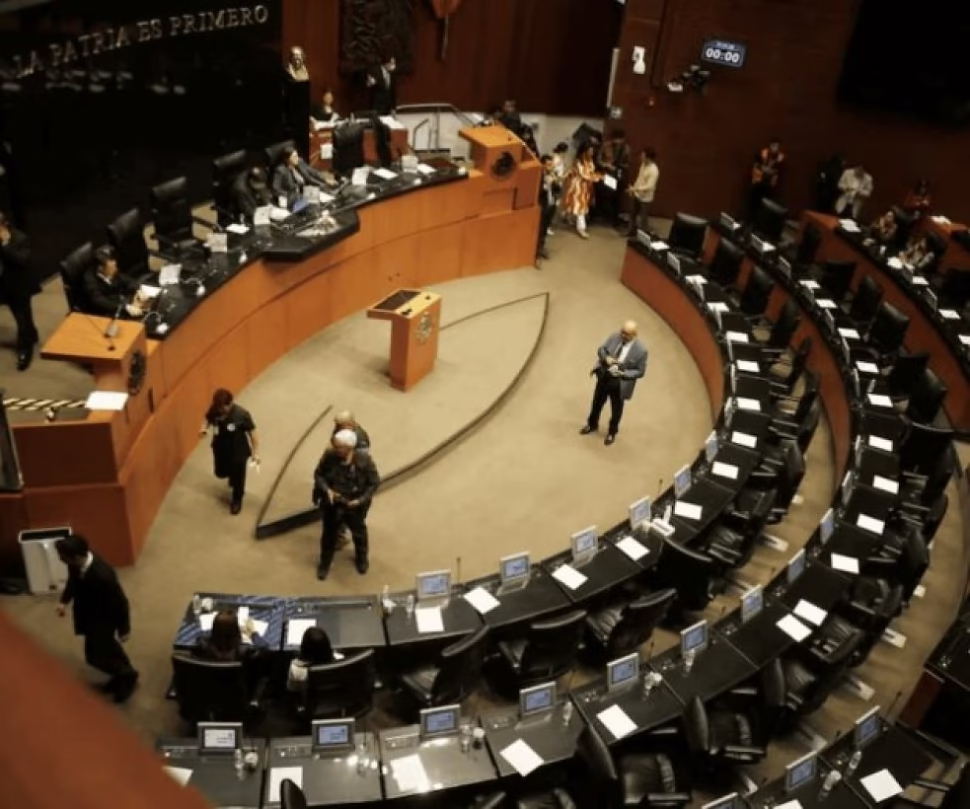
The National Telecommunications Association (Anatel), an organization that brings together the main mobile operators and actors in the digital ecosystem in Mexico, has expressed its concern before the Senate regarding the presidential initiative to reform the Telecommunications Law. According to detailed analyses, the current project could generate legal uncertainty, affect investments and compromise the quality of services for more than 130 million users.
Direct spectrum allocation and competitive imbalance
One of the critical points is found in articles 56 to 58, where the direct assignment of radio spectrum to public entities is proposed without bidding processes or economic compensation. This measure, according to Anatel, would create an unfair advantage over companies that have historically invested in infrastructure and spectrum. Gabriel Szekely, spokesperson for the association, emphasized in an interview with EL UNIVERSAL: “Without competitive neutrality, the investments necessary to maintain advanced technologies are discouraged.”
In addition, the initiative introduces ambiguity in the validity of the Concession Titles, by allowing unilateral modifications by the Executive. This, according to legal experts, would violate fundamental legal security principles for a sector that requires long-term planning.
Impact on net neutrality and disproportionate sanctions
The omission of the traffic management principle (article 107) could affect network neutrality, limiting equitable access to content. At the same time, article 266 establishes sanctions of up to 6% of annual gross revenues for regulatory non-compliance, doubling the previous amounts and generating unprecedented financial risks for operators.
Other problematic provisions include:
- Mobile User Registration: Criticized for its possible inefficiency and duplication of functions between concessionaires and the Digital Transformation Agency.
- Penalty blockers: Vague wording on technical responsibilities could compromise the safety of facilities and personnel.
- Underground infrastructure: It would require unprecedented coordination between local governments, INBA and INAH, in addition to public financing for civil works.
Call for a balanced legal framework
Anatel proposed adjustments to the Senate to guarantee certainty for investors and protect the interests of users. Szekely highlighted: “Mexico needs a law that encourages innovation, not bureaucracy.” The association also asked for clarity in the implementation of free services in public spaces, whose operating costs could become unsustainable under the current article 80.
This analysis reveals tensions between regulatory objectives and technical realities. According to INEGI data, the telecommunications sector contributes 3.5% of the national GDP, so poorly designed changes could have macroeconomic repercussions.
Are you worried about how this reform will affect your internet connection and mobile services? Share this analysis to inform more users and explore our special on technology regulation in Latin America.