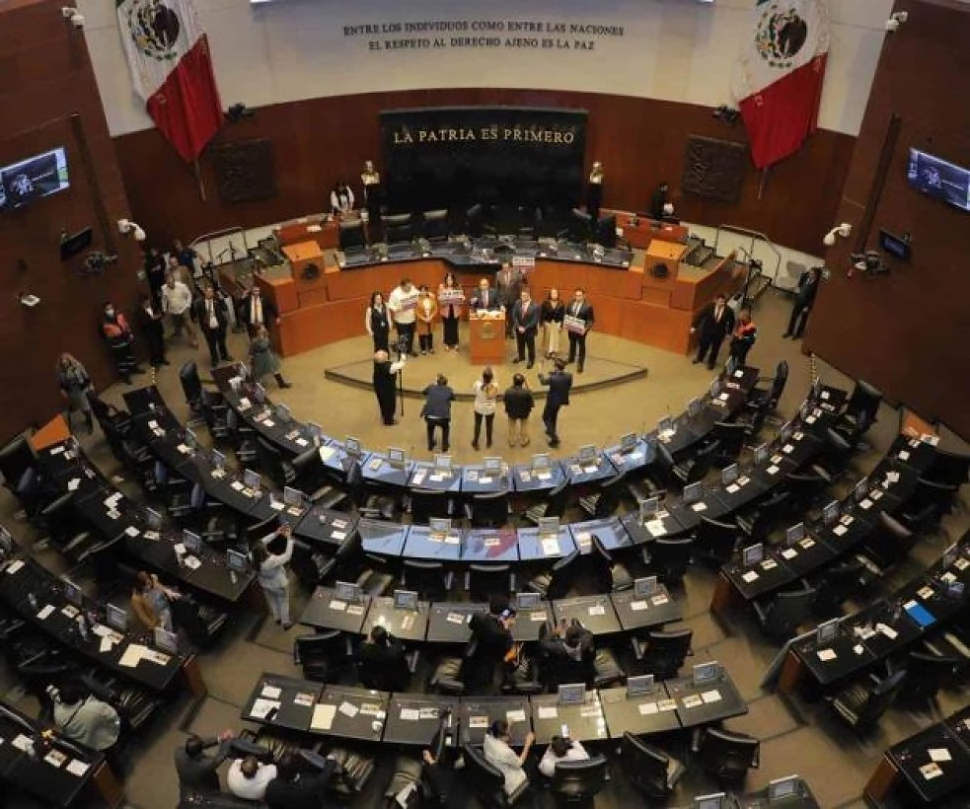
Senate opens public talks for telecommunications reform
The Senate of the Republic will begin this Wednesday, April 30, a process of open dialogue on the reform initiative to the Federal Telecommunications and Broadcasting Law. The conversations, with no defined deadline, seek to gather perspectives from all sectors involved, from private industry to indigenous communities and government agencies.
Multi-sector participation and preliminary agenda
Adán Augusto López, president of the Political Coordination Board, explained that the call will include representatives of the National Chamber of the Radio and Television Industry (CIRT), federal officials—including José Merino, head of the Digital Transformation Agency—and civil organizations. “The priority is to guarantee a plural debate before taking the initiative to the Plenary,” he stated.
The process faces technical and political challenges: the project proposed by the federal Executive includes controversies such as article 201, which requires prior authorization for content financed with foreign funds. Representatives of community and indigenous radio stations—such as the groups from Michoacán and Oaxaca that visited the Senate—argue that this measure limits their operational capacity and violates the right to information.
Technical controversies and key lawsuits
Among the critical points are:
- Reservation of the radio spectrum: The communities demand that the allocation for indigenous and Afro-Mexican stations be expanded to 33%, currently marginalized in access to frequencies.
- Regulation of external financing: Article 201 duplicates restrictions already contemplated in article 210, which could hinder the production of cultural content.
- Deadlines and modifications: López admitted that the vote will likely occur after the current period, allowing for adjustments based on dialogue.
Communication policy experts point out that this debate reflects historical tensions between state regulation and media autonomy. “The reform must balance national sovereignty with the rights of minorities,” explained an analyst consulted.
Impact and next steps
The initiative would affect more than 150 community stations and redefines the criteria for granting frequencies. While the CIRT defends the need to “organize the spectrum”, civil organizations insist that the reform must prioritize digital inclusion.
What’s next? The conversations will be broadcast on the Senate’s digital platforms, and it is expected that the conclusions derived will be integrated into a modified opinion for discussion in committees.
Share this information and follow the live broadcasts to learn about progress in this key reform. Explore more about how telecommunications impact Mexico’s cultural diversity.
CTA: Are you interested in the future of telecommunications in Mexico? Share this analysis on your networks and join the public debate. #TelecomLaw
Note: This content has been updated to include technical context and statements from key stakeholders. For real-time coverage, visit our specialized microsite.