UN red alert for possible catastrophe in Sudan

Volker Türk warns of atrocity crimes in El-Obeid and calls for urgent action.

The UN warning

The UN High Commissioner for Human Rights, Volker Türk, launched an alert this Friday before the Human Rights Council in Geneva. The signs from the city of El-Obeid, in central Sudan, are clear: a new humanitarian catastrophe is approaching.

“This is not a drill. It is a red alert that must reach the desks of heads of state and government around the world,” declared Türk.

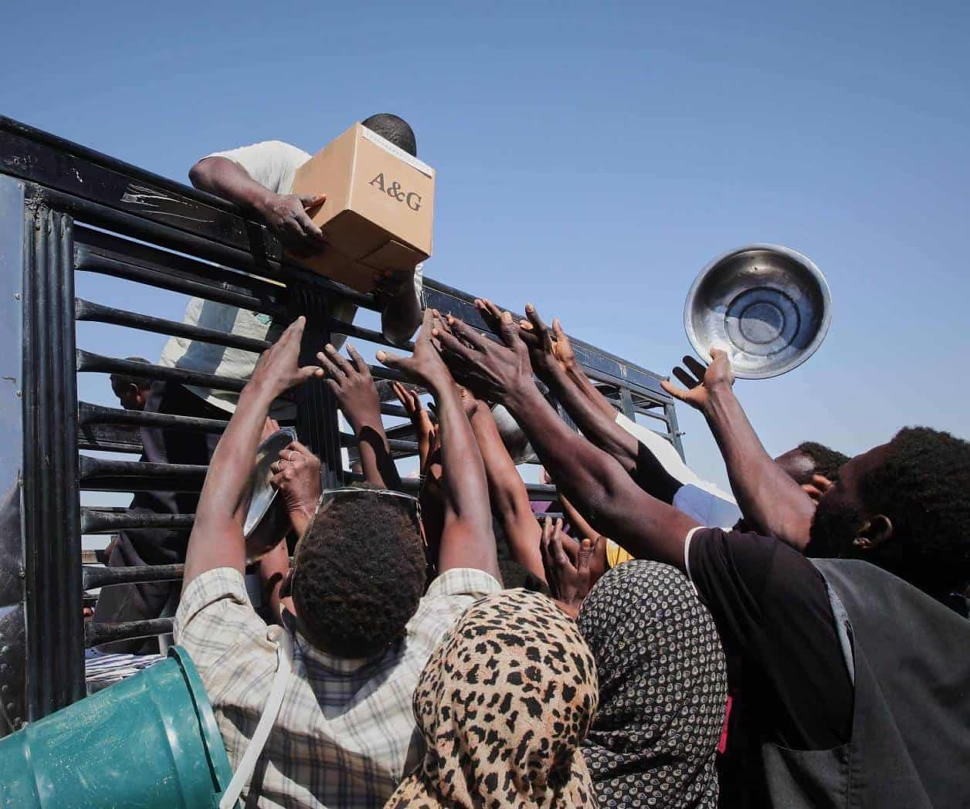
Civilians have been under siege conditions for 18 months, with constant drone attacks. The Sudanese army and the paramilitary Rapid Support Forces (FAR) are fighting for control of the area. Half a million people live in El-Obeid, North Kordofan, and face shortages of food, water, fuel and health services.

RelatedHumanitarian crisis in Sudan leaves 23 children dead from malnutrition

The context of the conflict

The war broke out in April 2023. So far, at least 59,000 people have died, nearly 13 million have been displaced, and large regions of the country are suffering from famine. More than 30 million need humanitarian assistance.

The army broke a siege on El-Obeid in February 2025, but the FAR has launched offensives to reestablish it. The United Nations and several countries expressed concern about FAR reinforcements around the city.

The Human Rights Council is considering a draft resolution presented by the United Kingdom, Germany, Ireland, the Netherlands and Norway. The text condemns the escalation of violence by the FAR, encourages support for countries hosting Sudanese refugees and rejects all external interference in the conflict.

Türk urged world leaders to take concrete action: “Your phones should be abuzz with ideas to prevent atrocity crimes in El-Obeid and other areas of Kordofan.”
Avalanche in China leaves 21 dead and dozens rescued

Authorities confirm 21 victims after an avalanche in Gansu province.

Avalanche in northwest China: 21 dead

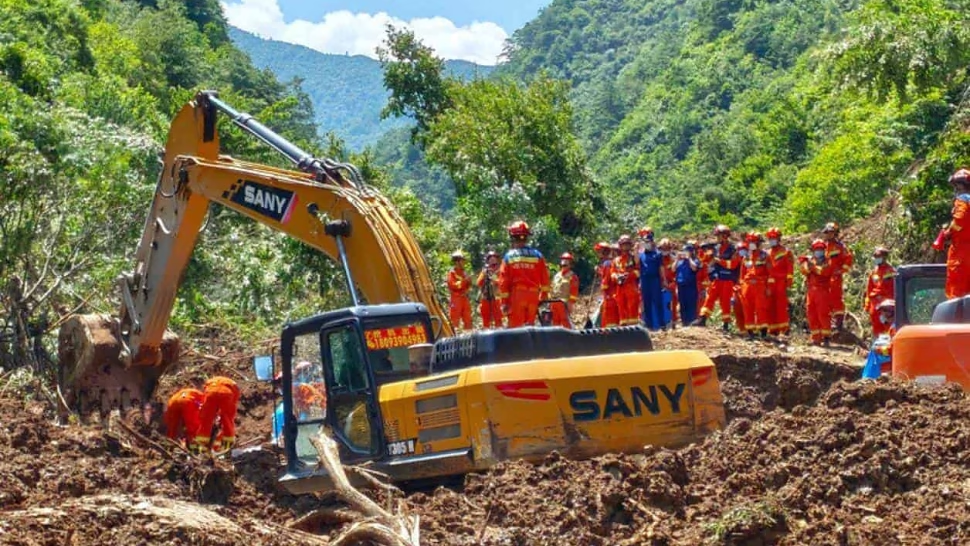
The death toll from a landslide in Longnan, Gansu province, rose to 21 people, according to the official Xinhua agency. The incident occurred on Tuesday minutes before 7 a.m., when an avalanche buried 33 people in the municipality of Nanhe.

Rescue operations concluded early Wednesday morning. State television CCTV reported that all the trapped people were located: 21 dead, seven slightly injured and five unharmed.

Without determined cause

So far, authorities have not specified the origin of the slide. Images broadcast by CCTV show excavators and rescue teams working on mounds of earth under clear skies.

The event occurred in a mountainous region prone to this type of phenomena. Emergency teams acted immediately to care for those affected.

Continue reading

Attacks on oil tankers raise tension in the Strait of Hormuz

Three ships were attacked in the strategic passage. There are no injuries.

Incidents in the Strait of Hormuz

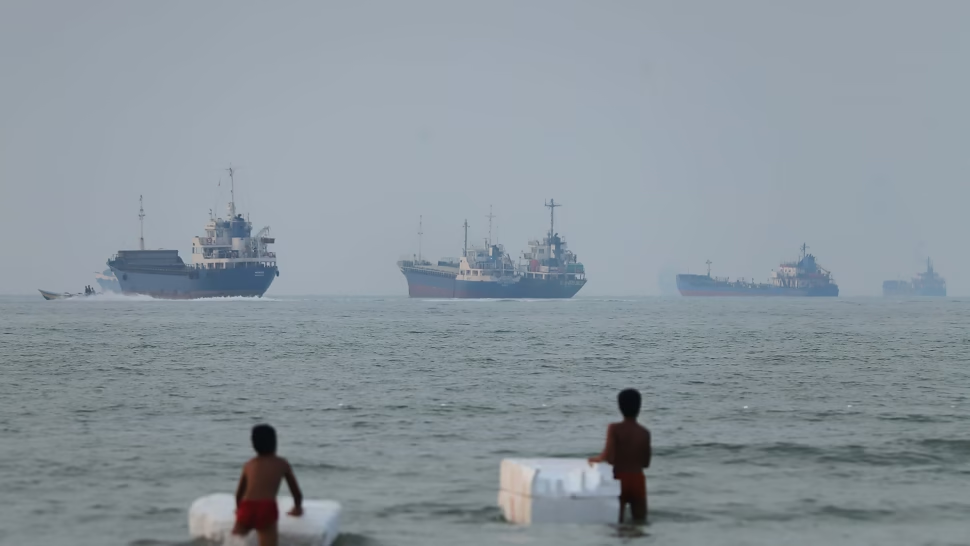
Three oil tankers were attacked this Tuesday in the Strait of Hormuz, one of the most important routes for global hydrocarbon trade, according to the British Army. The events raise regional tension and put maritime traffic at risk in that passage that connects the Persian Gulf with the Gulf of Oman.

The British Maritime Trade Operations Agency detailed that one of the ships, which was transporting liquefied natural gas off the coast of Oman, caught fire after being hit by a projectile. Two other ships were also hit, one of them by a drone. The authorities reported only material damage and confirmed that there were no injuries.

Iranian state television claimed that the gas ship was attacked after ignoring warnings about the shipping route, although Tehran did not officially claim responsibility. For its part, Qatar condemned the attack against one of its oil tankers and held Iran legally responsible, considering that the action violates international law and the safety of navigation.

The attacks occur as the United States seeks to resume negotiations with Iran to normalize transit through the strait, limit Iran’s nuclear program and reach an agreement to end the regional conflict. However, talks remain suspended during the funeral ceremonies for Iranian Supreme Leader Ali Khamenei, who died at the start of the war.

The Strait of Hormuz concentrates under normal conditions about 20% of the oil and natural gas sold in the world. The new incidents revive fears of a military escalation that could affect international markets and stability in the Middle East.

Continue reading

Trump lifts sanctions on Türkiye and reopens F-35 option

Announcement at NATO summit paves the way for Ankara's return to the fighter program.

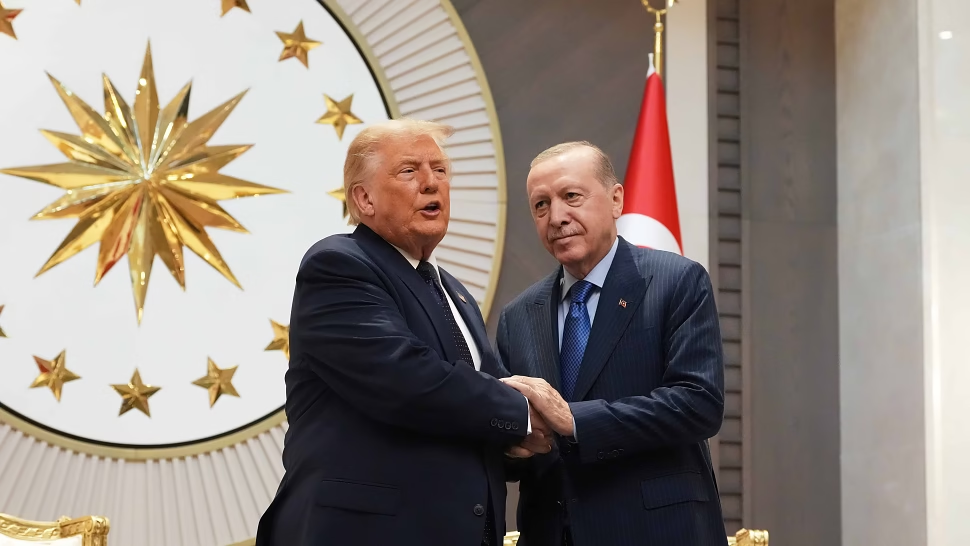
The president of the United States, Donald Trump, announced the lifting of sanctions imposed on Türkiye for the purchase of the Russian S-400 missile defense system. The decision, communicated during a meeting with Turkish President Recep Tayyip Erdogan in Ankara, paves the way for that country to rejoin the F-35 fighter aircraft program, from which it was excluded in 2019.

Trump assured that his administration is already working on removing the restrictions and that the possible sale of the fighters to Türkiye “is something that we will certainly consider.” Both leaders highlighted the good bilateral relationship and agreed to strengthen cooperation between their nations.

Announcement at the NATO summit

The announcement occurred within the framework of the NATO summit, where the alliance presented new defense projects worth billions of dollars. These include the acquisition of GlobalEye surveillance aircraft and new Triton drones. NATO Secretary General Mark Rutte stated that these investments seek to strengthen military capabilities and respond to current security challenges.

International reactions

Türkiye’s possible rejoining of the F-35 program generated reactions. Israeli Prime Minister Benjamin Netanyahu asked Washington not to authorize the sale of these aircraft to Ankara. He believes that it could alter the military balance in the Middle East, amid bilateral tensions over the war in Gaza.

For his part, Ukrainian President Volodymyr Zelenskyy took advantage of the summit to reiterate his request to join NATO and highlighted the military experience acquired by his country during the conflict with Russia. The alliance also discussed strengthening European defense and increasing the production of military equipment to address security risks in the region.

Continue reading