Young Jews in the US prioritize traditions over support for Israel

Survey reveals generational gap in American Jewish identity regarding ties to Israel.

Generation gap in Jewish identity

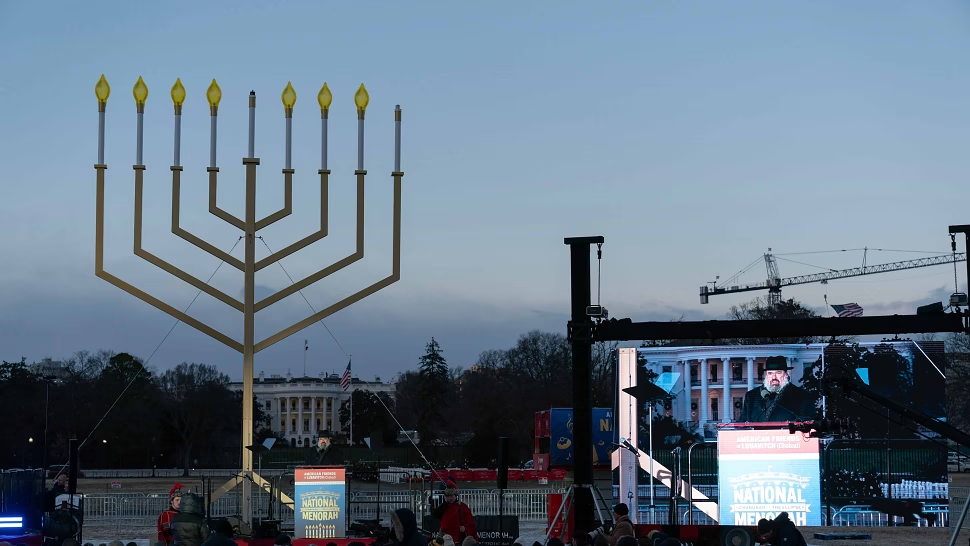
An Associated Press-NORC poll reveals significant differences between generations of Jews in the United States. For those over 45, support for Israel is a pillar of their religious identity. On the other hand, younger people value traditions and festivities more.

The study, applied to more than a thousand Jewish adults, shows that half of the elderly consider support for Israel to be very important to their identity. Among those under 45 years of age, only four out of ten share that priority. Meanwhile, seven out of ten young people privilege religious and cultural practices.

RelatedIsrael’s growing international isolation before the UN

This change reflects a transformation in the American Jewish community. The new generations connect more with their cultural roots than with political support for the Israeli State. The survey highlights how each group’s experiences shape their vision.

The differences could impact the future of the relationship between the Jewish community in the US and Israel. There is a need for intergenerational dialogue to find common ground.
Shooting by ICE agent in Maine leaves one dead

Young Colombian with a work permit dies in an ICE operation in Maine.

The incident in Biddeford

An immigration operation in Biddeford, Maine, ended in tragedy this Monday. An ICE agent shot a driver who, according to authorities, tried to run over the officers during an attempted deportation arrest.

The man was identified by civil organizations as a 26-year-old Colombian citizen. He had a work permit and Social Security number. His family claims that he was on his way to work when the incident occurred and demands a transparent investigation.

Senator Angus King reported that the Secretary of Homeland Security explained that the driver used his vehicle as a weapon when trying to escape. The officers were not wearing body cameras, which will make it difficult to clarify whether the action was justified. The FBI is already investigating the facts.

Hours later, dozens of demonstrators gathered near the site to protest against the Trump administration’s immigration policies. With banners, they condemned the use of force in operations and called for a stop to mass deportations.

This is the second case in a week in which an ICE agent used deadly force. The fact revives the debate about transparency and accountability in this type of operations.

Continue reading

South Africa deports more than 53 thousand African migrants

More than 53 thousand African migrants repatriated in the last month, mainly from Malawi.

South Africa deported or repatriated more than 53,000 African immigrants in the last month. The measure is part of a government offensive to strengthen immigration control, in a context of growing rejection of foreigners and protests that, in some cases, led to acts of hostility.

Origin and destination of the returnees

Justice Minister Mmamoloko Kubayi said more than 80% of migrants sent back were from Malawi. He did not specify how many were forcibly deported and how many agreed to return voluntarily. In addition to Malawians, those affected include citizens of Zimbabwe, Mozambique, Nigeria, Uganda and Kenya.

South African authorities have intensified their efforts to control immigration, leading to a spike in the number of deportations. This movement occurs in the midst of social tensions and an environment of rejection towards immigrants, which has fueled protests.

The anti-foreigner demonstrations have been a key factor in the government’s decision to toughen its immigration policies. The situation opens the debate on the integration of migrants and the need for a more humane approach in South African migration management.

Continue reading

Navy ships arrive in Venezuela with humanitarian aid

Mexico delivers 388 tons of aid to Venezuela after earthquakes in June.

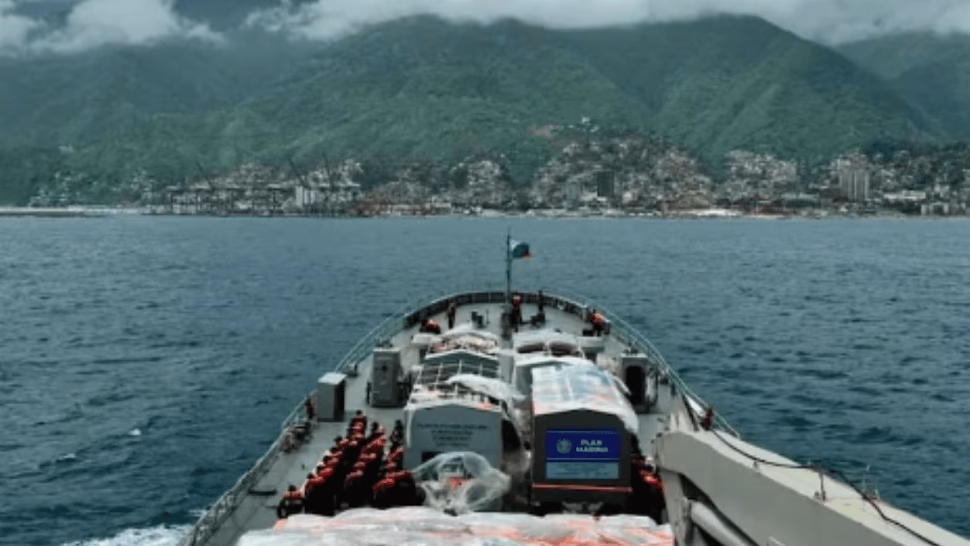
The ARM Isla Holbox and ARM Huasteco ships docked at the port of La Guaira, Venezuela, after eight days of navigation. The mission, ordered by President Claudia Sheinbaum, aims to deliver humanitarian assistance to the Venezuelan people affected by the earthquakes of June 24.

Load and capacity

The journey of 1,969 nautical miles (more than 3,600 kilometers) transported 388.4 tons of supplies. It includes food, bottled water, hygiene items, medicines and four water treatment plants capable of producing a thousand liters of purified water per hour each.

Personnel and coordination

One hundred elements of the Navy’s Emergency Response Brigades (BRE) will participate in the landing, installation and operation of the plants. They will also support the organization and distribution of aid, in coordination with Venezuelan authorities.

The Secretary of the Navy (Semar) indicated that, although the immediate care phase has already been overcome, recovery efforts continue to restore essential services. The help sent seeks to strengthen that stage.

This operation was possible thanks to the joint work between Semar, the Foreign Ministry, institutions, companies, foundations and civil organizations. The federal government reiterated its commitment to international solidarity and the construction of a more resilient region in the face of natural disasters.

Continue reading