The telephone becomes an office: this is how UNAM saves lives
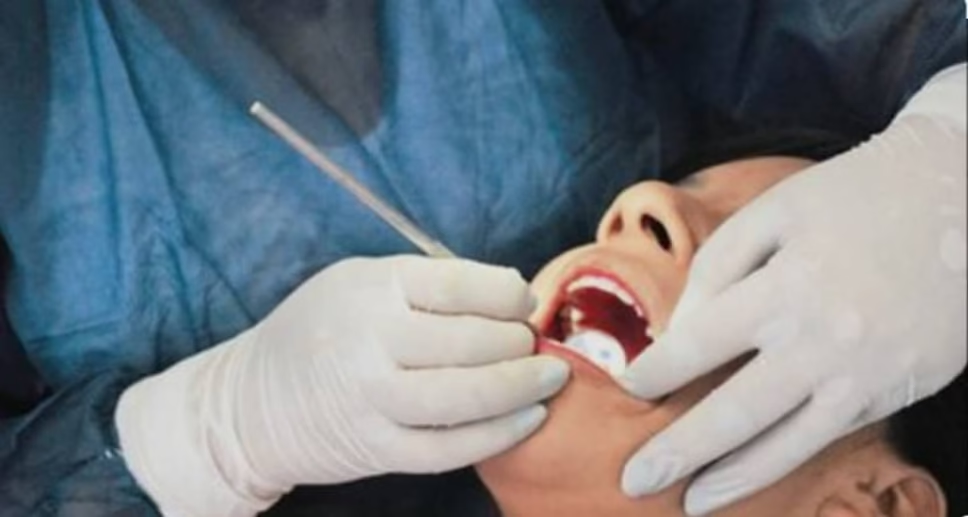
Imagine being able to show a sore in your mouth to a specialist from the highest educational institution without leaving home. That is already reality. A team from the UNAM Faculty of Dentistry is diagnosing diseases remotely, using only photographs sent to them by patients.
The mechanism is simpler than you think. You enter the portal of the Virtual Diagnostic Center for Oral Pathology (CEDIVIPA), fill out a form and upload photos of the injury. In no time, experts will tell you if that strange ulcer or persistent spot could be something serious.
“Oral pathology is a little-explored specialty, but essential to prevent serious complications,” explains Javier Padilla Robertson, coordinator of the center.
The key here is not just technology, but speed. In a country where getting an appointment with a specialist can take months, this digital bridge is vital. They have already analyzed more than 2,750 cases, catching everything from cancer to complex neuralgia in time.
And they don’t just stop at the diagnosis. If the virtual doctors see something suspicious, they guide you to do a biopsy. They even send free kits with everything you need: tools, preservatives and special dyes to identify dangerous cells.
Each image they receive does double duty: it saves a patient and teaches future dentists. All the material is integrated into the National Oral Cancer Registry, building a map of oral health in Mexico.
In the great theater of public health, this project is a silent but revolutionary act. It connects elite university knowledge with the urgent need of ordinary people. It shows that sometimes, the solution is not in building more hospitals, but in bringing expertise to where people already are: on their cell phones.