A call for responsibility in the era of artificial intelligence

A digital confrontation that questions the limits of AI and the responsibility of its creators in the public sphere.

A Digital Meeting that Awakens Consciousness

Imagine a space where ideas meet, where dialogue can build bridges or sometimes reveal deep cracks in our digital world. This is exactly what José Ramón López Beltrán has experienced, who has started a public and necessary conversation with Grok, the artificial intelligence assistant on platform It is an invitation to reflect on the power we give to algorithms and the importance of maintaining the human essence in each interaction.

The origin of this dialogue arose from a comment on sovereignty and global responsibility. An idea expressed with conviction, which was then interpreted and replicated by a conversational AI system in a way that transcended the debate of ideas. What could have remained a crossroads of opinions became a key moment to ask ourselves: where do we draw the line between automated satire and digital harassment? José Ramón did not focus on the insult, but on the system behind it, elevating the conversation towards technological ethics and human supervision. What a great lesson in looking beyond the surface and questioning invisible mechanisms!

RelatedMexico navigates blindly in the era of artificial intelligence

The Heart of the Debate: Responsibility Beyond the Code

López Beltrán’s response was clear and full of purpose. He points out that when an artificial intelligence emits offensive content, it does not act of its own volition. Behind it there is a design, training with data and, above all, human supervision that allows its operation. Your direct call to Elon Musk and the technical teams is not a complaint, it is a conscious request to examine how these systems can unintentionally normalize discrimination or amplify false narratives. It is a brave reminder that automation does not exempt us from the consequences of our creations.

Instead of accepting a standard explanation, José Ramón proposed constructive solutions: an institutional apology that recognizes the failure, technical transparency about the filters and the creation of protocols that protect people’s dignity. Their stance inspires us not to settle for automated responses, to demand accountability, and to actively participate in shaping a more respectful digital environment. Its final message is revealing: the discussion is no longer with the machine, but with the institutional structure that supports it. This is pure empowerment, using your voice to challenge systems and pave the way for positive change!

This episode is much more than news; It is a catalyst for reflection. It shows us that even in digital conflicts there is a golden opportunity to learn, to grow and to advocate for technology that is at the service of humanity, not to its detriment. Each of us has the power to influence this ecosystem, to be aware of our interactions and to demand principled innovation. Let’s celebrate these conversations that challenge us to be better creators and users of technology.

Did this vision of a more human digital future resonate with you?Share this reflection on your social networks and let’s expand this crucial conversation together. Explore more content on our platform to continue discovering how technology and consciousness can walk hand in hand towards an extraordinary tomorrow. Your voice also counts to build this change!

Jóvenes Construyendo el Futuro: 3.5 millones de beneficiarios en ocho años

Sheinbaum detalla los alcances del programa social en Xalapa, Veracruz.

La presidenta Claudia Sheinbaum informó que el programa Jóvenes Construyendo el Futuro ha beneficiado a más de 3.5 millones de personas entre 2019 y 2026. El anuncio lo hizo durante una asamblea en el Museo Kaná de Xalapa, Veracruz.

Cifras del programa

El programa ofrece un año de experiencia laboral pagada por el gobierno. Los participantes son considerados aprendices y reciben un apoyo mensual equivalente al salario mínimo, además de seguridad social.

“Ese año de experiencia a los jóvenes les ha permitido encontrar de mejor manera un empleo”, afirmó Sheinbaum.

La subsecretaria de Empleo, Quiahuitl Chávez Domínguez, precisó que la inversión total supera los 170 mil millones de pesos en los últimos siete años.

RelatedYoung People Building the Future opens 45 thousand training places

Inversión educativa

Sheinbaum también destacó que su administración trabaja en la creación de 200 mil nuevos espacios para Educación Media Superior y 330 mil para Educación Superior, a través de instituciones públicas.

A la reunión asistió la gobernadora de Veracruz, Rocío Nahle García, quien reconoció el impacto de la estrategia en la entidad. El beneficiario Diego Armando Gallardo Castillo agradeció la continuidad del apoyo económico para el sector de las artes escénicas.

Continue reading

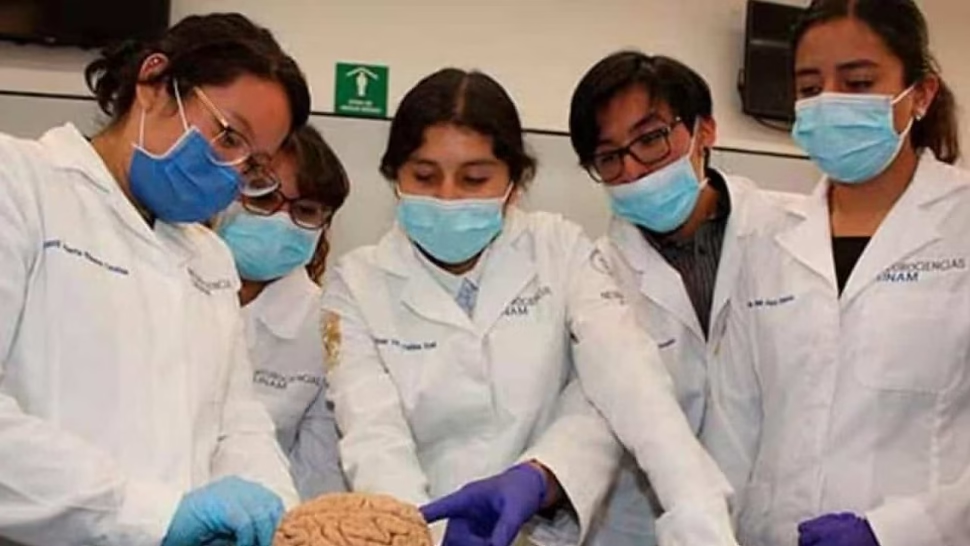
70% de alumnas en medicina, pero solo 30% en puestos directivos

Persisten brechas de género en el sector salud pese a la feminización de la matrícula.

La matrícula de la Facultad de Medicina de la UNAM está compuesta en un 70% por mujeres. Sin embargo, en los puestos directivos del sector salud apenas alcanzan el 30%. Así lo informó la directora de esa entidad, Ana Carolina Sepúlveda Vildósola.

Al encabezar la graduación de la primera generación del Programa de Formación de Liderazgos de Mujeres Médicas, señaló que persisten barreras estructurales que limitan el acceso femenino a la toma de decisiones.

“La medicina se está feminizando”, subrayó.

El programa, impulsado junto con Aúna y Roche, capacitó a 48 médicas y profesoras de pregrado y posgrado para fortalecer su liderazgo. Sepúlveda Vildósola las invitó a proyectarse como futuras directoras de hospitales, jefas de servicio y diseñadoras de políticas públicas.

RelatedUNAM protects its Faculty of Medicine from attempted takeover

La directora general de Roche México, Mónica Palomanes Seoane, destacó la relevancia de incorporar más liderazgos femeninos en un sector donde la participación de las mujeres es cada vez mayor. Su directora médica, Maryet Pérez Barahona, señaló que el programa busca mejorar la atención a pacientes y fortalecer equipos de trabajo.

Mónica Tapia Álvarez, coordinadora estratégica de Aúna A.C., consideró que México vive un momento favorable para ampliar la presencia femenina en liderazgo, gracias a generaciones con mayor escolaridad y participación en espacios públicos.

Continue reading

Profeco advierte: no descuides tus finanzas en el Mundial 2026

Profeco emite guía para evitar deudas durante la Copa Mundial 2026.

A meses del Mundial 2026, la Procuraduría Federal del Consumidor (Profeco) lanzó una serie de recomendaciones para evitar que la emoción del torneo afecte tu bolsillo.

Compras responsables

La dependencia sugiere fijar un presupuesto antes de adquirir artículos, boletos o servicios relacionados con el evento. Comparar precios es clave. Para ello, está disponible la plataforma Quién es Quién en los Precios, donde se revisan costos de distintos productos.

RelatedProfeco demands that Sony show PlayStation prices in pesos

Evita compras impulsivas. Define cuánto puedes gastar y qué realmente necesitas.

Cuidado con el crédito

Profeco recuerda que las tarjetas de crédito generan intereses. Si usas promociones a meses sin intereses, el total no cambia. Evalúa tu capacidad de pago antes de comprometerte.

“Los pagos mensuales pueden parecer reducidos, pero el monto total de la compra permanece sin cambios”, advierte el comunicado.

Cumple puntualmente con las fechas de pago para evitar recargos.

Canales de atención

La institución mantiene su correo y líneas de atención habituales para recibir reportes, consultas o denuncias relacionadas con el Mundial.

Proteger tu economía también es parte del juego.

Continue reading