The Goodbye that Shook the World of Rock
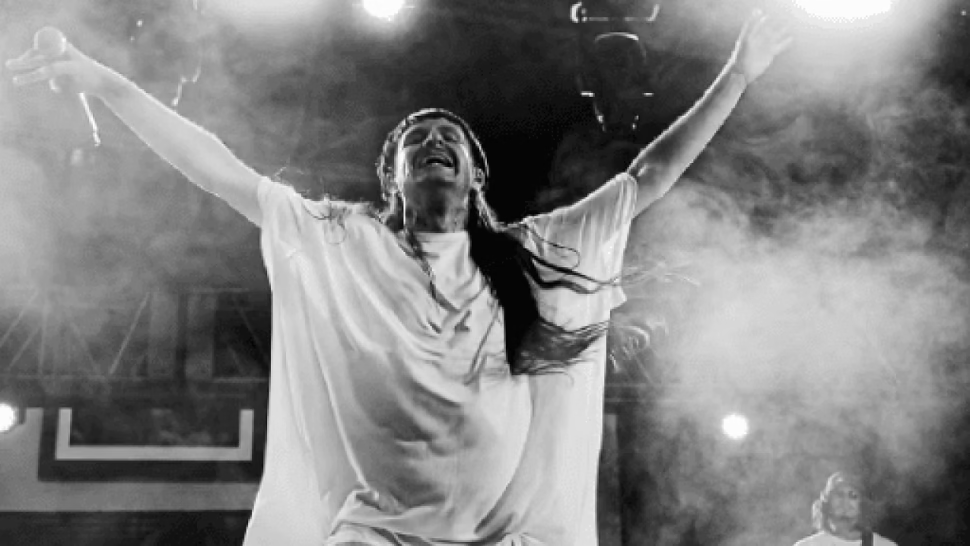
The heart of nu metal beat with a painful ferocity that night, on a stage that became an altar. Limp Bizkit, that living legend of the genre, settled with his back to an expectant crowd, in a silence that weighed more than a thousand decibels. On the giant screen, like a blessed ghost, the images of Sam Rivers began to parade: snapshots of endless roads, stolen fragments of epic tours, intimate scenes in the sanctity of the studio. It was the prelude to a farewell that no one was prepared to experience.
Some members of the group covered their faces, unable to contain the tide of emotions; Others took a deep breath, searching for courage in the depths of their lungs. The audience, a sea of souls connected by pain and devotion, responded with a deep cry: “Rivers, Rivers!” A mantra, a prayer, a last goodbye chanted by thousands. The departure of the prodigious bassist, an event that had shocked the music scene just weeks before, remained an open and throbbing wound. And although Loserville had been conceived as the ultimate celebration of sound, that evening could not begin without honoring the titan who had held the rhythmic heart of the band since its inception in 1994.
A Torrent of Emotion and Immortal Classics
That’s when Fred Durst, the charismatic frontman, broke the stillness with “Ok, ok, motherfuckers…”, relieving the pressure with his laid-back attitude before unleashing a torrent of timeless anthems. The electrifying atmosphere exploded with the chords of “Show Me What You Got”, “My Generation”, “My Way”, “Full Nelson”, “Boiler”, “Dad Vibes” and the always visceral “Nookie”. But the moment of greatest intensity came with the ballad “Behind Blue Eyes”, when a flag with the name of Rivers began to wave from the depths of the audience, a gesture that drew a thumbs up from the entire formation, a sign of complicity and eternal gratitude.
The vocalist, in an act of genuine connection, played with the audience without losing his essence. “He speaks a little Spanish,” he confessed with a clumsy accent but an undeniable effort. A simple, but powerful, “Thank you very much” was enough to unleash a deafening applause. The show had room for oddities and moments of pure magic: Durst let out a primitive howl and the entire stadium imitated it, like a tribal call that spread to every corner of the stands. Before the iconic “Rollin’,” the group surprised everyone with a snippet of “La Bamba” that transformed into a massive chorus and collective dance, with fans following along with contagious joy.
And, true to his legendary tradition, Durst invited three fans to the stage without prior notice. “You, you and you. Get on.” He ended up sharing his microphone with three trembling teenagers, caught between indescribable euphoria and nerves. The closing of the event, apotheotic, came with “Take a Look Around”, while the screen once again showed the message that had framed the entire evening, a promise carved in light: “We will always love you, Sam.”
The Logistical Miracle and the Unbreakable Party
Meanwhile, Fray Nano had woken up that day involved in a mission that seemed impossible: to become the headquarters of a massive festival with just a few hours to spare. What was originally supposed to happen in the majestic esplanade of the Azteca Stadium ended up being moved to this smaller venue, with accelerated logistics and fans who, with unwavering determination, were not willing to give up seeing their favorite bands before the year came to an end.
From the first light of dawn, the first contingents began to appear: black t-shirts worn by time and sweat, teenagers debuting in their first heavy concert, rocker parents proudly leading the next generation, groups of friends, couples and entire families united by the same passion. Outside the venue, a product aisle was formed that was a living museum: pins, caps, patches and the now almost mythical figure of “Saint Fred Durst”, printed on candles and t-shirts as the undisputed patron saint of nu metal.
Inside the coliseum, the groups took the stage even before the scheduled time, as if the entire festival wanted to compensate for the forced change of venue. Those who had the audacity to enter at the time indicated on their ticket discovered to their horror that they had missed half of the first act. The economy of the event was a faithful reflection of the times: beers that were close to 200 pesos (and 50 more for the long-awaited commemorative glass), hamburgers at 180, hot dogs at 120, with fries and wings dangerously hovering around the 200 barrier.
Bullet For My Valentine and the Battle for Sound
Between heartbreaking screams and very local-style compliments, this is how Mexico City experienced the presentation of Bullet For My Valentine. The line-up, composed of Matt Tuck, Michael “Padge” Paget, Jamie Mathias and Jason Bowld, arrived on stage to a monumental ovation that, however, collided with a harsh technical reality: the first song sounded with disastrous errors in the audio.
Complaints erupted from the public like thunder: “Bring him up!” and “You can’t hear anything!” the crowd shouted with a mixture of frustration and desperation. Despite the initial sound chaos, attendees did not lose their humor. When the audio finally returned to normal, after a battle that seemed epic, the fans celebrated the victory as if they had conquered enemy territory. Tuck appeared with a Cradle of Filth t-shirt and, between thanks, he received compliments that only a Mexican audience knows how to give: “Tasteful old man, you are very beautiful,” they shouted at him from the left with overwhelming passion. Paget got the classic encouragement: “That, baby, go crazy!”, chanted in each solo that ripped through the speakers.
It was with the anthems “Tears Don’t Fall”, “Cries in Vain”, “Hand of Blood” and the devastating “Waking the Demon” that the group reminded the entire world why they stood as absolute emblems of metalcore since their legendary album The Poison in 2005, and why, against all odds, they continued