A step back in historical reconciliation
President Donald Trump has decided to take a radical turn in the cultural recognition policy initiated by his predecessor. This Sunday, he announced on his Truth Social platform that Columbus Day will once again be exclusively that, eliminating any mention of Indigenous Peoples’ Day. Why this change? According to Trump, it is about “rescuing” the figure of the Italian explorer from what he considers an unfair attack by the Democrats.
A legacy in dispute
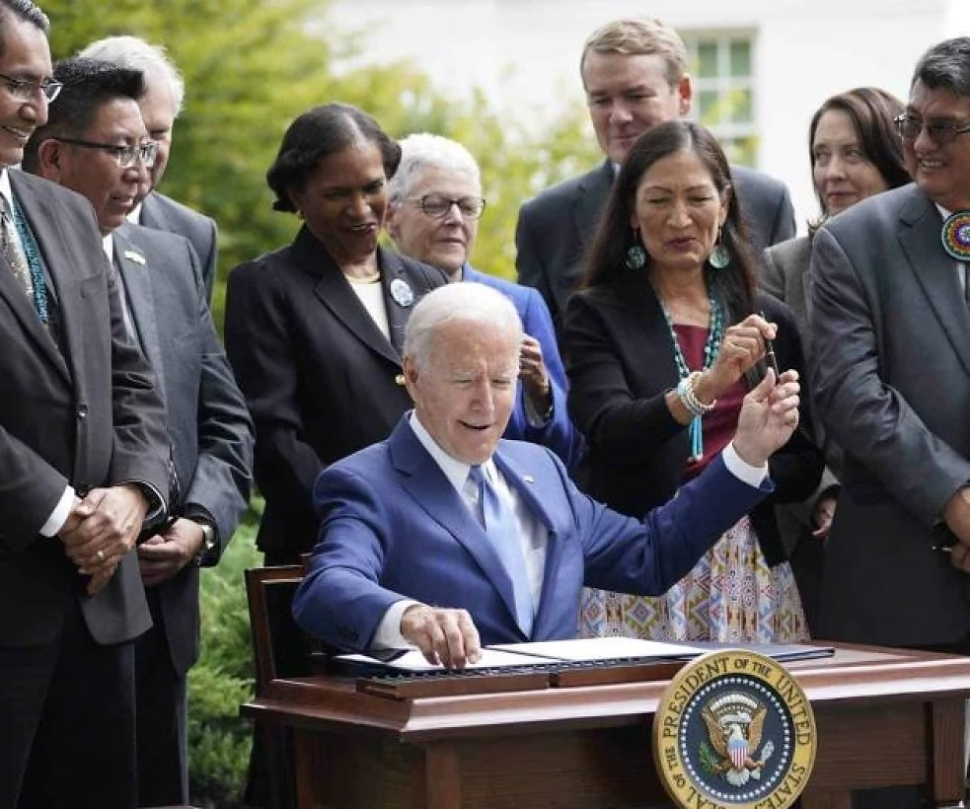
In 2021, Joe Biden made history by becoming the first president to officially recognize Indigenous Peoples’ Day. His proclamation was a tribute to native cultures and a reflection on the unfulfilled promises of equality in the United States. “We have never fully fulfilled that promise,” Biden admitted, highlighting the need to honor those who inhabited these lands long before the arrival of settlers.
But Trump sees things differently. For him, this federal holiday — celebrated on the second Monday in October — should focus solely on Christopher Columbus and, by extension, Italian-American heritage. “The Democrats did everything they could to destroy Columbus and his reputation,” he said. However, the story is more complex: the Genoese navigator’s expeditions never reached what is now American territory, and his legacy is marked by controversy over the exploitation of native communities.
Why does this debate matter?
This is not just a symbolic issue. It reflects a broader struggle over how the United States tells its story. While some see Columbus as a symbol of bravery and discovery, others consider him a painful reminder of colonialism and its consequences. Statues of the explorer have been vandalized or removed in several cities, a phenomenon that Trump has vehemently criticized. In 2020, his administration even funded the restoration of a statue of Columbus in Baltimore that had been torn down during protests over the death of George Floyd.
The truth is that Columbus Day has deep roots in the Italian-American community. It was established as a national holiday in 1934 by Franklin D. Roosevelt, but its origin dates back to 1892, when President Benjamin Harrison promoted it after the lynching of 11 Italian immigrants in New Orleans. For many families, this day represents the fight against discrimination and the celebration of their contribution to the country.
Is it possible to honor both narratives? For indigenous activists, the coexistence of the two celebrations was progress. Now, with Trump’s decision, the debate reignites: should the United States review its history or cling to its traditions?
Share this note and join the conversation! What do you think about this topic? Explore more content about culture and history on our social networks. #ColumbusDay #IndigenousPeoples #LivingHistory